
 By Admin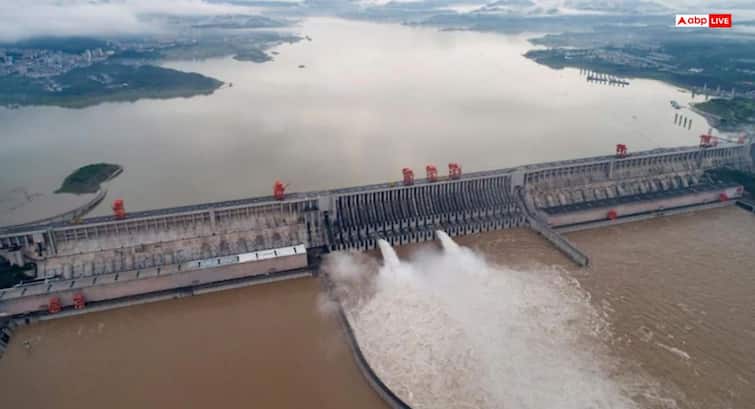
India has prepared plans to build at least 208 hydroelectric projects in the Brahmaputra River Basin in response to China’s massive hydropower projects. All these projects will be built in 12 sub-basins, which will achieve the capacity of producing about 65,000 MW of electricity. At present this scheme is under the supervision of the Energy Ministry and the Prime Minister’s Office (PMO).
China’s answer to the dam
According to officials, China is building a 60,000 MW capacity dam on the Yarlung Tsangpo river in Tibet (known as Brahmaputra in India and Jamuna in Bangladesh), which will be the world’s largest hydro project. In response to this, India plans to ensure balanced use and safety of water resources by building several small and big projects on the entire stretch of the river.
Biggest Project- Siang Upper Multipurpose Project
The largest among India’s proposed projects is the Siang Upper Multipurpose Project (SUMP), which will have a capacity of 11,000 MW. It is proposed to be built in Arunachal Pradesh, but has been stalled for a decade due to local opposition. In May 2025, NHPC has restarted the survey work in police security.
Importance of Brahmaputra Basin
The Brahmaputra river basin extends to Arunachal Pradesh, Assam, Sikkim, Meghalaya, Mizoram, Manipur, Nagaland and West Bengal. The region holds 80% of India’s total untapped hydropower potential, of which Arunachal Pradesh alone has 52 gigawatts (GW) of potential.
Existing and new projects
Currently, projects with a capacity of about 4,807 MW are underway in the Brahmaputra Basin, while projects of 2,000 MW are under construction. The new scheme includes large hydro projects as well as pumped hydro storage and small (<25 MW) projects.
China’s dam called ‘water bomb’
Arunachal Pradesh Chief Minister Pema Khandu had said that China’s dam is being built very close to the state border and it can prove to be a threat like a ‘water bomb’. He warned that ‘this could become an existential crisis for our tribes and livelihoods.’ The Foreign Ministry has said that India is keeping a close eye on China’s activities. Foreign Minister S. Jaishankar had formally raised this issue during his visit to Beijing in July.