
 By Admin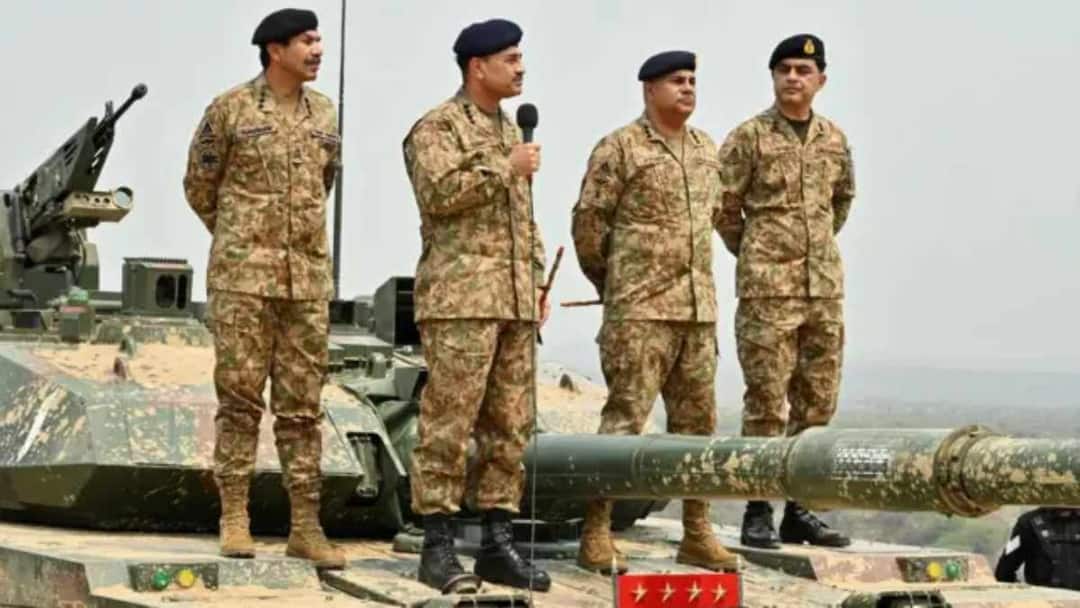
Pakistan on tri-services exercise Trishul: India’s tri-service (Army, Navy and Air Force) joint exercise ‘Trishul’ is being held at a time when the activities of Tehreek-e-Taliban Pakistan (TTP) have reached Islamabad. This exercise has further increased Pakistan’s concerns.
Lieutenant General Ahmed Sharif Chaudhary, Director General of Inter Services Public Relations (ISPR), the public relations department of the Pakistani Army, warned India during an informal conversation with journalists in Rawalpindi, saying, “India should know that this time our response will be even stronger.”
Lieutenant General Chaudhary said this
Lieutenant General Chaudhary further said, “Pakistan is closely monitoring India’s tri-service exercises. India is preparing for another false flag operation in the Arabian Sea.”
At the same time, top sources of Indian intelligence agencies have described these statements of Pakistan as a sign of “strategic instability and nervousness”. According to sources, “Pakistan’s political situation is already unstable because of Rawalpindi. This statement of DG ISPR is just a narrative. Their aim is to show unity on the domestic front, while the internal situation of the country is out of their control.”
Display of joint power of land, air and navy
India’s tri-service exercise ‘Trishul’, which started from November 3, is a symbol of the combined power of the Indian Army, Navy and Air Force. This large-scale multi-domain exercise extends from the Arabian Sea to the sky. This is the first such major exercise after Operation Sindoor, which will continue till 13 November. In this mega drill, the scenario of integrated war, rapid military deployment and maritime dominance is being practiced. The objective of the exercise is to further strengthen coordination and strategic coordination between the three armies.
Uneasiness increased in Pakistan
Although this is a regular military exercise, Pakistan’s security agencies have started taking extreme caution regarding it. Sources say that such reaction reflects Pakistan’s strategic nervousness and political instability.