
 By Admin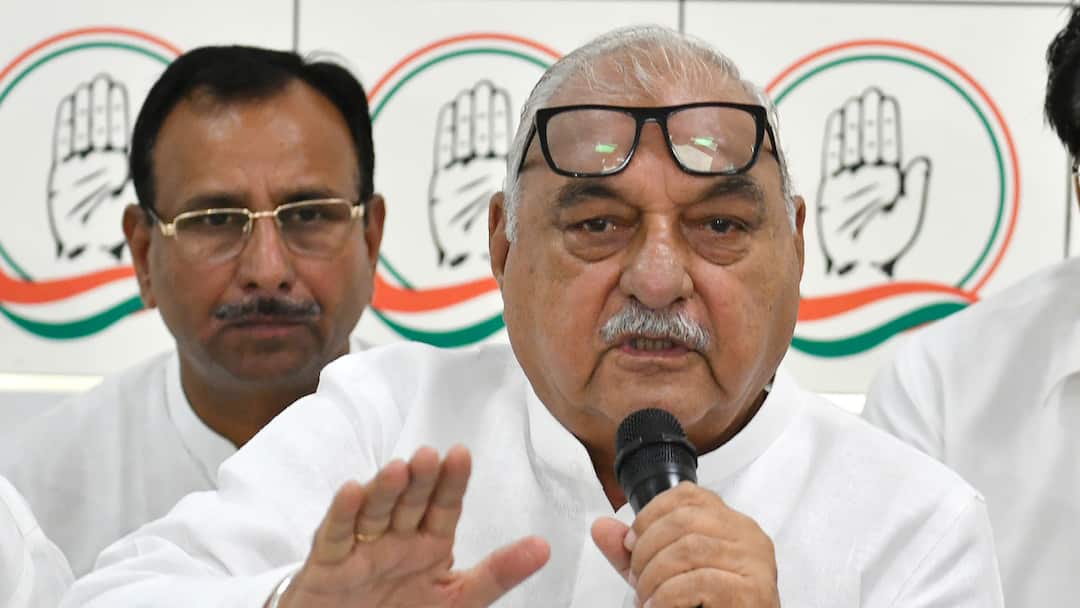
Former Chief Minister of Haryana and current Leader of Opposition Bhupendra Singh Hooda has faced a big problem. A case will be filed against him in the Manesar land scam case. The Punjab-Haryana High Court has given this order while rejecting the petition of Bhupendra Hooda.
Actually, senior Congress leader Bhupendra Singh Hooda had filed a petition and said that the remaining accused in this case have got a stay from the Supreme Court. It is not appropriate to conduct a trial against him alone. Punjab-Haryana High Court has rejected this petition. Now charges will be framed against Hooda in the CBI Special Court of Panchkula.
CBI has already presented the charge sheet in the court
It is being told that CBI has already filed a charge sheet against Bhupendra Singh Hooda in the Manesar land scam case. After framing of charges, Hooda will be tried.
Bhupendra Hooda, while being the Chief Minister, had canceled the IMT in Manesar area and issued a Section-6 notice on 25 August 2005. He had also issued a Section-9 notice for the award, fixing the amount at Rs 25 lakh per acre. It is alleged that the builders had purchased 400 acres of land from farmers at throwaway prices.
Accused of buying land from farmers at throwaway prices
It has also been claimed in the charge sheet that in 2007, when Bhupendra Hooda was the Chief Minister, the government had freed that 400 acres of land from acquisition. Due to this, farmers had suffered a loss of about Rs 1500 crore at that time.
CBI started the investigation in 2015 and in September 2018, presented an 80-page charge sheet in the court against 34 accused including Bhupendra Hooda. Now the special CBI court will hear the case while framing charges against Bhupendra Singh Hooda.
The Supreme Court had directed a CBI investigation into the Manesar land scam. The court found that the then Hooda government’s 2007 decision to cancel the acquisition process was mala fide and considered it fraudulent. The Supreme Court had directed the CBI to investigate the ill-gotten gains earned by the middlemen and to ‘recover every penny’ from the state government.