
 By Admin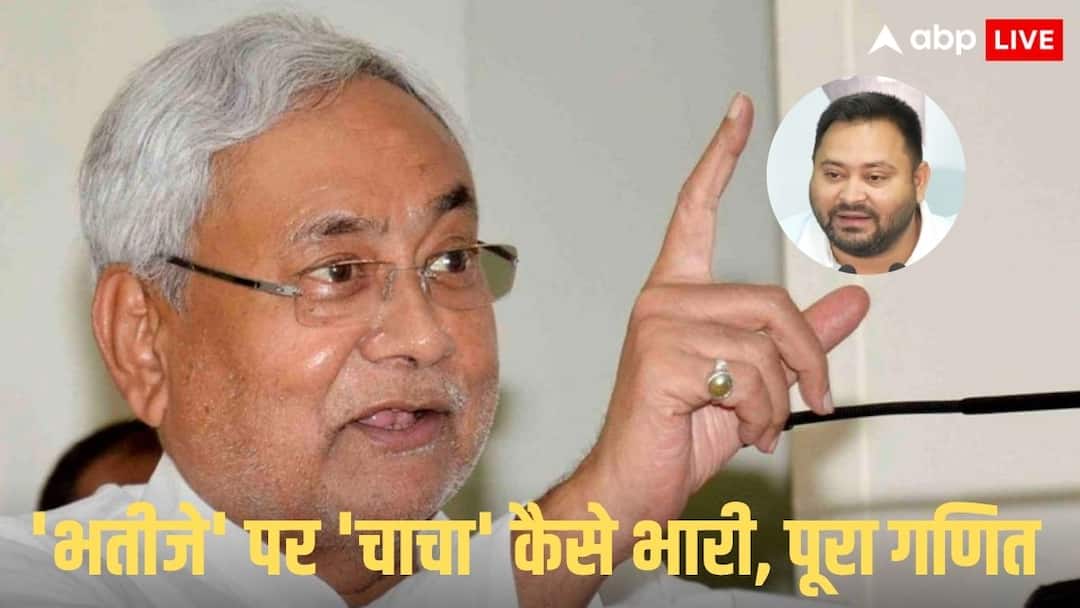
On one hand, NDA has got a landslide victory in Bihar Assembly elections, while on the other hand, Grand Alliance has suffered a huge loss. This time, while Nitish’s JDU has gained 100 percent seats, RJD has suffered a historic defeat under the leadership of Tejashwi. In such a situation, it becomes necessary to understand how the RJD suffered so much under the leadership of Tejashwi, who was declared the CM face by the Grand Alliance, and how Nitish’s JDU won so many seats beyond expectations.
Talking about RJD, one of the main reasons for its defeat this time proved to be giving tickets to 52 Yadav candidates. This decision not only strengthened the casteist image but also alienated the non-Yadav vote bank from the party. Yadavs have 14 percent population in Bihar, which is the core vote bank of RJD, but by giving tickets to 52 Yadavs, the public started smelling Yadav rule, due to which the forward and backward people moved away from the Grand Alliance. The surprising thing is that despite giving tickets to 52 Yadavs, the party has been able to win only 25 seats.
RJD gave tickets mostly to Yadavs
Let us tell you that RJD fielded candidates on a total of 144 seats, out of which 52 were Yadavs, which was about 36 percent of the total candidates. RJD had got 143 seats under seat sharing in the Grand Alliance. The biggest mistake in Tejashwi Yadav’s strategy proved to be his lack of equality with his allies Congress, Left parties and smaller parties. Seat sharing controversies also caused a lot of damage to the Grand Alliance.
Tejashwi appeared dominating the grand alliance
Congress insisted on the Guarantee Manifesto, while Tejashwi Yadav gave priority to jobs, which irked all the allies. Not only this, Tejashwi left everyone behind by naming the manifesto of the Grand Alliance as ‘Tejasvi Pran’. Tejashwi kept his colleagues on the backseat even in the campaign. Apart from this, pictures of Tejashwi Yadav were more prominent in the rallies than those of Rahul Gandhi.
RJD contested 3 elections under the leadership of Tejashwi
Let us tell you that RJD has contested 3 elections under the leadership of Tejashwi. 2015, 2020 and 2025. In the year 2015, when RJD and Nitish were together, this alliance had won. RJD had emerged as the largest party with 80 seats. In 2020, RJD contested the elections in alliance with Congress and Nitish Kumar joined BJP. In this election also, RJD emerged as the largest party by winning 75 seats. In 2025, RJD lost badly like in 2010.
Nitish’s strong comeback
Nitish Kumar’s political capital had reduced due to its reduction to 45 seats in 2020. His approval rating as chief minister had fallen from 37 percent in 2020 to between 16 percent and 25 percent. Although this time BJP along with JDU made an agreement of equal seats on 101-101 seats, but in the political circles Nitish was being seen as the younger brother. The reason was that Modi brand will attract votes, not Nitish Kumar.
Popular among all castes
If we talk about the reasons supporting Nitish, many things are included in it. Social harmony and caste balance. Nitish’s biggest strength is his ability to take along many castes and religions. Even though his Kurmi caste population in Bihar is about 3 percent, he is popular even among those castes which are traditionally not considered committed to any one party. Apart from the upper caste, Kushwaha, Paswan, Musahar and Mallah, he also has a hold among those Muslim voters who are generally considered against BJP.
support of women voters
Apart from all this, Nitish Kumar has also registered a strong presence among women voters. Women voters have served as a stabilizing force for his leadership, garnering huge support through welfare initiatives such as the Mukhyamantri Mahila Rojgar Yojana (MMRY). Also, let us tell you that unlike in 2020, where there was confusion among the JDU cadre, this time the organizational strength of the party appeared more active.
read this also
Bihar Assembly Election Result 2025: Who will be the Chief Minister of Bihar? JDU leader Shyam Rajak made a big claim, know whose name he took