
 By Admin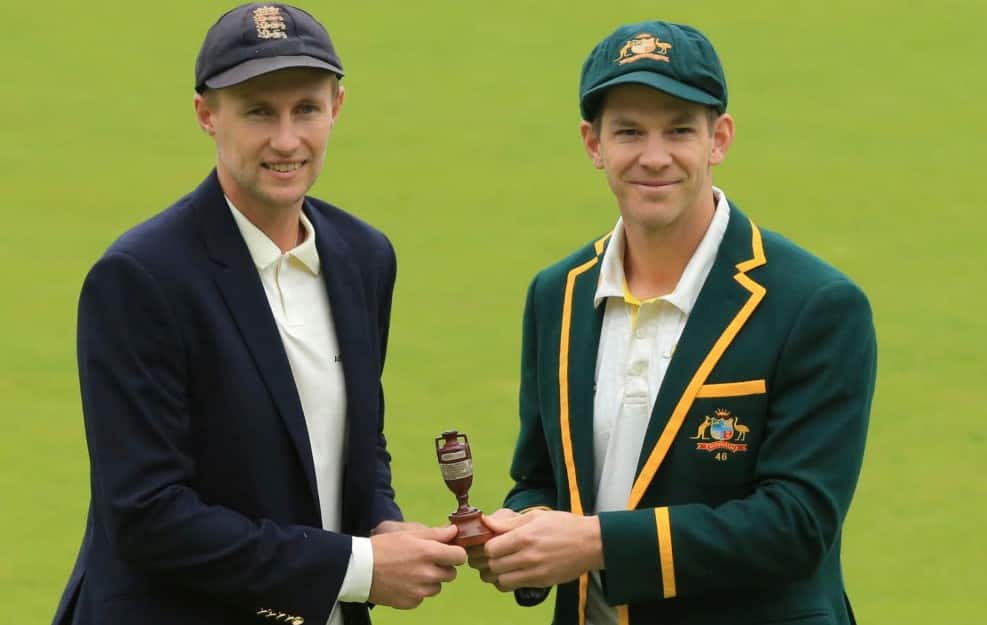
In the year 1882, the Australian team went on a tour of England, where in the Test played at the Oval, England had to face defeat by a close margin of 7 runs. The very next day, the British newspaper ‘Sporting Times’ published a fake ‘condolence’ regarding English cricket, which read, “In affectionate memory of the English cricketer, who died at the Oval on the 29th August 1882. Deeply condoled by a large group of bereaved friends and acquaintances. May his soul rest in peace. Please note that the body will be cremated and the ashes taken to Australia.”
In fact, the British weekly newspaper had used the term ‘The Ashes’ on England’s defeat at the hands of Australia. With this ‘condolence message’ the word ‘Ashes’ was used for the first time in cricket history. This concept attracted the attention of sports lovers.
After a few weeks, the English team left for the Australian tour under the captaincy of Ivo Bly. The team’s objective was to avenge the previous defeat. Captain Bly resolved that he was going to Australia to take back the Ashes.
The England team played three tests on this tour. During this period, Bly and his team’s amateur players also took part in many social matches.
This series was to start from 30th December. The first match was to be played in Melbourne, before which, on Christmas Eve, at the Rupertswood estate outside Melbourne, Bly was given a small clay urn as a symbol of the Ashes he had traveled to Australia to retrieve. However, Bly considered it a personal gift. On this tour, England won the series 2-1.
It is believed that the women of Melbourne had burnt Bells and filled his ashes in this urn.
At this occasion Bly met Florence Murphy, a classmate of Lady Janet Clarke, owner of the Rupertswood estate and governess to the Clarke family. In 1884, Bly married Florence Murphy.
After some time, Bly returned to England taking this urn with him. This urn remained kept at Bly’s house for about 43 years. After Bly’s death, Florence handed over this urn to the Marylebone Cricket Club (MCC), since then it has been kept in the MCC Museum at Lord’s.
When the Australian and English teams desired to compete for an actual trophy in the 1990s, the MCC, in consultation with the England and Wales Cricket Board and Cricket Australia (CA), commissioned the vase-shaped Waterford Crystal Trophy.
The trophy was first presented to Australian captain Mark Taylor when the Australian team won the Test series against England in 1998–99, and since then the Ashes trophy has been awarded to the winning captain at the end of each Test series between Australia and England.