
 By Admin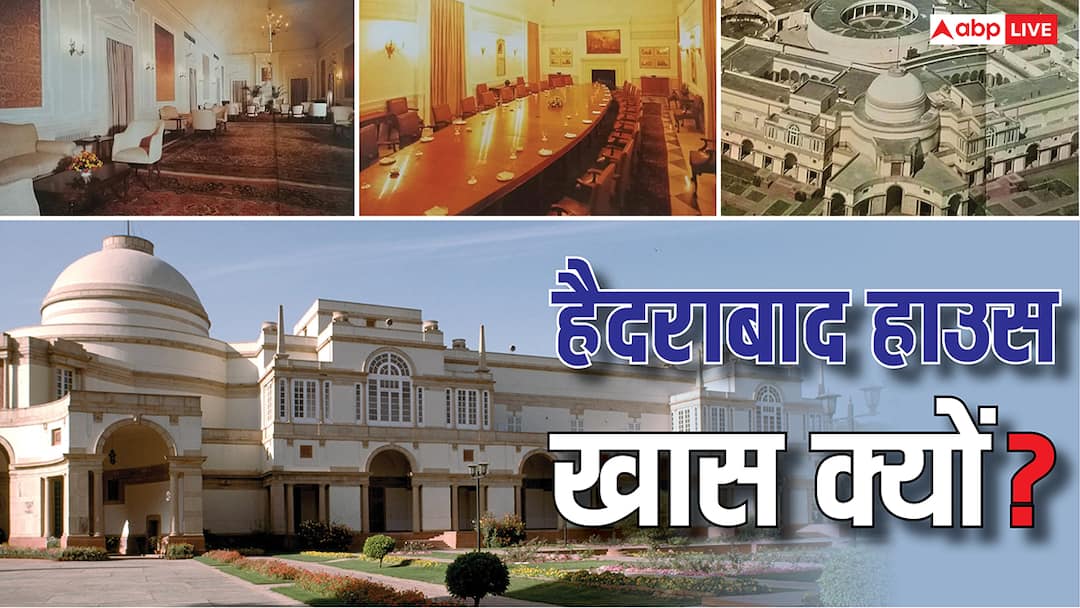
In 1911, the British government shifted its capital from Calcutta (now Kolkata) to Delhi. In 1919, he included the kings of the states in the ‘Chamber of Princes’, so that accommodation could be arranged when they came to Delhi. Then Nizam Osman Ali bought 8.2 acres of land in 1919 itself and construction of Hyderabad Palace started. Hyderabad House was completed by 1928. But Usman Ali never used it much. In the 1920s, its cost was around 2,00,000 pounds, which in today’s times is more than Rs 170 crore. This palace was as per the Nizam’s grandeur and wishes in every way.
After independence, Government of India got ‘Hyderabad House’
Celebrating 100 years: The tale of Delhi’s iconic Hyderabad House According to the report, India’s independence in 1947 changed the fortunes of Hyderabad House as the merger of the princely states into the Indian Union began. Hyderabad protested against the forced merger by launching Operation Polo in September 1948. After the merger, Hyderabad House became government property.
Since 1974, it has been with the Ministry of External Affairs and is the state guest house of the Prime Minister. It is one of the 28 royal palaces in Delhi that were built during the British era, like Patiala House or Jaipur House. Today, foreign leaders come and stay here and meet Prime Minister Narendra Modi.
There is no dearth of luxury in the butterfly shaped palace.
This palace looks like a butterfly. For this reason it is called ‘butterfly shaped’. It was designed by the famous British architect Sir Edwin Lutyens, who was the creator of big buildings like Delhi’s National Museum and Rashtrapati Bhavan. This palace is spread over 8.2 to 8.77 acres. It has a total of 36 rooms, including 1 zenana (separate section for women). Now some rooms have been converted into dining halls.
- The main entrance is a big dome, below which is the hall. There are butterfly-like wings installed at a 55 degree angle on both sides.
- The chhatris and arches are made of mixed artefacts of Mughal and European style.
- Inside the palace, there are rhombic (deer-shaped) designs on the marble floor, circular lobby, stairs, archways and tall pyramid-like stone obelisks.
- Outside the palace there is a square garden, circular lobby and a big dome. This is the largest and grandest palace of Delhi after Victoria House.
- The Nizam had ordered 3 dozen hand-paintings for this palace from Lahore-based painter Abdurrahman Chughtai, which were inspired by Islamic and Mughal art.
2 interesting stories of Hyderabad House
According to the book ‘The Patriot’ published in 2024-
- Nizam disliked the palace: Osman Ali saw the palace for the first time after 10 years i.e. in 1936. He didn’t like it because it looked too western. He called it ‘horse stable’. Even his sons did not like it, so Nizam rarely came here.
- Nizam’s ghost appeared: This palace has been shown in many films. A scene of independence meetings was being shot in the film ‘Gandhi’. Then the crew members felt as if Nizam’s spirit was roaming around but it was just a joke. This palace is not just made of stones, but is a living example of history.