
 By Admin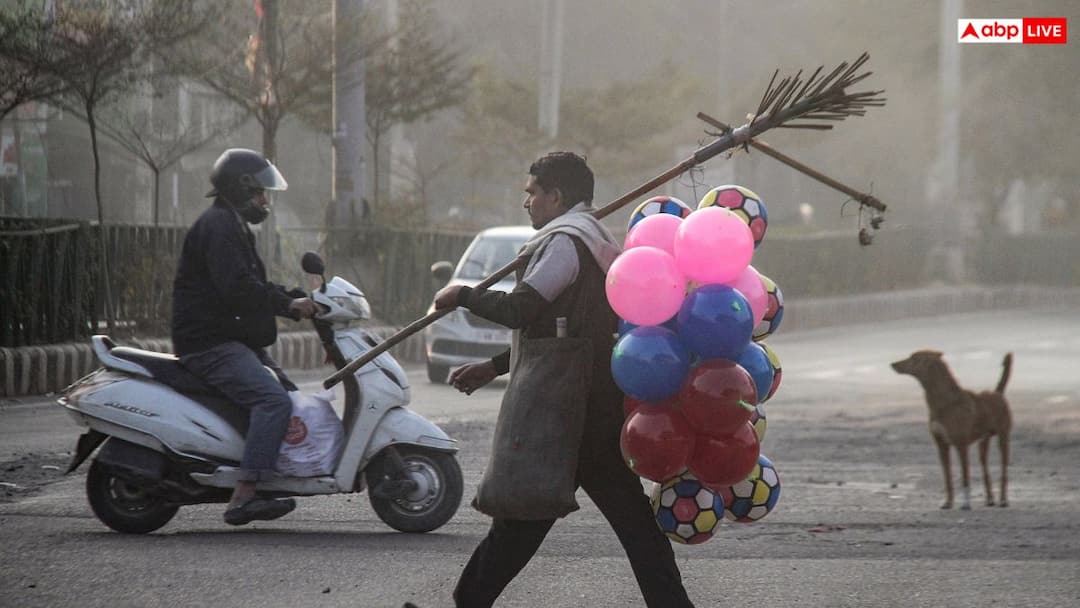
The country’s capital Delhi and its adjoining areas remained covered in a blanket of poisonous smog on Monday (December 8) and the air quality was recorded in the ‘very poor’ category. According to the Central Pollution Control Board, the 24-hour average AQI was 308, which is a serious warning for health. People’s problems have increased due to continuous falling air level in many areas of Delhi. People are forced to breathe this poisonous air.
‘Very bad’ air at 29 centers in the capital
According to Sameer App, till Sunday (December 7) evening, the air quality was recorded as ‘very poor’ in 29 monitoring centers of Delhi. Bawana area had the worst situation with AQI 336. At 10 am the AQI was 302 and 26 stations recorded ‘very poor’ levels. According to the board’s standards, 301-400 AQI is in the ‘very poor’ category. Delhi’s decision support system reported that transportation accounted for 16.5 percent of pollution, while industrial sources contributed 8.1 percent, residential four percent and construction activities 2.3 percent.
Burden increased from NCR districts too, air remained bad throughout the week
Neighboring districts of NCR contributed significantly to pollution. According to PTI, Jhajjar’s share was 13.9 percent, Sonipat’s 6 percent, Rohtak’s 5.2 percent and Jind’s 2.5 percent. This week, continuous fluctuations were recorded in AQI. AQI was recorded at 279 on Sunday, 304 on Monday, 372 on Tuesday, 342 on Wednesday, 304 on Thursday and 327 on Friday. The air remained in the ‘very poor’ category every day, causing the layer of smog and dust to become increasingly dense.
Slight change in temperature, effect of western disturbance
According to IMD, on Sunday the maximum temperature of Delhi was recorded at 24.7 degrees Celsius and the minimum was 8 degrees Celsius, both of which were below normal. The humidity in the morning was 92 percent and in the evening it was 71 percent. The Meteorological Department has predicted the minimum temperature for December 8 to be 10 degrees Celsius and the maximum to be 25 degrees Celsius. Due to the effect of western disturbance, the minimum temperature has increased by about two and a half degrees in the last three days, but the combined effect of cold and pollution seems to be making the air of the capital more heavy.