
 By Admin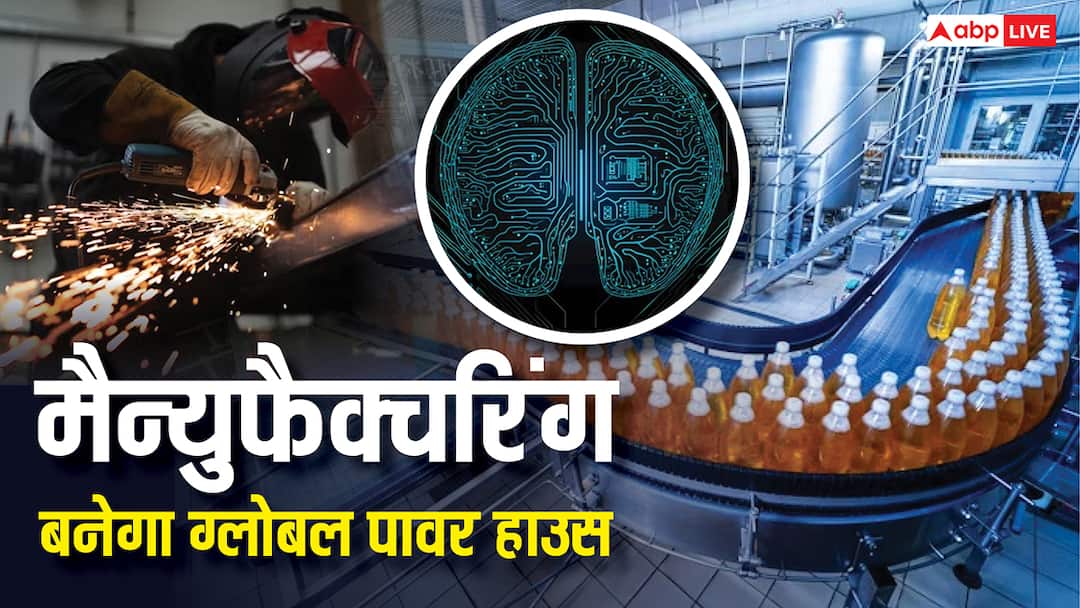
India At 2047: India is today counted among the fastest growing economies of the world. Despite high global tariffs, fears of an economic recession and geopolitical pressures, India’s GDP growth has maintained momentum. Union Finance Minister Nirmala Sitharaman had recently said in a conclave that the Indian economy has a strong capacity to withstand global turmoil. He clarified that if India has to become a $30 trillion economy by 2047, then at all costs the GDP growth rate will have to be maintained at an average of 8 percent or above.
The Finance Minister said that India faces a dual challenge – on one hand, achieving the goal of ‘Developed India’ by 2047 and on the other hand, strengthening self-reliance. Similarly, Union Commerce and Industry Minister Piyush Goyal has also reiterated that India has the potential to become a 30 trillion dollar economy by 2047.
Growing global confidence in India’s economy
Recent reports from RBI, SBI and Asian Development Bank (ADB) have further strengthened India’s economic prospects. ADB has increased India’s GDP growth forecast for the financial year 2025-26 from 6.5 percent to 7.2 percent. At the same time, RBI estimates that the growth in the current financial year can be between 6.5 to 7.5 percent. RBI has increased the GDP growth estimate for 2025-26 from 6.8 percent to 7.3 percent. If this pace continues, India’s GDP may cross the $4 trillion mark by 2026.
Trust in international institutions is also continuously increasing. According to IMF, India’s GDP growth rate may be 6.6 percent in 2026, while the World Bank says that between 2025 and 2027, India will remain the fastest growing large economy in the world. Some reports have predicted GDP growth to be 7.5 percent or more in the second half of 2026.
Conditions for becoming a developed India by 2047
According to experts, if India has to become a $30 trillion economy by 2047, it will have to maintain a sustained annual GDP growth of 8 to 9 percent. With this, the per capita income will have to be increased to about $18,000 per year. According to NASSCOM report, if India maintains a sustained growth of 8–10 percent, this target can be achieved.
India’s youth population is a big strength. Working age population, initiatives like Digital India and rapid expansion of technology are strengthening the country’s growth pace.
These sectors will play the most important role
Many sectors will play a decisive role in achieving the goal of 2047, the major ones being-
- electronics
- automobile
- Energy (especially renewable energy)
- Semiconductor
- defense sector
- service area
- Pharma
- electric vehicle
Schemes like GST reforms, Make in India and Production Linked Incentive (PLI) have given additional impetus to the Indian economy.
What do experts say?
On this subject, IIMC Professor Shivaji Sarkar says that at present India’s GDP growth rate remains around 6 percent, although there are fluctuations in it. He told that earlier this rate had also reached close to five and a half percent. According to him, GDP growth depends on many factors, including weather, global conditions and domestic economic conditions, so it is not easy to keep it stable.
Professor Shivaji Sarkar also said that the fall in rupee affects the domestic economy, the impact of which is visible from technology to manufacturing sector. In such a situation, a balanced and stable growth rate is very important, so that the diverse country can achieve its long-term economic goals. He said that if India has to maintain a strong position at the global level, it will need a higher and more sustained growth rate.
He further said that by 2047, major changes will have taken place in the global economic scenario and currently a downward trend in growth rate is being seen across the world. In such an environment, if India is successful in maintaining a growth rate of 12 percent for a long time, then it is possible to become a 30 trillion dollar economy by 2047.
Manufacturing and technology will change the face of India
The demand for semiconductors in India is estimated to increase from $33 billion by 2022 to $117 billion by 2030. There has been tremendous growth in electronics manufacturing—today 99.2 percent of smartphones sold in India are made domestically, compared to only 26 percent a decade ago.
Amidst global tensions, the defense sector has also become very strategically important. In the last 10 years, the defense budget has doubled to Rs 6.81 lakh crore. In the financial year 2024-25, 92 percent of the contracts in the defense sector have been awarded to domestic industries, due to which the dependence on imports has reduced.
Green energy and EV sector will get new momentum
India recorded a record 29.5 GW addition to renewable energy capacity in 2024-25, taking the total capacity to 220 GW. India will require 50–70 GWh of battery capacity every year in the coming years, creating huge opportunities in areas such as cell manufacturing, raw materials and recycling. Sales of electric vehicles have also increased rapidly—wherein the number was around 50,000 in 2016, it will reach 20 lakh in 2024.
Focus on government investment and infrastructure
The seriousness of the government can be gauged from the fact that between 2024 and 2026, Rs 30–33 lakh crore has been invested in government infrastructure. Capital expenditure increased by 37 percent in FY 2024, while the capex budget for 2025 has been kept at Rs 11.1 lakh crore. It is expected to increase further in 2026.
Manufacturing will become a global power house
Experts believe that the role of manufacturing sector will be most important in becoming a developed India. By 2047, its contribution to GDP may increase from 17 percent to 25 percent. According to a report by Boston Consulting Group (BCG) and venture capital firm Z47, India’s manufacturing strategy is no longer limited to assembly only but is moving towards technology-based development.