
 By Admin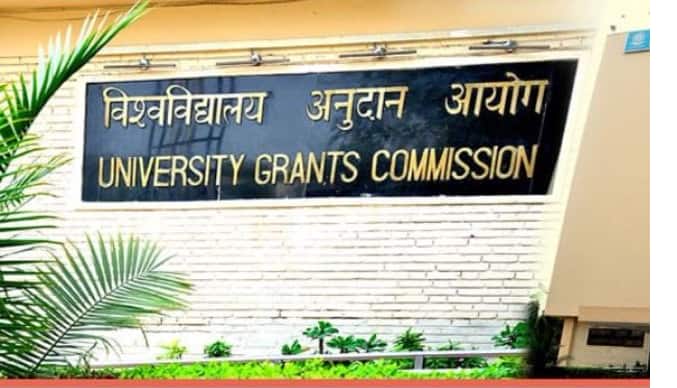
The government has taken a big step towards historic change in the higher education of the country. The University Grants Commission (UGC), which was established in 1953 and became a statutory body under an Act of Parliament in 1956, is about to become history. In its place, Vikas Bharat Education Foundation (VBSA) will be formed, which will be a unified regulator of all the universities and higher education institutions of the country.
UGC was established on 28 December 1953 by the then Education Minister Maulana Abul Kalam Azad. Its objective was to set, maintain standards of university education in India and to give recognition to universities. Over the years, UGC has set the direction of higher education in the country and laid the foundation of education for millions of students.
Now everything will be in one place
The government has decided to bring unification in the regulation of higher education. Under this, Vikas Bharat Shiksha Foundation (VBSA) will be formed by merging UGC, All India Council for Technical Education (AICTE) and National Council for Teacher Education (NCTE). This step is in line with the National Education Policy-2020.
Union Education Minister Dharmendra Pradhan said that at present, due to the existence of different regulatory bodies, there was duplication, delay and confusion in the rules. This problem will end with the formation of VBSA. Now universities, technical institutes and teacher education institutes will operate under the same structure. With this, decisions will be taken faster, transparency will increase and the quality of education will improve.
IIT and IIM also included for the first time
After the implementation of VBSA, for the first time, prestigious institutions like IIT and IIM, which till now were not under UGC or AICTE, will also be brought under its ambit. This means that all higher education institutions in the country will have uniform regulatory and quality standards.
There will be three main pillars
Developed India Education Regulatory Council: Will play the role of regulator.
Developed India Education Quality Council: Will look after the work related to accreditation and recognition.
Developed India Education Standards Council: Will set educational standards.
Same rules will apply to all institutions
VBSA rules will apply equally to central, state and private universities. This will also include open universities, digital and online education institutions. Earlier, general universities were regulated by UGC, AICTE was responsible for technical institutions and NCTE was responsible for teacher education institutions. Now this entire work will be done by a single organization, which will make the education system simple, clear and effective.
fines and strict provisions
Under VBSA, there is a provision for strict action against breaking the rules. The Regulatory Council will have the power to impose a fine ranging from Rs 10 lakh to Rs 75 lakh for violation of the Act or rules. A fine of up to Rs 2 crore can be imposed for establishing a higher education institution without permission.
Appointment of chairpersons and members
The presidents of VBSA and its three councils will be selected by the President. The appointment of the Chairman will be for three years, which can be extended up to five years. There will be 14 members in each council. The President will also have the right to remove him in case of negligence in duty. If necessary, the Central Government will also be able to dissolve the Commission or Councils.
Also read: NCERT made these big changes in the syllabus in the year 2025, it is very important for you to know also
Education Loan Information:
Calculate Education Loan EMI