
 By Admin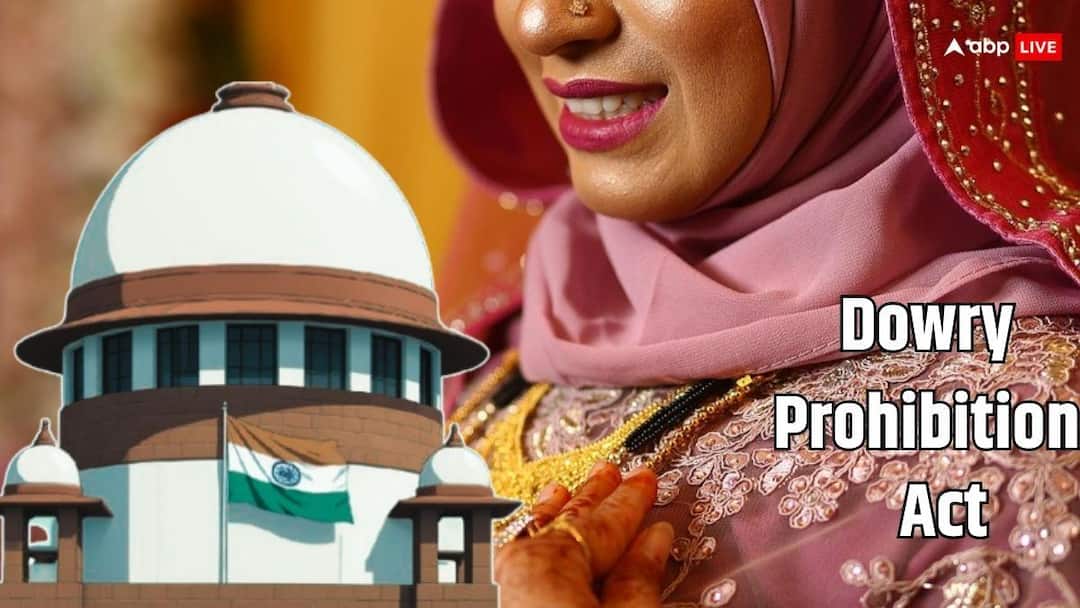
The Supreme Court on Monday (December 15, 2025) expressed concern over the dowry cases emerging in the country and said that the existing laws are both ineffective and prone to misuse and this evil is still widely prevalent. In the case the Supreme Court was hearing, a 20-year-old girl was burnt alive by her husband and mother-in-law after pouring kerosene oil on her for dowry.
Justice Sanjay Karol and Justice N. Emphasizing the need for collective effort by all to deal with dowry cases, the bench of Kotishwar Singh issued several directions to the High Courts, including ascertaining the number of pending cases (from oldest to newest) under sections 304-B and 498-A of the Indian Penal Code (IPC) so that they can be disposed of expeditiously.
Describing dowry as a social evil, the court said that because of it a 20 year old girl had to lose her life. The court said, ‘A young woman of only 20 was sent away from this world through a heinous and painful death. Simply because her parents could not fulfill the wishes of her in-laws in marriage. Was his importance only equal to a color TV, a motorcycle and Rs 15,000 in cash, which his family could not give?
Section 304-B of the Indian Penal Code deals with dowry death, while Section 498-A deals with cruelty to a married woman by the husband or his relatives. This case is 24 years old, in which the Court, while giving its verdict, directed the Center and the States to consider necessary changes in the educational curriculum at all levels, and also directed to strengthen the constitutional position that both the parties to the marriage are equal to each other and no one is subordinate to the other.
The Supreme Court has given this order on the appeal of Uttar Pradesh Government against the decision of Allahabad High Court. In 2001, the High Court had acquitted two accused including a woman. Nasreen was married to Ajmal Baig. After marriage, Ajmal and his family started demanding dowry from Nasreen. They demanded a color TV, a motorcycle and Rs 15,000 in cash, for which they kept harassing him for years.
In the year 2001, Nasreen was harassed a lot by her husband and in-laws and finally they poured kerosene oil on her and set her on fire. By the time Nasreen’s maternal uncle arrived, Nasreen was dead. After this, the trial court sentenced Ajmal and his mother to life imprisonment with fine under sections 304B and 498A of IPC. Both of them challenged this decision in the Allahabad High Court, where the High Court gave relief on October 7, 2003, saying that Nasreen’s maternal uncle was not an eyewitness to the incident, hence his testimony cannot be accepted. After this, the UP government challenged the High Court’s decision in the Supreme Court.
The Supreme Court accepted the appeals and reinstated the conviction of Ajmal and his mother in the case. However, the court did not sentence the 94-year-old woman convict to imprisonment. The court has directed Ajmal to surrender within four weeks to serve the life sentence given by the lower court. The court said that even though the accused in this case have finally been punished, there are many examples where this does not happen.
Also read:-
Bengal’s SIR draft list is here, check your name, list will come today in many other states including Rajasthan