
 By Admin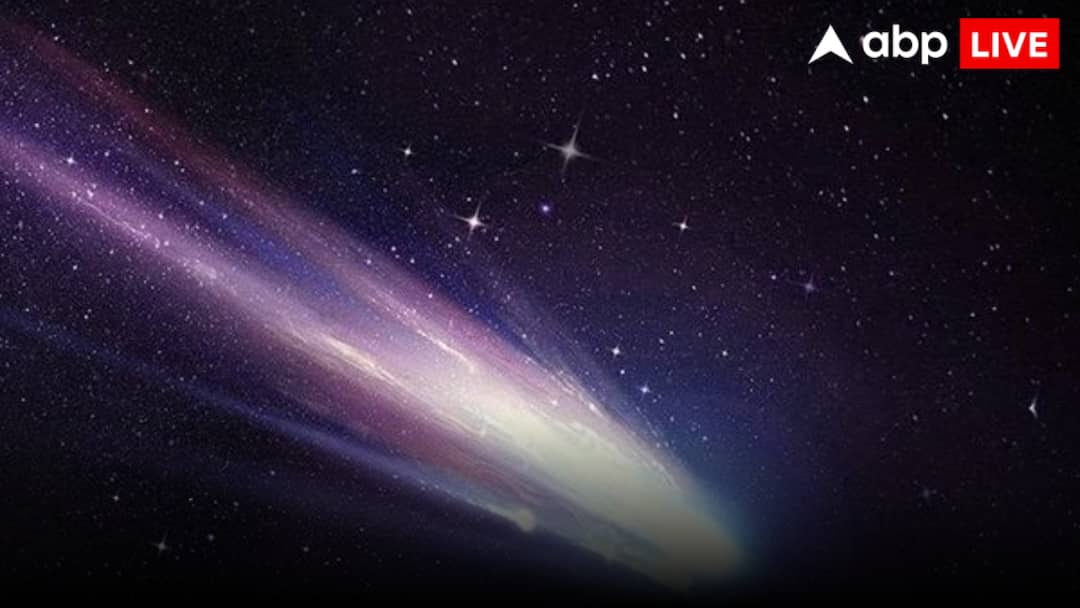
The date of December 19 is considered very important in the field of astronomy. On this day, interstellar comet 3I/ATLAS will pass through its closest point to the Earth. This is a historic occasion for scientists and astronomers, as it is the first interstellar body to enter our solar system so far. Before this, only two such objects had been seen, which had reached our solar system while traveling from another constellation.
This incident is also special because such objects give direct information about the world outside the solar system. This journey of 3I/ATLAS is providing scientists a rare opportunity to understand the mysteries of the universe.
What is 3I/ATLAS and how was it discovered?
3I/ATLAS is an icy interstellar comet, which was discovered on July 1, 2025. It was observed with the help of the ATLAS telescope system located in Chile. After studying its movement and speed, scientists confirmed that this comet is not a part of our solar system, but has reached here from some other constellation. Normal comets keep revolving around the Sun, but interstellar comets do not follow this rule. They pass straight through and then exit the solar system. 3I/ATLAS will also come near the Sun for some time and then return to interstellar space forever.
How close to Earth will 3I/ATLAS pass?
According to astronomers, when 3I/ATLAS will be closest to Earth on December 19, it will still be at a distance of about 1.8 astronomical units. This distance is equal to approximately 27 crore kilometers. This is almost double the average distance between the Earth and the Sun. This simply means that the Earth is not in any kind of danger from this comet. It will pass at a completely safe distance. For this reason, scientists will be able to study its behavior and structure without any worry.
Why is 3I/ATLAS so important for scientists?
The importance of 3I/ATLAS lies in its rare origin. As it approaches the Sun, the Sun’s heat causes gas and dust to escape from its icy core. This process is called sublimation. The particles released during this time are very valuable for scientists. By studying these gases and dust, scientists will try to understand what kind of chemical elements are present in other constellations and how the planets might have formed there. This comet seems to be a sample from another star world, which helps us understand the diversity of the universe.
Will the general public be able to see 3I/ATLAS?
This comet will not be visible to the naked eye, but its observation will be possible through modern telescopes and space observatories. A bright coma and faint tail have been seen around it in images taken by the Hubble Space Telescope and other space missions. Common people interested in astronomy also have a chance to see it. The Virtual Telescope Project will broadcast this rare event live, allowing people to watch this interstellar visitor from home.
Why is it important to study interstellar comets?
3I/ATLAS will exit the solar system after some time and will never return. Therefore scientists have limited time to understand it. The data collected during this period will prove useful in studies like the evolution of the solar system, structure of comets and comparison of different constellations. For this reason, 3I/ATLAS is being considered not just an astronomical phenomenon, but an important step towards understanding the universe.
Also read: Indian Currency: Which of the three countries PM Modi is visiting can make Indians rich, know currency comparison