
 By Admin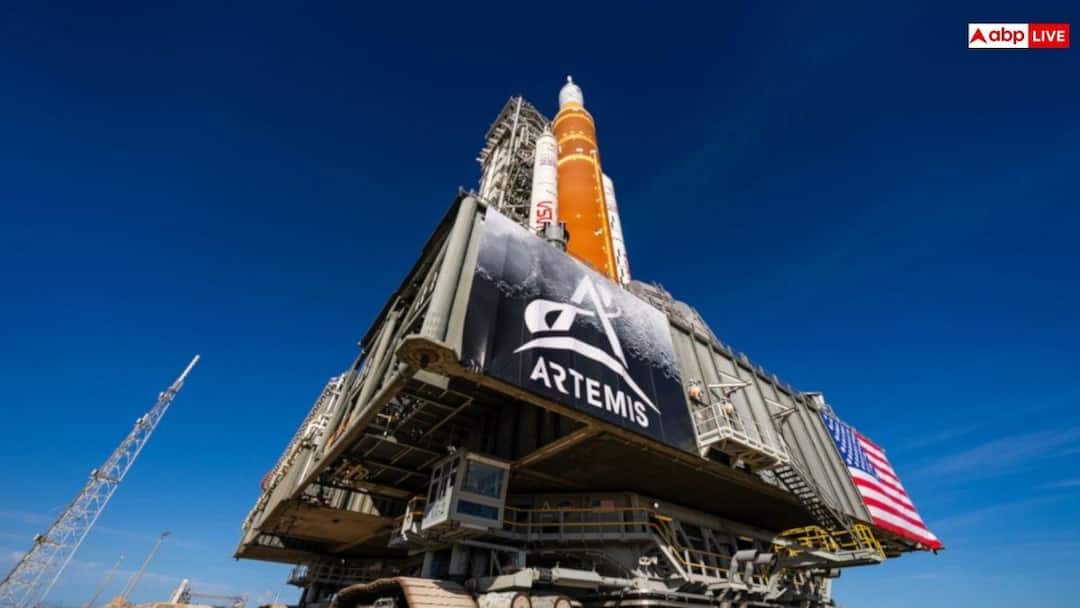
Artemis II Mission: NASA has completed the process of moving the Artemis II rocket to the launch pad at Kennedy Space Center. In the future, Artemis II will be able to send humans further away from Earth than ever before. In this, four astronauts will go into lunar orbit without landing on the Moon. Meanwhile, let us know which countries are involved in this mission and who has what responsibilities.
united states
The United States is the backbone of this mission through NASA. NASA designed and built the powerful Space Launch System and the Orion Group capsule, which will carry astronauts around the Moon. Three of the four astronauts on board are Americans. Reed Wiseman as Commander, Victor Gloval as Pilot and Christina Koch as Mission Specialist. Their work ranges from spacecraft control and navigation to system testing in deep space.
In addition to launch and mission operations, the US Navy also plays a major role by recovering the Orion capsule and crew from the Pacific Ocean after splashdown.
Europe
Europe’s contribution comes through the European Space Agency. He has created the European Service Module, one of the most important components of the mission. This module serves as the engine room of the Orion spacecraft. It supplies electricity, water, oxygen and nitrogen to the astronaut. Not only this but it also controls propulsion and temperature regulation. The European Service Module is a continental effort. Airbus is leading it in Germany. Besides, Italy and France along with more than 10 European countries have contributed in this.
Canada
Canada is playing a historic role in this mission through its human presence and long-term technical contribution. Canadian Space Agency astronaut Jeremy Hansen will fly as a mission specialist. He will become the first non-American citizen to travel near the Moon. He has been entrusted with the responsibility of monitoring the spacecraft system and assisting in mission experiments.
Japan
Although there is no Japanese astronaut in the crew of this mission, but Japan Aerospace Exploration Agency is a major strategic partner. Japan is providing technical expertise and scientific cooperation.
Rest of the countries and CubeSat missions
Artemis II is also receiving contributions from other countries. Countries like Germany, Argentina, South Korea and Saudi Arabia are sending CubeSats. These are small research satellites that will be deployed during the mission. Apart from the immediate mission partners, more than 60 countries along with India have signed the Artemis Agreement. These agreements are designed for peaceful lunar exploration, transparency, scientific data sharing and responsible use of space resources.
Also read: Under whom does BMC work, can’t PM Modi interfere in its functioning?