
 By Admin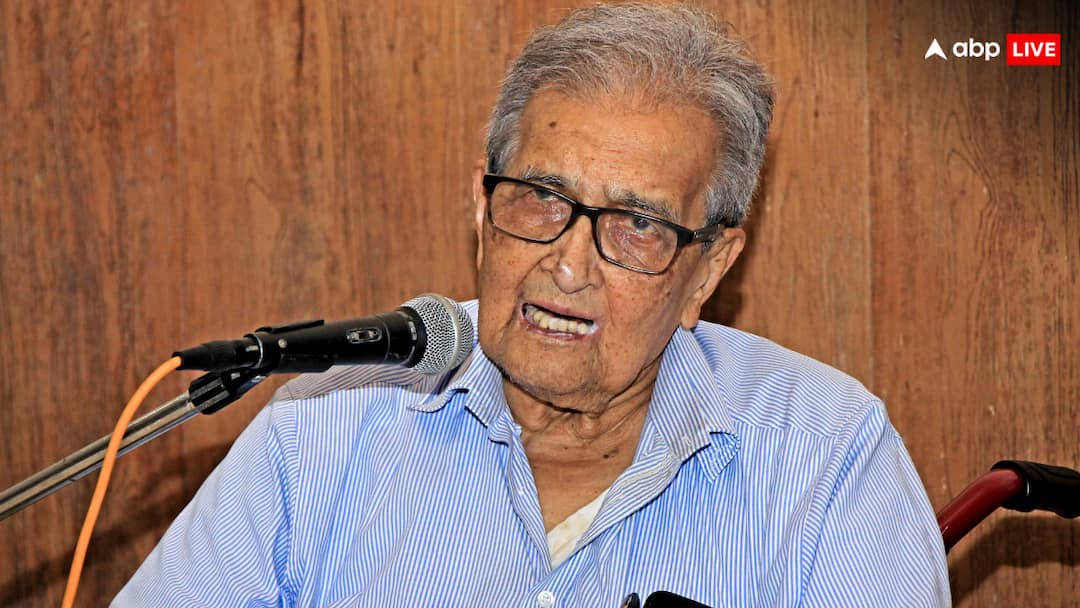
Nobel Prize winning economist Amartya Sen has expressed deep concern about the ongoing Special Intensive Review (SIR) process in West Bengal. He has warned that this exercise is being done in unnecessary haste and it could jeopardize democratic participation before the assembly elections to be held in a few months.
Reflecting on the democratic importance of voter list revision, he said that this process can strengthen voting rights only if it is carried out with care and taking adequate time. According to him, both these conditions are missing in the case of Bengal.
This is injustice to the voters: Amartya Sen
92-year-old Amartya Sen said in an interview to PTI in Boston, USA, ‘If a thorough revision of voter lists is done carefully and with sufficient time, it can be a good democratic process, but at present this is not happening in West Bengal.’
He said, ‘The SIR exercise is being done in a hurry and people having voting rights are not getting adequate opportunity to submit the necessary documents to prove their rights for the upcoming assembly elections. This is not only unfair to the voters, but also unfair to Indian democracy.
Even Election Commission officials do not have time: Sen
Sharing his experience during the SIR of voter lists in Bengal, Sen said that the pressure of time is clearly visible on the election officials also. He said that sometimes the Election Commission officials do not have enough time.
He said, ‘Even though I have already voted from Shanti Niketan and my name, address and other details are recorded in the official records, my voting rights were questioned. I was asked about my late mother’s age at the time of my date of birth, even though my mother’s details were also available in the records of the Election Commission.
Sen shared his experiences regarding SIR
The eminent economist also mentioned the documentation difficulties that are common for many Indians born in rural areas. He said, ‘Like many Indian citizens born in rural India (I was born in the then village Shantiniketan), I do not have a birth certificate and additional documents were required to be submitted on my behalf for my eligibility to vote.’ Although his case was resolved, he expressed concern for those who do not have access to such help.
He sarcastically said that he got through the process with a little help from friends, but not everyone has such supportive friends. Sen said, ‘Even though I can happily say that oh, I managed with a little help from my friends, but I worry about those who do not have such loyal friends. My friends helped me overcome the tough hurdle of the powerful Election Commission.
Democratic integrity should remain paramount: Sen
90-year-old Sen was summoned for hearing after the commission found a logical discrepancy in the age difference between him and his mother Amita Sen in the voter list. When asked whether any political party could benefit from SIR, Sen said he could not give a definite answer. He said that democratic integrity should remain paramount.
He said, ‘I am not an expert on elections, so I cannot give a definite answer to this question. People with more knowledge than me have told me that BJP will benefit from less counting. He further said, ‘I don’t know whether it is right or not, but the real issue is that the Election Commission should not insist on any flawed system and should not force our proud democracy to make any unnecessary mistakes, even if no one benefits from it.’
The most deprived and poor people will be affected by this process.
Discussing the groups most at risk of being left out during SIR, Sen pointed to the structural inequalities faced by poor citizens. He said, ‘The obvious answer is that the deprived and poor sections will be most affected. The documents required to be included in the new voter list are often difficult to obtain for the weaker sections of the society.
He said, ‘The class bias reflected in the compulsion to collect and show specific documents to determine eligibility for enrollment in the new voter list, naturally works against the poor class.’
Also read: When will America remove the 25% tariff imposed on India for purchasing Russian oil? A person close to Donald Trump gave this answer