
 By Admin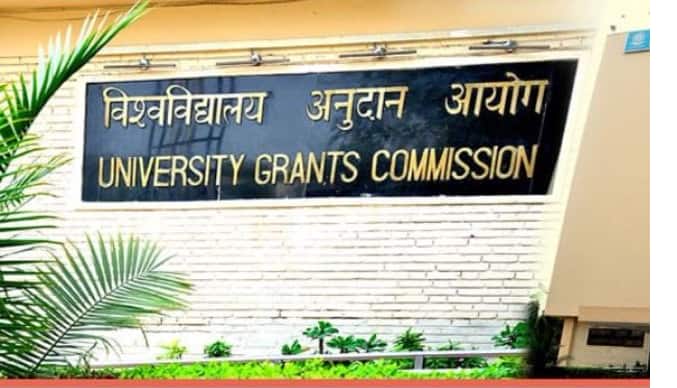
With the intention of eliminating discrimination in higher education institutions, UGC has implemented the new Equity Rules of 2026. Student organizations have considered this a positive step, but at the same time the debate has also intensified whether these rules will remain just paper reforms or will they actually provide justice to the marginalized students.
The objective of the University Grants Commission (Promotion of Equality in Higher Education Institutions) Rules, 2026, issued on January 13, is said to be to prevent discrimination on the basis of religion, caste, sex, place of birth or disability. All India Students Association (AISA) has welcomed these guidelines, but the organization says that these rules did not come suddenly, but are the result of years of pressure from student movements and institutional failures.
Student deaths revealed layers of the system
AISA President Neha and General Secretary Prasenjit said that cases like Rohit Vemula, Payal Tadvi and Darshan Solanki highlighted how deeply caste oppression exists in universities. These incidents also proved that the UGC guidelines of 2012 were not effective at the ground level. According to AISA, the new rules are a forced move following social anger and judicial interventions.
Inclusion of OBC, an important but late step
In the rules of 2026, backward class i.e. OBC has also been brought under the ambit of equality and security. Student organizations consider this a constitutionally necessary and welcome change. He says that till now the discrimination against backward castes has been continuously ignored at the legal and institutional level.
EOC expansion and new arrangements
The role of Equal Opportunity Centers (EOC) has been made broader than ever before in the rules. Now these will not be just advisory units, but arrangements like Equity Committee, 24-hour Equity Helpline, Equity Squad and Equity Ambassador have also been proposed to investigate complaints.
Conflict of interest hidden in the structure
AISA alleges that the rules did not make it mandatory that the EOC coordinator or the chairperson of the equity committee be from a marginalized community. On the contrary, the head of the institute has been made the ex-officio chairperson. Due to this, the real power once again gets confined in the hands of the head of the institution and questions are raised on impartiality.
Still fog on representation
The situation regarding representation of SC, ST, OBC and women in the Equity Committee is not clear. Be it faculty or students, the terms of representation are said to be vague and incomplete, which casts doubt on the effectiveness of the committee.
Definition of discrimination, shield for the powerful
The definition of discrimination in the rules has been kept very broad and abstract. The lack of reference to any concrete action or example leaves institutions free to interpret it arbitrarily. Critics believe that this blurring can become a way to avoid accountability.
Statistics that raise concerns
UGC data itself shows that between 2019 and 2024, there has been a 118 percent increase in complaints of caste-based discrimination in higher education institutions. AISA calls this a result of the caste structure created at the institutional and state level.
Student organizations believe that although the coming of rules is positive, it is a step taken too late. Without major and concrete reforms, these guidelines may remain mere cosmetic progressivism, which may appear strong on paper but prove weak in practice.
AISA demands, accountability along with rules is necessary
Welcoming the UGC Equity Regulations, 2026, AISA has demanded that necessary amendments should be made in it soon. The organization says that without real accountability, meaningful representation and real protection for marginalized communities, these rules will not be able to fulfill their purpose.
Also read – UGC New Rules: Why are general category students protesting against the new UGC rules? Know the whole matter
Education Loan Information:
Calculate Education Loan EMI