
 By Admin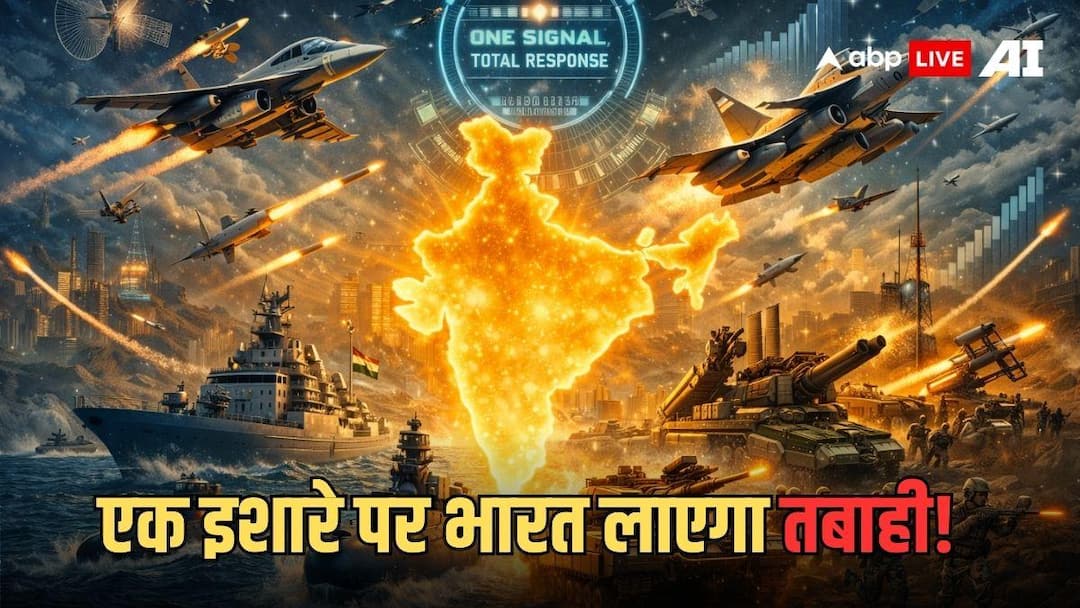
India’s three forces, Army, Navy and Air Force, are now going through a major change. This change is coming in the form of integrated theater commands, which will make the army more agile, united and stronger. India’s military is now at an inflection point. That means, we are moving from the old system to the new, modern system.
What are theater commands and why are they important?
According to the report of Hindustan Times, at present the three services in the Indian Army (Army, Navy, Air Force) work separately. Each service has its own network, doctrine, intelligence and command system. If the army needs air support, it has to go through many layers, which causes delays. This is an old system dating back to the British Raj, where services work in separate ‘silos’ (separate rooms).
But now there will be these major changes in theater commands:
- On the basis of geographical areas (theaters), all three services will be brought under one commander.
- A single commander will control the troops, weapons and resources of all the services.
- Decisions will be faster, operations will be more precise and unified.
- This will also include cyber, space and other domains.
It is already in big armies like America, China and Russia. China has 5 theater commands, which are very effective. This is necessary for India because there is a threat from both China and Pakistan in the neighborhood and security has to be increased in the Indian Ocean as well.
How many theater commands will India have?
Now the matter has reached three theater commands. These:
1. Western Theater Command: Mainly focus on Pakistan.
2. Eastern Theater Command: Focus mainly on China.
3. Maritime Theater Command: Security of the Indian Ocean, 7,000 km coast, 1,062 islands and neighboring countries (Maldives, Sri Lanka, Myanmar, Bangladesh, Nepal, Mauritius, Seychelles).
The existing tri-service command of Andaman and Nicobar is under CDS. There is discussion on including it in Eastern or Maritime, because China is the main threat. Pakistan and China are also facing the challenge of how to handle the Northern Command.
When was the plan for Integrated Theater Command made?
- The Kargil Review Committee of 1999 had recommended CDS and theater commands.
- On August 15, 2019, Prime Minister Narendra Modi created the CDS post.
- The first CDS, General Bipin Rawat, rapidly escalated theater commands through a top-down approach, but he died in a helicopter crash in December 2021, bringing the work to a halt.
- Now CDS General Anil Chauhan is working with bottom-up, consensus approach. Both CDS consider theater commands as essential.
- General Chauhan has created a unified communication backbone, through which the commanders of the three services can talk directly.
- Defense Minister Rajnath Singh approved the concept in principle. NSA Ajit Doval saw the proposals. All three service chiefs and CDS agreed in a document.
- PM Modi gave the directive to create theater commands at the Combined Commanders Conference in Kolkata in September.
Now the note will be sent to the Cabinet Committee on Security (CCS). This can happen before the retirement of General Chauhan on 30 May 2026.
Big signal of big preparation for Budget 2026-27
Finance Minister Nirmala Sitharaman presented the budget on 1 February 2026. Capital expenditure i.e. new purchases have been increased by 22% in the defense budget. There has been a 24% increase in the modernization budget. This budget is the ‘first hard indicator’ for theater commands that the government is serious. This money will go for infrastructure, integrated commands, new assets. Its focus is to increase indigenous manufacturing and dominance in Asia.
Decision taken as per the lessons learned from Operation Sindoor
After the Pahalgam attack in 2025, for the first time in Operation Sindoor, Service Chiefs and CDS sat in one room and coordinated. The result was that there should be a swift and precise attack on the terror camps. PM Modi said, ‘Do whatever you want’ i.e. no micromanagement. This shows the benefits of operation theater commands.