
 By Admin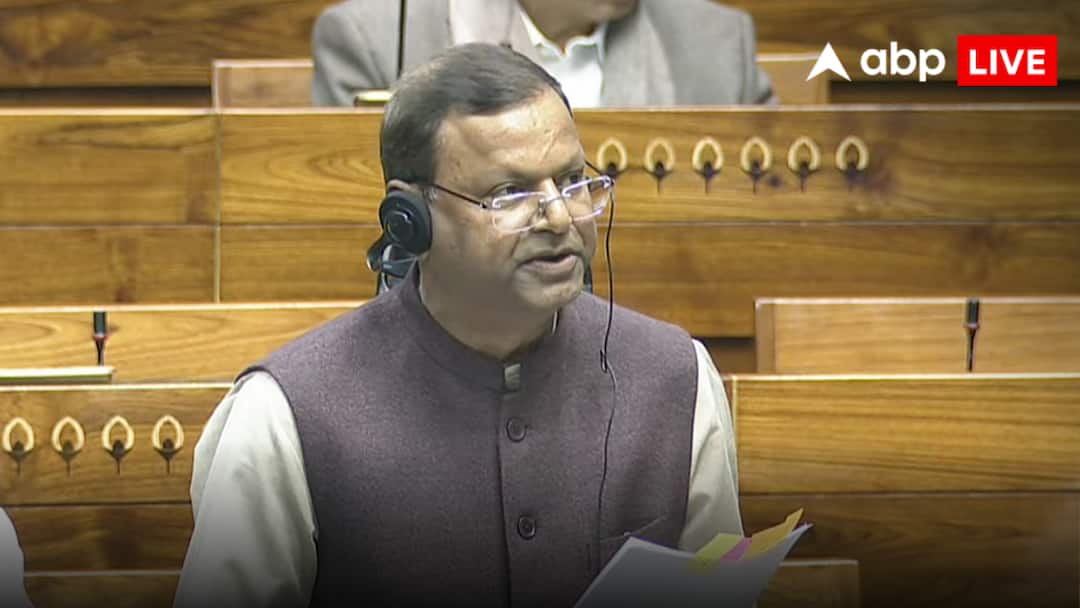
Questions have once again been raised in Parliament regarding large-scale loan write-offs by banks in the country. Lok Sabha MPs Babu Singh Kushwaha, Devesh Shakya and Neeraj Maurya asked the government why loans worth about Rs 12.3 lakh crore were written off by public and private sector commercial banks between the financial year 2015 to 2024 and whether any concrete reforms are proposed to improve the recovery system.
Along with this, the MPs also questioned that when the profit condition of the banks has improved and the gross non-working assets i.e. GNPAs have declined, then why 42,000 loans were written by the public sector banks in the first half of the financial year 2025.
Write off does not mean loan waiver: Minister of State for Finance
Answering these questions, Minister of State for Finance Pankaj Chaudhary clarified in the Lok Sabha that loan write off does not mean loan waiver. He said that under the guidelines on “Resolution of Stressed Assets” of the Reserve Bank of India, banks adopt the process of write off, so that their balance sheet can be cleaned of bad loans. According to the minister, such loans are usually those which are either considered ineligible or whose recovery requires the bank to invest excessive resources. In many cases these are written for technical or prudential reasons, especially when full provision has been made for them for four years.
The responsibility of the lender does not end
The government clarified that even after the loan is written off, the liability of the lender does not end. The individual or company taking the loan is still responsible for making the full repayment. Banks continue the process of recovery in such accounts continuously. The minister said that recovery of written off loans is a continuous process and banks use all options available under the law. These include filing cases in civil courts and debt recovery tribunals, action under the SARFAESI Act and taking the case to the National Company Law Tribunal under the Insolvency and Bankruptcy Code or IBC.
What steps were taken to strengthen the recovery system
The government and RBI have made several major reforms over the years to make the recovery mechanism more effective and timely. The minister said that after the implementation of IBC, there has been a big change in the relationship between debtor and creditor. Now the control of defaulting companies is removed from the promoters and those who deliberately default on loans are kept out of the resolution process. Apart from this, a prudential framework has been implemented for resolution of stressed assets, thereby enabling early identification and timely resolution of bad loans. Public sector banks have also created special stressed asset management units and branches for this.
How much loan was written off in the first half of FY25
Citing the provisional data of RBI, the Minister of State for Finance said that in the first half of the financial year 2025, public sector banks have written off loans worth about ₹ 35,096 crore. He said that NPAs are a normal but undesirable part of the banking business, which arise due to several economic and administrative reasons. These reasons include weak global business environment, pressure in some sectors, lack of proper risk assessment at the time of giving loans, delay in projects and increasing costs.
Big decline in GNPA, banking system strong
The government also said that the condition of the country’s banking system has become much better than before. Gross non-working assets were 14.58 percent of total debt in March 2018, which has come down to 2.30 percent by September 2025. This is being considered a major reformative achievement for the banking sector. RBI has given the responsibility to the boards of banks to ensure effective monitoring to reduce NPAs and write offs. Along with this, strict rules have also been implemented on pre and post loan approval investigation, risk management and accountability of employees.
Accountability of officers also fixed
The Finance Ministry said that under the board-approved staff accountability policy of banks, it is ensured that if any loss is caused due to negligence, wrong decision or non-following of prescribed procedures by any officer, then action should be taken against him. The government says that the purpose of all these steps is to reduce loan write offs in future, strengthen the recovery system and make the banking system more transparent and responsible.
Also read: Prasannajeet of Balaghat released from Pakistan jail, told his sister on phone call – I do not have a ticket.