
 By Admin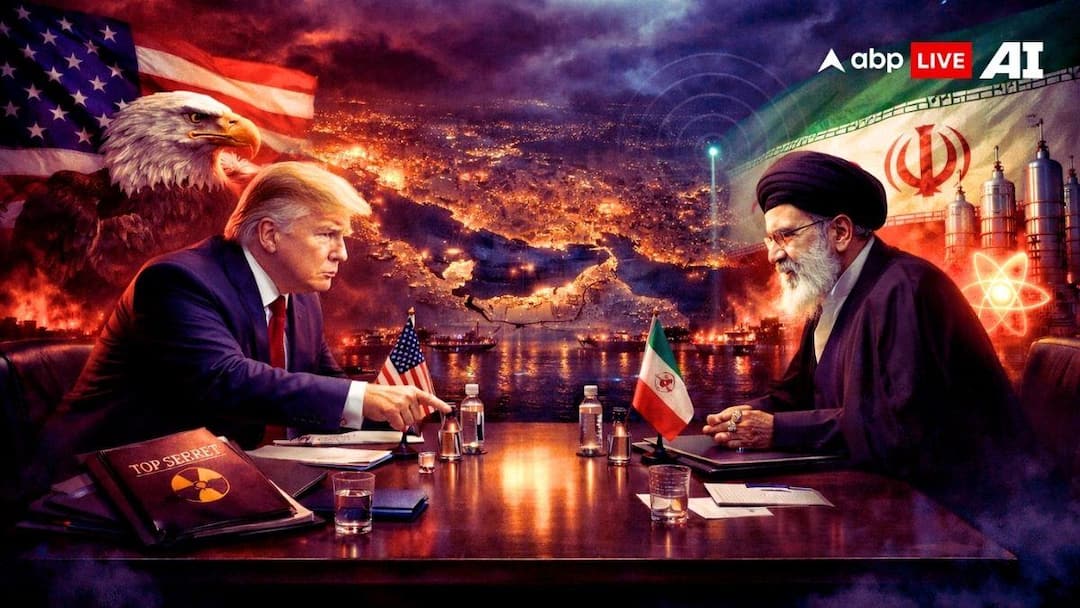
There is going to be a big discussion between America and Iran today i.e. on Friday in Muscat, the capital of Oman. These talks will be held on Iran’s nuclear program, but despite this, there are deep differences between the two sides regarding the agenda. America is also insisting on including Iran’s missile program, local proxy groups and human rights issues, while Iran wants to limit the talks only to the nuclear issue and lifting of sanctions.
Oman was chosen for the meeting instead of Istanbul.
Iran’s Foreign Minister Abbas Aragchi has told on X that the talks will take place in Muscat at 10 am on Friday. He thanked the brothers of Oman for the arrangements. The American team will include Trump’s special envoy Steve Witkoff and the President’s son-in-law Jared Kushner. Oman is playing the role of mediator between the two countries, because Iran had demanded to change the venue from Istanbul to Oman at the last moment and insisted on a bilateral format.
Trump’s priority diplomatic discussion
US President Donald Trump is giving priority to diplomacy, but has also warned of military action in case of failure. Trump has said that ‘bad things’ will happen to Iran and Supreme Leader Ayatollah Ali Khamenei should be worried. White House Press Secretary Caroline Leavitt said Trump is seeking ‘zero nuclear capability’ and has ‘many other options’. Secretary of State Marco Rubio said that any agreement would have to include missiles, proxy groups (such as Hamas, Hezbollah), and domestic repression.
Despite talks, weapons from both countries deployed
Iran claims that its nuclear program is completely peaceful, but America and Israel doubt it. Despite this, tensions have increased in recent times:
- US fighter jets destroyed an Iranian drone in the Arabian Sea, which came aggressively close to the ship.
- America has deployed Abraham Lincoln Carrier Strike Group in Iranian territory.
- Thousands of extra troops, aircraft carriers and surveillance planes have been sent around Iran.
- Iran has also deployed Kroramshahr-4 ballistic missile.
The talks are taking place amid rising tensions over the past few months, including US pressure over Iran’s missile program and regional influence. A few days ago, there was news of the talks being canceled, but many leaders of the Middle East (including Gulf countries) put pressure on the White House, after which they started again.
Gulf countries worried about Iran’s retaliatory attacks
America is confused whether the talks will be successful or not. Regional leaders such as Turkey’s Erdogan and Germany’s Chancellor have called for an end to the conflict, while Gulf Arab states are worried about Iranian retaliatory attacks from the US attack. This dialogue is important at the global level, because if it fails, the risk of direct military conflict in the Middle East may increase. However, no concrete result has been achieved yet and both sides are adamant on their ‘red lines’.