
 By Admin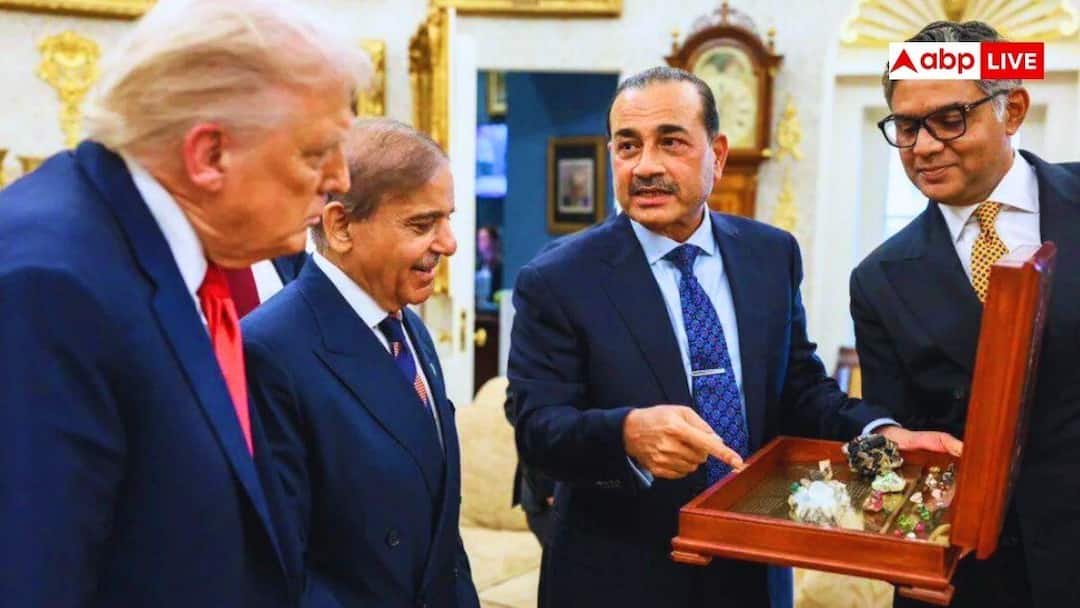
The Trump administration has expressed confidence in Pakistan Army Chief Field Marshal Asim Munir in the matter of important minerals, but according to a report, this bet is going to fail. Pakistan’s internal instability, increasing power of militants and American weapons reaching their hands are weakening this partnership.
Munir lured Trump with critical minerals
According to the report of Times of India, Pakistan has offered major minerals to America, because the Trump administration is focusing on critical minerals like copper, lithium, cobalt, gold, rare earth to reduce China’s hold. The main project is Reko Diq in Balochistan, which:
- One of the largest undeveloped copper-gold deposits in the world.
- Barrick Gold (Canadian company) has 50% stake, Government of Pakistan has 25% stake and Government of Balochistan has 25% stake.
- In December 2025, the US Export-Import Bank approved financing of $1.25 billion.
- Pakistan claims that it has mineral reserves worth up to $8 trillion.
- In September 2025, Prime Minister Shahbaz Sharif and Munir showed a box of rare earth minerals to Trump at the White House. Trump had called Munir ‘my favorite field marshal’.
Why are critical minerals important for Trump?
China has more than 90% of rare earth processing in the world. In the future, due to EV, AI and electrification, the demand for copper may double by 2050. For this reason America wants an alternative supply chain.
But why might this bet fail?
The minerals are mostly in Balochistan and Afghan border areas, where the security situation is deteriorating. There are 5 big reasons why Trump’s bet failed:
1. Militants better equipped: American weapons (M-16, M-4, M249 machine guns, Remington sniper rifles, night vision devices) left behind after the US withdrawal from Afghanistan in 2021 are now with groups like TTP, BLA and ISKP. CNN showed more than 100 such weapons in Pakistani border areas, whose serial numbers showed that they were given to Afghan forces. Now instead of IED, attacks are using long range firing and night attacks. Allah Uddin, a Pakistani soldier, said he was angry after losing both his legs in the ambush because the militants’ weapons were ‘different and better’.
2. Increasing violence in Balochistan: Balochistan Liberation Army (BLA) carried out coordinated attacks in January 2026, which resulted in more than 33 deaths. Pakistan launched ‘Operation Radd-ul-Fitna-1’ and claimed to have killed 216 militants, but 36 civilians and 22 security personnel were also killed. 2025 was the most dangerous year of Balochistan. There were more than 254 attacks at that time, in which more than 400 deaths occurred. Militants are now hijacking trains, blocking highways and occupying areas.
3. Impact on Reco Dick: Barrick Gold CEO Mark Hill said in February 2026 that the company was conducting a full review of the project. Investors are afraid whether the project will be able to start in 2028 or not.
4. Afghanistan Connection: The Taliban have captured the weapons and Pakistan accuses them of providing shelter to the militants. Trump asked for weapons back, but has not achieved any success.
5. Attacks increased after power went into the hands of Munir: On 6 February 2026, a suicide bombing took place at the Khadija Tul Kubra Shia Mosque in Tarlai Kalan on the outskirts of Islamabad. In this attack, 31 to 32 people were killed and more than 160 to 170 were injured. The attack took place during Jumma prayers, where the bomber wore an explosive vest and detonated himself. Islamic State (ISIS) took responsibility for this. Earlier in November 2025, there were 12 deaths outside the court. This clearly showed the weakness of security even in the capital of Pakistan, where General Munir and the government make tall claims.
So what will be its consequences?
Pakistan has taken help from IMF 24 times. Because of this, there is hope for mineral economic recovery. But without benefits to local people and political support, the projects will remain unsafe. Pakistan was a ‘hedge’ in Trump’s anti-China strategy, but now it is being weakened due to security risks. While Pakistan and China remain CPEC and ‘all-weather’ friends, Pakistan is playing a two-sided game. Without dialogue, development and power-sharing, these minerals may remain buried in the ground.