 By Admin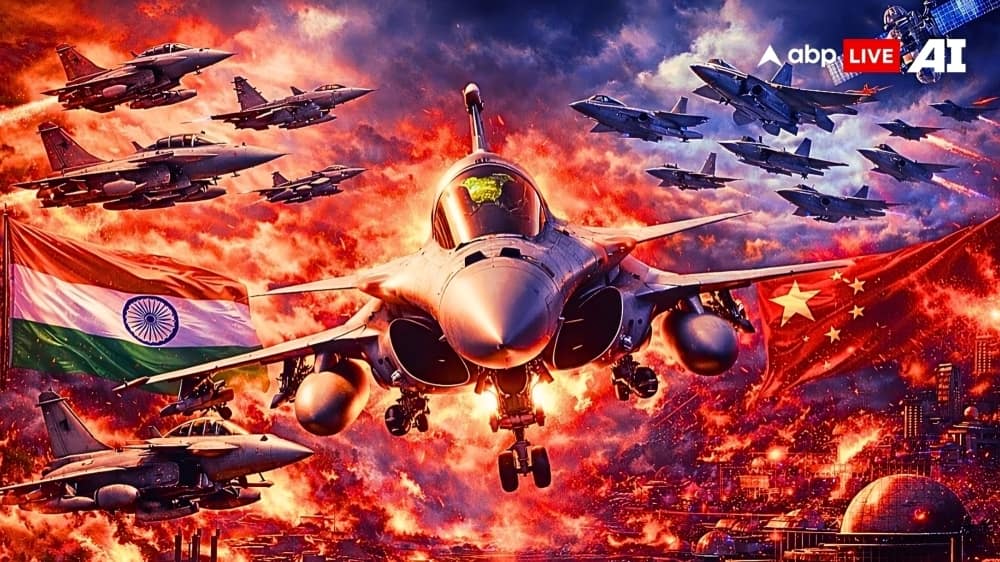
When India recently announced the purchase of 114 new Rafale fighter jets, there was a wave of happiness everywhere. Why not, this is the same deadly fighter plane which defeated Pakistan in Operation Sindoor. But it is also true that India’s biggest neighboring enemy is China, which is far ahead of India in terms of fighter jets. Even after the arrival of 114 Rafale, India will not be able to catch up with China. But why and how? Let us know…
Question 1: What is India’s 114 Rafale deal, and what is its status?
answer: India’s 114 Rafale deal is part of the Multi-Role Fighter Aircraft (MRFA) programme, which is meant to provide air superiority to the Indian Air Force. On 12 February 2026, the Defense Acquisition Council (DAC) approved the Acceptance of Necessity (AoN) for this deal. This deal is with France’s Dassault Aviation Company and 114 Rafale jets are to be purchased. 90 jets will be made in India, which will have 50% indigenous content. The total price of 114 Rafale jets is around Rs 3.25 lakh crore.
India has already inducted 36 Rafales from the 2016 deal and a deal for 26 marine variants was signed last year. With the addition of 114 new Rafales, India’s strength will increase manifold. This means that India will be able to compete with its most powerful neighboring enemy, China. But wait… first let us know what is the status of the existing fighter jets with India and China.

Question 2: How many 4th generation and above fighter jets does India have?
answer: According to the report of Global Firepower, by February 2026, India has 480 to 485 fourth generation and above fighter jets, which are considered the backbone of the Indian Air Force…
- Sukhoi SU-30MKI: It is a 4.5 generation heavy-duty twin-engine fighter jointly developed by Russia and India, which is the biggest strength of the Indian Air Force. India has 263 Sukhoi. Its supermaneuverability, canard delta wing design and advanced avionics systems make it unmatched in air-to-air and air-to-ground attacks, where it can carry long-range missiles like BrahMos. Under the upgrade plan, 84 jets are being made more advanced, which can magically change the game in air combat with its thrust vectoring technology.
- Dassault Rafale: This 4.5 generation twin-engine delta wing multi-role fighter from France is considered the pride of the Indian Air Force. India has 36 Rafale jets, which include 28 single-seat EH and 8 double-seat DH. Rafale has proved its strength in missions like Operation Sindoor. Equipped with advanced AESA radar, electronic warfare systems and Meteor and Scalp missiles, this jet also has high maneuverability and stealth-like features, which is adept in carrying out precise attacks while avoiding enemy radar. In the coming time, this fleet will be further strengthened with the purchase of 114 more Rafales, giving India new heights in long-range strike capability.
- HAL Tejas: India’s fourth generation indigenous lightweight single-engine delta wing fighter, of which 30 MK-1 variants are active, is a symbol of the flight of self-reliant India. Equipped with fly-by-wire controls, advanced AESA radar upgrades and internal weapons bay, this jet is the king in multi-role missions, including air-to-air refueling and precision strikes. 141 MK1A variants are on order, which will give new impetus to India’s air defense with its low radar cross-section and high-speed performance.
- Dassault Mirage 2000: France’s fourth-generation single-engine delta wing multi-role fighter, of which 36 H/I variants are active in India, excels in high-speed interception. The upgraded 2000I standard with improved avionics and weapons compatibility enables it to perform air-to-ground strikes and reconnaissance missions. It can carry laser-guided bombs. This jet, which became famous for its role in the Kargil war, still keeps India’s air superiority strong.
- Mikoyan MiG-29: It is a fourth generation twin-engine supermaneuverable fighter of the Soviet Union, of which 59 jets are active in the Indian Air Force. It plays a big role in air defense. The UPG variant has an upgraded radar, glass cockpit, and increased engine thrust making it specialized in ground attack and interception, where it uses BVR missiles. This jet, deployed on the borders of India, keeps an eye on the movements of the enemy and gives quick response in the war.

Question 3: How many 4th generation and above fighter jets does China have?
answer: According to the Global Firepower report, by February 2026, China is expected to have about 1,600 to 1,800 4th generation and above fighter jets, making the People’s Liberation Army Air Force (PLAAF) the world’s fastest growing and modern air force…
- Chengdu J-20: It is China’s main 5th generation stealth fighter, with more than 300 jets active in February 2026 and this number is increasing rapidly. The twin-engine, heavy-weight air superiority fighter features a stealth design, AESA radar, supercruise (with WS-15 engines) and long-range PL-15/PL-21 missiles. With this, it can destroy the target from a distance of 100 km while avoiding enemy radar. The new variants include maritime strike and twin-seat J-20S, which give the PLAAF a strong deterrence in the Indo-Pacific.
- Shenyang J-16: 4.5 generation multi-role strike fighter, with approximately 450 jets active and projected to reach 900 by 2030. Developed on the basis of SU-30, this twin-seat jet is equipped with AESA radar, electronic warfare systems and large weapons payload (anti-ship, ground attack), making it adept in high-speed and long-range operations. It is the main multi-role force of the PLAAF, adept at both air-to-air and air-to-ground missions.
- Chengdu J-10: It is a 4th/4.5 generation lightweight multi-role fighter, of which more than 600 jets are in service. This single-engine, delta-canard designed jet is equipped with high manoeuvrability, AESA radar and BVR missiles like PL-15. These features make it expert in air defense and ground attack. The J-10C variant is the most advanced and accounts for the largest share in the PLAAF’s numbers.

- Shenyang J-11: It is a 4th generation air superiority fighter jet, whose number is around 400. The twin-engine, heavy fighter includes advanced avionics, thrust vectoring and long-range missiles, making it strong in long-range interception. Although the older variants are gradually being retired, the upgraded J-11B still holds a major responsibility.
- Sukhoi Su-30MKK/MK2 and Su-35S: There are above fourth generation multi-role fighter jets of Russian origin, the total number of which is more than 150. These are equipped with high manoeuvrability, long-range radar and multi-role capability, but China is now gradually replacing them with the domestic J-16. These are still used in training and special missions.
Question 4: So will India remain behind China even after the arrival of 114 Rafale and why?
answer: After the arrival of 114 Rafale, India will have a total of 176 Rafale jets and the total fleet of fighter jets will reach above 600. But the main reason for lagging behind China is China’s numerical superiority, where it already has more than 1,800 fighter jets.
China is making more than 200 new fourth and fifth generation jets every year. China has more than 300 5th generation jets like J-20, which are ahead of any Indian jet in stealth and long-range strikes, whereas India does not yet have any 5th generation jet.
According to the report of the International Institute of Strategic Studies (IISS), Rafale is 4.5 generation, which is better than J-10 or J-11, but it will be difficult to compete with the stealth and sensor fusion of J-20. Also, the squadron strength of the Indian Air Force is currently 30, while the sanctioned strength is 42 and due to the two-front challenge of China-Pakistan, India needs more jets.
Question 5: Will this situation of India ever change? What will happen next?
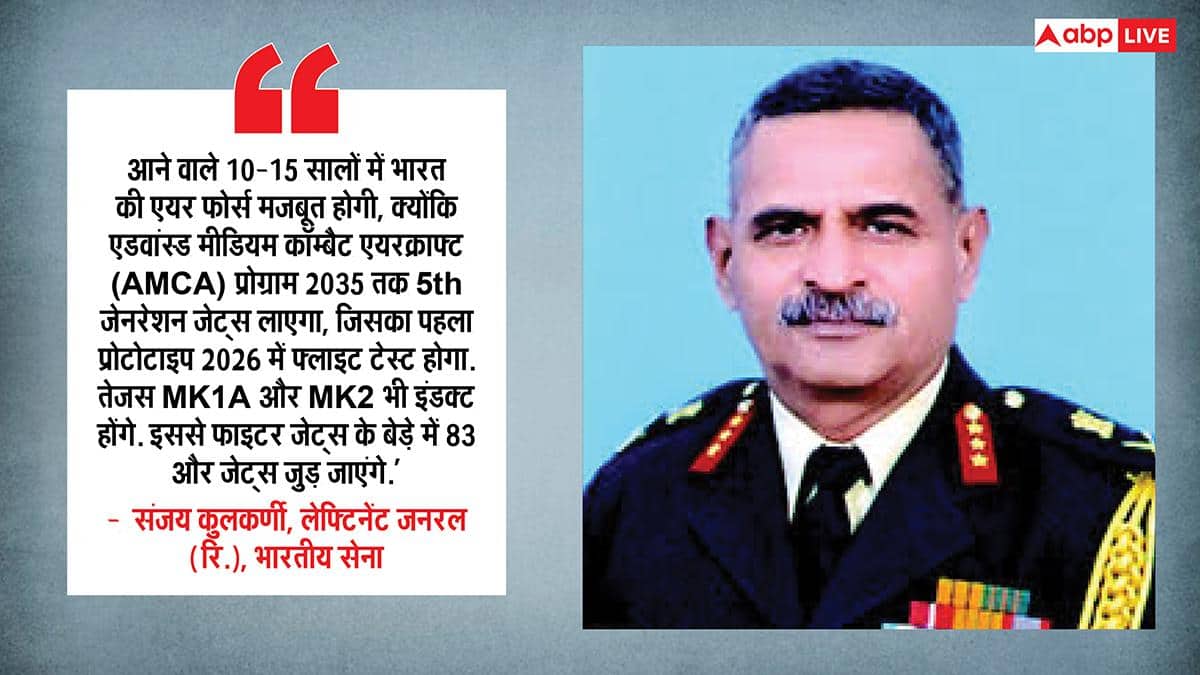
answer: HAL Chairman Dr. D.K. According to Sunil’s report of June 25, 2025, 6 Tejas will be delivered by March 2026. With this, India’s squadron strength will reach 42 and 450 jets can be deployed on the China-Pakistan border. But China is working on 6th generation jets, which will have AI and hypersonic speed. India’s deterrence capability will increase in the coming years, as shown by Rafale in Operation Vermillion (2025), but if China’s production speed continues, India will have to import more or accelerate indigenous programs, otherwise the gap in air superiority will remain.