
 By Admin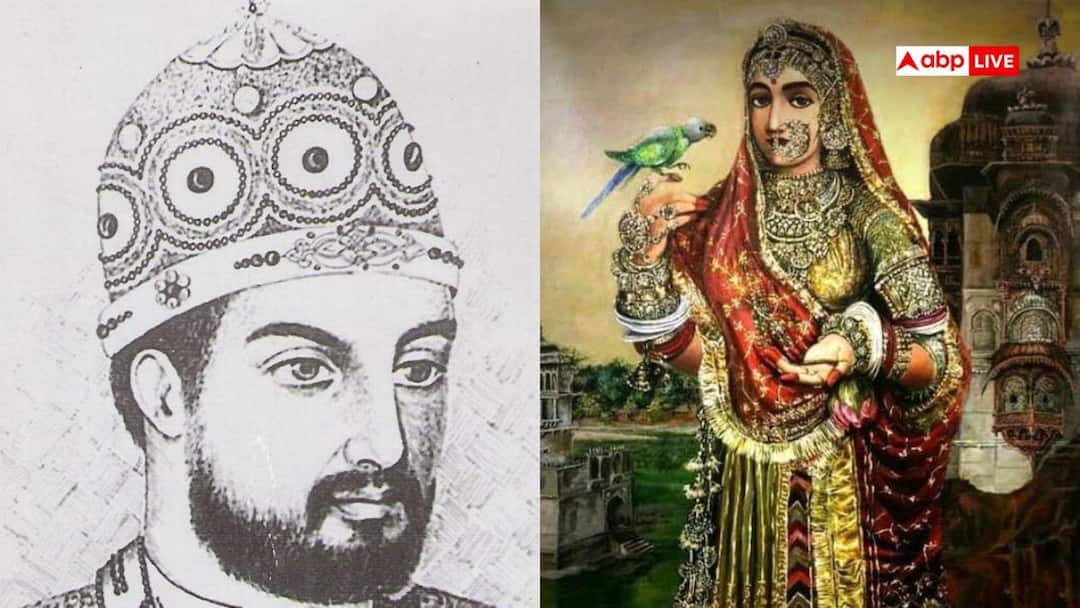
One name still resonates in the land of Chittor – Rani Padmini. Some consider her the true queen of history, while others consider her a poetic imagination. On one side is the story of the flame of Jauhar, on the other side is the silence of history books. The question still remains whether Alauddin Khilji really attacked Chittor because of its beauty, or was there a game of politics and power behind it? This debate between history and folklore continues even today.
Queen of Chittor – History or Folktale?
Queen Padmini, also known as Padmavati, is considered a symbol of bravery and honor in Indian folklore and Rajasthani tradition, but there is disagreement among scholars about her historical existence. Some historians believe that the stories related to his life are derived from later literary works, while others believe that a character so deeply embedded in folk tradition cannot be called completely imaginary. Alauddin Khilji attacked Chittor in 1303 AD – this fact is recorded in history. At that time the fort of Mewar was very strong and strategically important.
Why did the attack happen?
Khilji’s Chittor campaign has been mentioned by his court poet Amir Khusro in his work ‘Khazain-ul-Futuh’. According to Khusro, this attack took place due to political and military reasons. The Delhi Sultanate was expanding its borders and the Chittor fort stood in its way as a major power. The special thing is that there is no mention of Queen Padmini or her beauty anywhere in Khusro’s description. Historian K.S. Scholars like Lal argue that if the desire to have a queen was the real reason for the attack, then court historians would definitely have mentioned it.
Similarly, the story of Padmini is not found in contemporary writers like Ziauddin Barani and Ibn Battuta. This deepens the question whether the story of Padmini came from history or from later literary tradition.
Padmavat and expansion of the story
The most detailed description of Rani Padmini is found in the Sufi poem ‘Padmavat’ written in 1540, which was composed by Malik Muhammad Jayasi. This work was written approximately 237 years after Khilji’s attack. Jayasi had clearly said that his book is not a history but a Sufi allegory. In this, Padmini is described as the princess of Sinhaladweep, whom King Ratan Singh of Chittor marries. Later the news of her beauty reaches Khilji and he moves towards Chittor. Famous critic Ramchandra Shukla has also described ‘Padmavat’ as not a historical document but a symbolic poetry in which the characters have spiritual meaning.
Question on mirror story
According to the popular story, Khilji made a condition to Rawal Ratan Singh that he would only see the glimpse of Queen Padmini in the mirror, but historians believe that this incident is a part of literary imagination. There is no evidence of this in contemporary documents. Historians consider this story to be a later creation, the purpose of which was to make the image of the heroine more impressive.
Tradition and memory of Jauhar
In Rajput tradition, Jauhar is associated with honor and self-respect. Jauhar took place after the defeat of Chittor in 1303 – this is recorded in many historical sources. However, it cannot be said with certainty that it was Padmini who led that Jauhar. Still, the character of Queen Padmini remains alive in popular belief as a symbol of Jauhar, courage and protection of honour. History may raise questions, but his image remains firm in the public mind.
Also read: What is the difference between the Parliament of Bangladesh and the Parliament of India, how do both work?