
 By Admin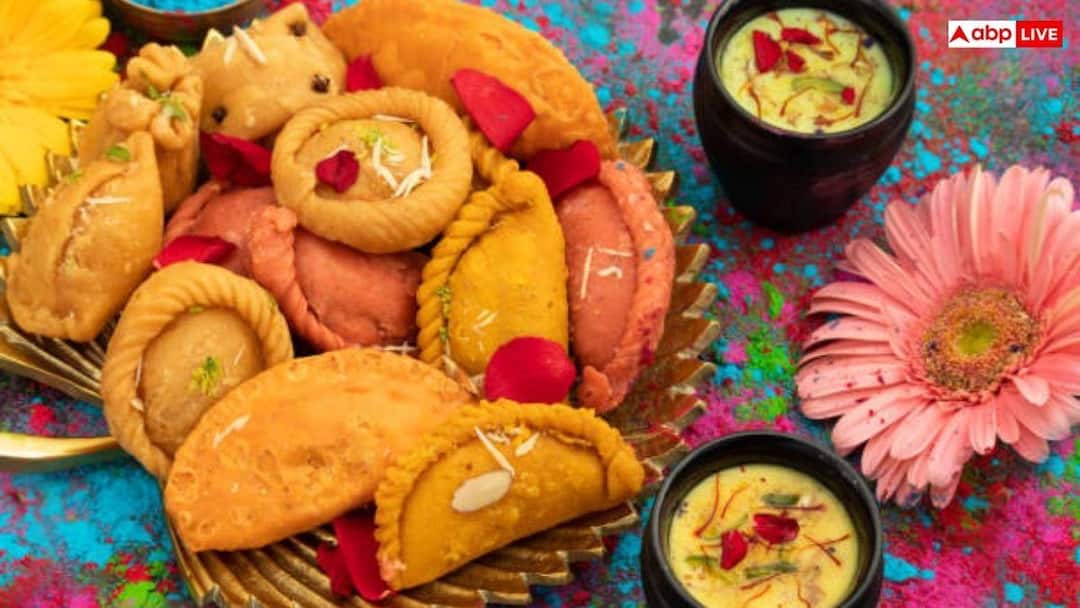
Holi 2026: As the festival of Holi approaches, the aroma of fried Gujiyas, heavy with khoya and dry fruits, starts wafting in the kitchens across North India. Gujiya is not just a festival sweet but it also holds importance as a cultural transaction. Although historians have different opinions about its true origins, most people believe that Gujiya has its roots between the 13th and 17th centuries.
Started in 13th century
The first mention of sweets like Gujiya is found in the 13th century. At that time they were not deep fried. Instead, small balls of wheat flour were filled with jaggery and honey and dried in the sun. This early version was much simpler than today’s sweets. This sweet was a seasonal sweet made during the spring harvest festival, which later merged with the tradition of Holi.
middle eastern bearing
Many food historians believe that Gujiya may have been influenced by Middle Eastern desserts like Baklava. Baklava is made by adding dry fruits and sweetener to thin layers of dough. Some experts say that the idea of filling Gujiya with nuts and sweet things might have come to India through the trade route. Another theory links gujiyas to the sweet version of samosas. It is believed that he himself is of Middle Eastern origin.
some old references
Some experts say that the roots of Gujiya are completely indigenous. There is mention of a sweet named Karanika in old Sanskrit texts. It was filled with honey and dry fruits. This preparation is often considered the base of modern gujiya.
Changes in the Mughal period
The form of Gujiya changed significantly during the Mughal period in the 16th and 17th centuries. This was when khoya started being used as a filling along with sugar and dry fruits. At this time, the method of deep frying in ghee also became common.
holi connection
Bundelkhand area of Uttar Pradesh is considered the stronghold of making Gujiya during Holi. This sweet has a deep connection with the Braj region, especially Vrindavan. There has been a tradition of offering Gujiya and Chandrakala as Prasad to Lord Shri Krishna in Radha Raman Temple for centuries. Now, since Holi is closely associated with the love of Radha and Krishna, Gujiya gradually became an important part of the festival celebrations.
Also read: How much will it cost to make five grams of Maang Tikka, know the rate according to 22 carats?