
 By Admin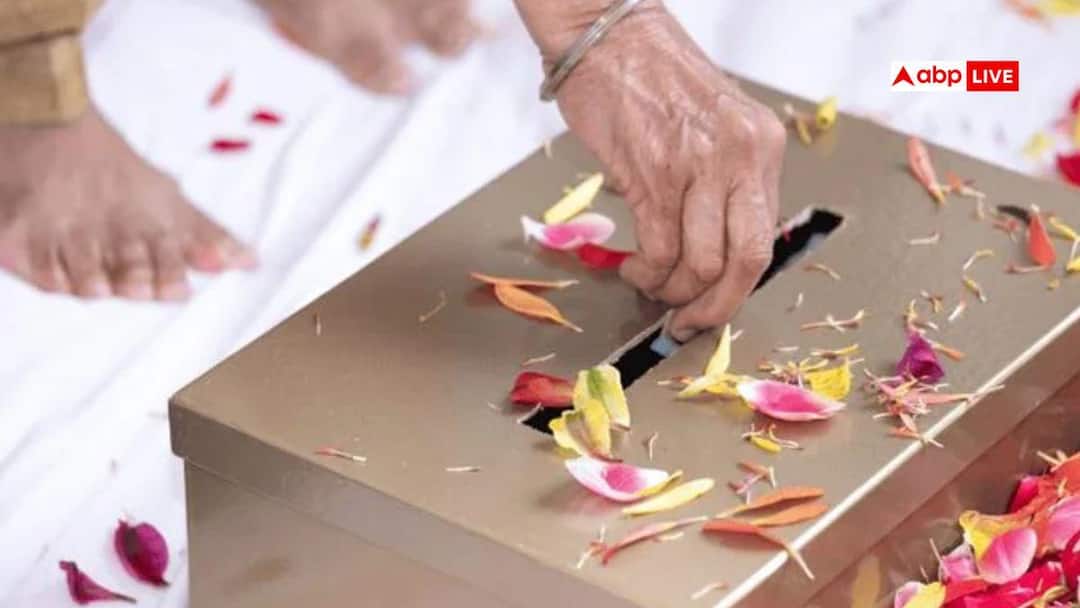
Donating in India is not just a social act, but it is an integral part of the culture and values here. Recently, a detailed survey report released by Ashoka University’s ‘Centre for Social Impact and Philanthropy’ (CSIP) has presented many surprising facts on the donation patterns and mindset in India. This report shows that a common Indian never lags behind in taking out a part of his hard-earned money to help others. Let us find out how much this goes into the account of religion.
Strong donating involvement
According to the survey, the tradition of donating is very widespread in India. The report has revealed that 68% of Indians have donated in some form or the other in a short period of the last three months. This includes not only cash, but also support in kind and volunteering of one’s time. In India, this ‘everyday donation’ is emerging as a major economic source, playing an invisible but strong role in the social security of the country.
Religious institutions receive maximum donations
One special thing about the donation behavior of Indians is that they are most inclined towards religious institutions. Statistics show that-
religious preference: A very large portion of individual donations go directly to temples, mosques, gurudwaras, churches or other religious places. About 46 percent goes to the account of religion.
Less share to NGOs: In comparison, non-governmental organizations (NGOs) and social purpose organizations (SPOs) get a meager 15 percent share.
Growing graph: In the year 2019, ‘Retail Giving’ (donation given by the general public) in India was estimated to be around Rs 34,000 crore. By the year 2023, this figure has increased to Rs 37,000 crore.
formal and informal channels
A large part of donations in India is still ‘informal’, that is, it is given directly from hand to hand or in the form of secret donations. It is difficult to track it through any government record or bank transaction.
Low Transparency: In 2019, only 10% of total donations were given through formal channels (bank, receipt, online).
Improvement status: This improved in 2023 and about 22% of donations were recorded through formal channels.
This simply means that even today about 78% of donations are being given directly in cash or at the local level without any documentary record.
Major ways to donate
In India, people do not consider their responsibilities fulfilled just by giving money. The report divided donations into three categories:
Donation in kind (45.6%): This is the most popular method in India. People like to donate old clothes, grains, medicines or other essential items directly to the needy or religious centres.
Volunteering (44.9%): Almost half of the people take out their precious time and spend it in serving others. This can be clearly seen in community functions or services like langar.
Cash donations (30.8%): The percentage of people giving cash is less than the other two categories. Small cash donations are usually given directly into hands or into donation boxes rather than through online platforms.
even the poor are kind hearted
It is often believed that only rich people donate, but the facts of the report break this perception. Donation is directly related to the monthly consumption of the family. Even among those families whose monthly expenditure is only between Rs 4,000 to Rs 5,000, about 50% donate regularly.
As soon as a family’s monthly expenditure goes above Rs 8,000, they are more likely to donate. This shows that the spirit of donating in India depends more on ‘willpower’ than economic condition.
India’s position compared to developed countries
The report also compares India’s donation model with developed countries like America and Britain. There the process of donation is completely linked to the ‘system’. In America, during the year 2022, taxpayers claimed charitable donations of approximately $257.6 billion. Whereas in Britain, the government gave 1.6 billion pounds to charitable organizations through ‘Gift Aid’.
In developed countries, donors are considered the backbone of NGOs, because there the money is spent directly on social work through the system. Due to the high number of informal donations in India, NGOs struggle to raise funds for large projects and maintain transparency.
Also read: India had to vacate its military base from which country, how much money was spent on this?