
 By Admin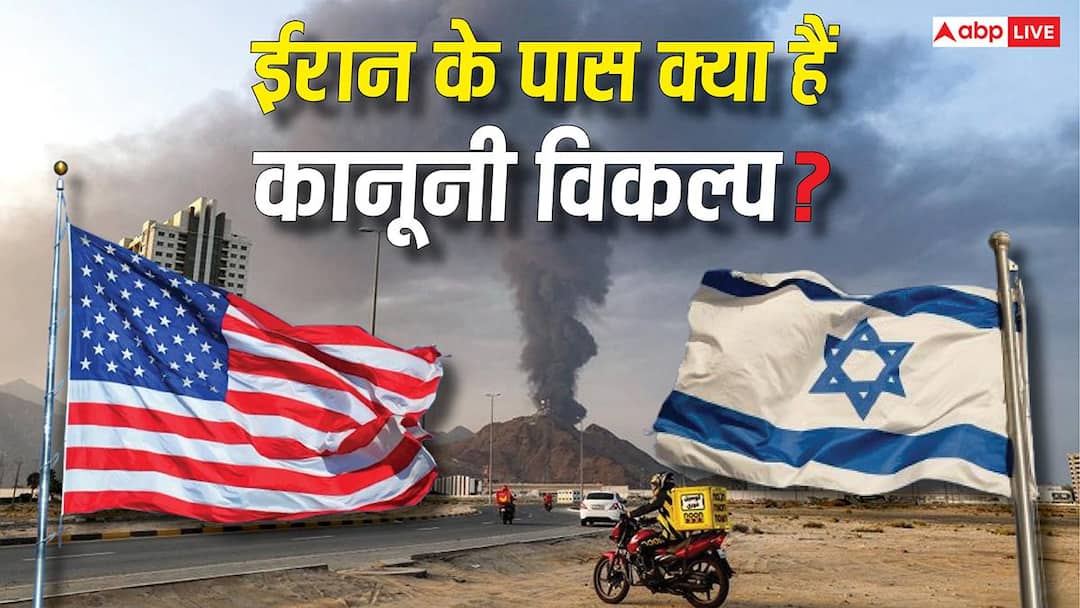
Amidst the buzz of gunpowder in the Middle East, questions have started being raised about the legal war. The recent attacks on Iran by the US and Israel, especially the missile that hit a girls school in Minab in southern Iran, have shocked the international community. The death of 150 people in this attack, most of which were schoolgirls, has raised big questions on the rules of war and whether Iran can challenge these attacks in the International Court?
When does the Charter of the United Nations allow any country to attack another and when does it fall under the category of war crime? Let us understand this entire legal complication on the basis of facts.
Is the US-Israeli attack legal?
After the horrors of the Second World War, the United Nations (UN) was established in 1945 with the sole purpose of saving the coming generations from the sting of war. Article 2(4) of the UN Charter clearly prohibits any member state from using force against the territorial integrity or political independence of another state. Under the Charter, only the United Nations Security Council can authorize military action against any country.
What does Article 51 say?
The only exception to this is Article 51, which allows a country to use force in ‘self-defence’, but there is a catch – the right to self-defence is available only when there is an ‘actual armed attack’ on that country. Legal experts argue that since Iran has neither recently attacked the US nor Israel, the ‘self-defence’ argument falls short here. America and Israel are calling it a pre-emptive attack, which means preventing a possible threat from happening in the future. However, carrying out attacks based on anticipated future threat is controversial in international law.
Also read: What is the maximum amount of petrol a common man can buy, what is the law?
Terms of preventive self-defense and Iran’s position
According to legal scholars, even if the principle of preventive self-defense is accepted, three conditions must be fulfilled for it: first, the attacking country must have made up its mind to attack; Second, he must have the ability to attack; And third, it is imperative to stop the attack now because this is the last chance.
In the case of Iran, after the US attacks in June 2025, then President Trump had claimed that Iran’s nuclear program had been ‘destroyed’. In such a situation, it is difficult to prove that Iran was in a position to attack again, which raises questions about the legality of this military action.
Violations of international humanitarian law (IHL)
Irrespective of the reason for which a war may have started, there are rules for fighting a war which are called ‘International Humanitarian Law’ (IHL). The shelling on Meenab’s Girls School has violated the ‘Principle of Distinction’. This principle states that attackers must make a clear distinction between military targets and civilian targets (schools, hospitals, places of worship). If there is any doubt about whether a location is military or civilian, it should be considered ‘civilian’.
Protection of children is mandatory under UNESCO and the Convention on the Rights of the Child (Article 38). If the school was not being used for military purposes (such as a weapons depot or command post), attacking it would constitute a war crime. Even if this attack is carried out as collateral damage (unintentional damage) by targeting a nearby military base, it will still be judged on the scale of proportionality. Was the benefit of destroying that military base greater than the lives of 150 innocent people? In international law the answer leans towards no.
What is the relevance of international law?
International law forces these powerful countries to explain their actions on the global stage. Iran can take this case to the International Court of Justice (ICJ) or the International Criminal Court (ICC). Even if sanctions are not imposed immediately, legal investigation and global condemnation damage the diplomatic credibility of these countries. When bombs fall on schools and playgrounds, not only lives are lost, but the world’s trust that was built in 1945 to maintain peace is also broken.
Also read: Kurds In Iran: Who are the Kurds living in 4 Muslim countries, know how they can become a threat to Iran?