
 By Admin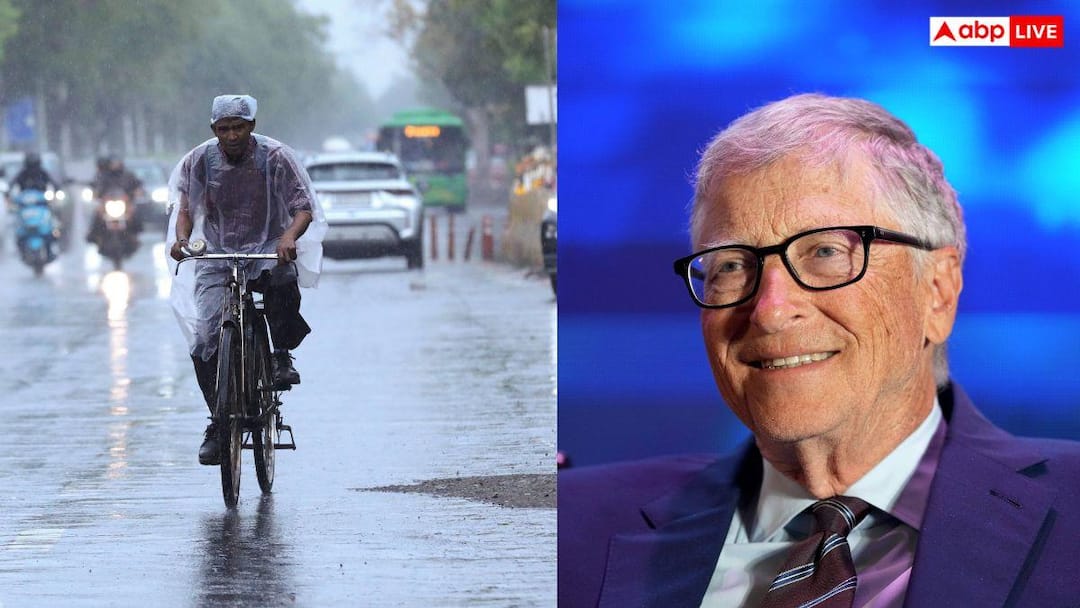
While the sudden rain in Delhi-NCR in the month of March provided a cool breeze of relief from the scorching heat, this changing weather has also raised many new questions. As much as this pattern of weather is comforting, it is equally shocking that why did it start raining like this in March?
In the age of social media, it doesn’t take long for questions to be raised, and answers start emerging even faster. Some are linking it to climate change, while others are calling it artificial rain. Also, some users on social media have linked it to the alleged solar geoengineering experiments of Bill Gates. But experts have called these claims wrong. Different claims, different arguments on every platform, but it has become more important than ever to understand what the truth is.
What are the viral claims saying?
In a viral video on social media, it is being claimed that chemical particles are being released into the atmosphere through aircraft. According to these claims, this process is being done to cool the earth by blocking sunlight. It was also said in some posts that such experiments can damage the ozone layer and cause sudden changes in temperature. Many users have linked these claims to Bill Gates’s foundation and called them part of “climate testing”.
What is solar geoengineering?
Solar geoengineering, also known as solar radiation management, is a scientific concept. Its purpose is to reduce the Earth’s temperature by sending some of the sun’s energy back into space. This technology is still completely experimental and has not been implemented anywhere on a large scale. Scientists are studying it only as research, and not for actual weather control.
How does solar geoengineering work?
Scientists have proposed several methods for this, such as stratospheric aerosol injection. In this, particles like sulfur dioxide are released into the upper atmosphere, which reflect sunlight. Another method is marine cloud brightening, in which marine clouds are made more reflective. However, all these methods are still limited to theory and small-scale studies.
The technology behind this is Albedo Effect, in which the whiter any object or surface is, the more it reflects the solar rays. That means it sends it back.
What are the risks and concerns?
According to experts, solar geoengineering can affect rainfall patterns, especially in monsoon-dependent countries like India. This may affect agriculture, water and ecosystem. Furthermore, there are no global regulations governing this technology. Scientists have warned that if such experiments are stopped suddenly, the temperature could rise rapidly, which is called “termination shock”.
What do experts say on Delhi’s rain?
According to meteorologists, the recent rains in Delhi-NCR are completely due to natural reasons. The main reason for this is an active Western Disturbance, which has brought rain and cold winds to North India. After snowfall in Himachal Pradesh and Jammu and Kashmir, cold winds reached the plains, causing a drop in temperature. Strong winds, dust storms and rain are part of this system.
Weather impact and alerts
This sudden change affected normal life and many flights had to be diverted. The Meteorological Department has issued a yellow alert and warned of winds blowing at a speed of 30 to 50 km per hour. Officials have advised people to exercise caution as the weather remains unstable.
Overall, solar geoengineering is a real scientific research, but it is still in its early stages and is not capable of controlling regional weather. There is no scientific evidence to link Delhi’s recent rains with any climate experiment. This is entirely the result of natural weather systems and not any man-made intervention.