
 By Admin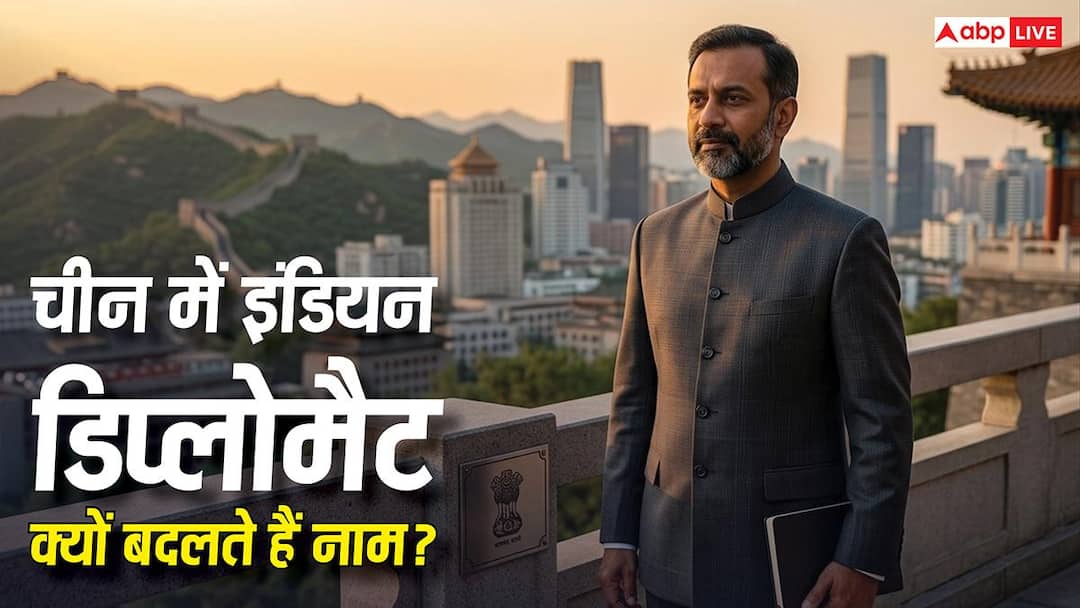
Relations between India and China have always been a topic of discussion, but do you know that when the Indian Ambassador moves to Beijing, there is a big change in his identity? This change is not in the way they work, but in their name. In the world of diplomacy, this is not a mere coincidence, but a decades-old, well-thought-out tradition. To adapt to the complexities of China’s language and culture, Indian diplomats adopt a new Chinese name; as strange as it sounds, the logic behind it is as deep and practical. Let us understand.
Vikram Doraiswami’s new name
Recently, India’s newly appointed Ambassador to China Vikram Doraiswami has changed his Chinese name to Wei Jiameng. At first glance this may seem like just a change in language, but in Mandarin (Chinese) names are chosen based on the combination of sound and meaning. Here ‘Wei’ is a historical surname which is associated with the ancient empire of China. Whereas ‘Jia’ means increase and ‘Meng’ means alliance or treaty. That is, a deep message of this name can also be that he has come as a messenger to strengthen the alliance between the two countries.
A tradition dating back to the 1950s
This trend of adopting Chinese names is not recent, rather it is decades old. When India established diplomatic relations with China in the early 1950s, the first Indian ambassador was also given a Chinese name. At that time it was known as ‘Pan Ng’. From then till today, every ambassador who goes to China becomes a part of this cultural process. This tradition is not limited to India only, but ambassadors, businessmen and scholars from many big countries around the world adapt their identity according to the language while working in China.
Also read: Space Debris: How much debris have humans spread in space, know how dangerous it is for the Earth now?
Linguistic complexity and pronunciation problems
The biggest and practical reason behind changing the names of ambassadors is the language of China. The Chinese language is based on ‘tonal’ i.e. notes and it is very difficult for the people there to pronounce foreign names. Many letters in Indian names do not fit into the Chinese phonetic system. In such a situation, if the ambassador uses his original name, it can create huge confusion in government meetings, media reports and communication with the general public. Adopting a local name simplifies communication and makes it easier to work with the local administration.
Positive messages hidden behind the name
In China, names are not just an identity, but they also reflect a person’s qualities and values. While choosing Chinese names for ambassadors, special care is taken that those words have a positive meaning. A good name creates trust and comfort among the local people. Diplomacy is not just about closed-door meetings, but it is also a game of cultural bonding. When a foreign diplomat adopts a local language name, it is seen as respect for the local culture, which creates a better environment for negotiations.
Trend in other countries of the world also
This exercise of localizing the name is not limited to China only. Even in Japan and Korea, foreign diplomats write their names according to the script there. In Arab countries, the pronunciation of names is changed according to the Arabic accent, whereas in Europe, names are shortened or made English-like. The only difference in the case of China is that here this process is very systematic. Here the letters are chosen by balancing both sound and meaning, so that the name is easy to remember and culturally acceptable.
Also read: Crude Oil Products: What things are made from crude oil, know why it cannot be used directly?