
 By Admin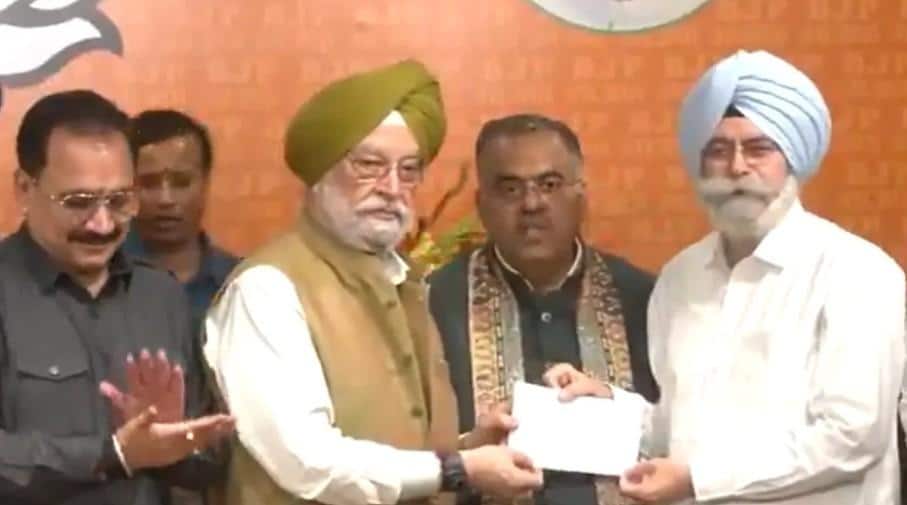
Delhi’s senior lawyer and human rights activist Harvinder Singh Phoolka joining BJP is not just a political news. This is a sign of the changing narrative in Punjab politics. His return after nearly seven years away from active politics, and that too with BJP, raises both questions and possibilities at many levels. This step has come at a time when BJP is trying to strengthen its social and political hold in Punjab keeping in mind the 2027 assembly elections.
Phoolka’s ‘Moral Capital’: Why important for BJP?
HS Phoolka’s identity has been that of a legal warrior before a politician. Fighting for the victims of the 1984 anti-Sikh riots for decades, reopening several cases and getting the culprits punished, all made him a credible face in the Sikh community. Phoolka’s entry for BJP is an attempt to add this ‘moral capital’. Especially in that state, where the party’s traditional hold has been weak.
BJP’s Sikh outreach: A long-term strategy
Phoolka’s joining BJP does not seem to be a one day decision. This is part of the strategy on which the party has been working for the last few years. Inclusion of leaders like Manjinder Singh Sirsa and Harmeet Singh in the party in 2021 was the first step in this direction. Its effect was also visible in Delhi, where Bharatiya Janata Party’s hold among Sikh voters strengthened. Now BJP is trying to repeat the same model in Punjab, so that the influence can be increased in the organization as well as in the sectarian leadership.
Akali Dal’s crisis: Opportunity for BJP
Shiromani Akali Dal, which was the center of Sikh leadership in Punjab politics for a long time, is now going through a weak phase. Declining electoral performance and internal factionalism have weakened the party’s grip. Phoolka himself was going to join Akali Dal in 2024, but due to internal politics and factionalism among various factions, his step remained incomplete. This political void is now becoming an opportunity for BJP. The party is working on a strategy to break into the traditional vote bank of Akali Dal by bringing forward Sikh faces, in which Phoolka can become an important link. Besides, the vacuum created by the weakening of Congress after Captain Amarinder Singh is also opening new possibilities for BJP.
Challenge for AAP: Narrative versus governance
At present the power in Punjab is with the common man. AAP had won in 2022 on the narrative of ‘change’ and ‘honest politics’. But leaders like HS Phoolka, who was once an important face of AAP and later parted ways with it, are now joining BJP. This challenges the narrative of AAP.
Phoolka’s past has been associated with AAP, but his leaving the party and now joining BJP indicates that change is going on in Punjab politics at both ideological and strategic levels.
Will the attitude of Sikh votes change towards BJP?
Sikh vote plays a decisive role in the politics of Punjab. Till now, BJP has often been seen as an ‘outsider’ party, especially after the controversy over agricultural laws, this distance has increased further. In such a situation, the entry of a face like Phoolka can help BJP in creating an ‘insider’ narrative. However, how deep this change will be will depend on how much acceptance the party is able to create at the grassroots level.
Phoolka’s political journey: a story of trust and contradictions
Phoolka’s political journey has also been interesting. Joining AAP in 2013, winning elections in 2017 and then suddenly resigning. This shows that he always gave priority to his principles. Leaving politics out of anger over the slow process of justice in sacrilege cases and then being active on social-justice issues further strengthens his image. But the same question also arises – will the same Phoolka, who had left politics disappointed, now be able to work with BJP with the same energy?
Roadmap to 2027: BJP’s new social engineering
The 2027 elections in Punjab will not just be a fight for seats for BJP, but a test of acceptance. Phoolka’s entry is considered to be a part of this strategy, where the party is trying to create a new social equation by associating ‘trusted faces’ with caste and religious identity. This strategy seems to be working at three levels. Building confidence in the Sikh leadership, targeting the weakening base of the Akali Dal, and challenging the narrative of the Aam Aadmi Party. But the path is not easy. BJP’s historical hold in Punjab has been limited and the negative perception created after the agricultural laws still has an impact. It is a big challenge to make a place among the parties having deep roots in Sikh politics. In such a situation, just adding faces will not be enough, the party will also have to build trust at the grassroots level. Phoolka’s entry is definitely a big sign, but whether it is the beginning of change or just a strategic move – only time will answer this. At present it is clear that the war of narrative has intensified in Punjab before 2027.