
 By Admin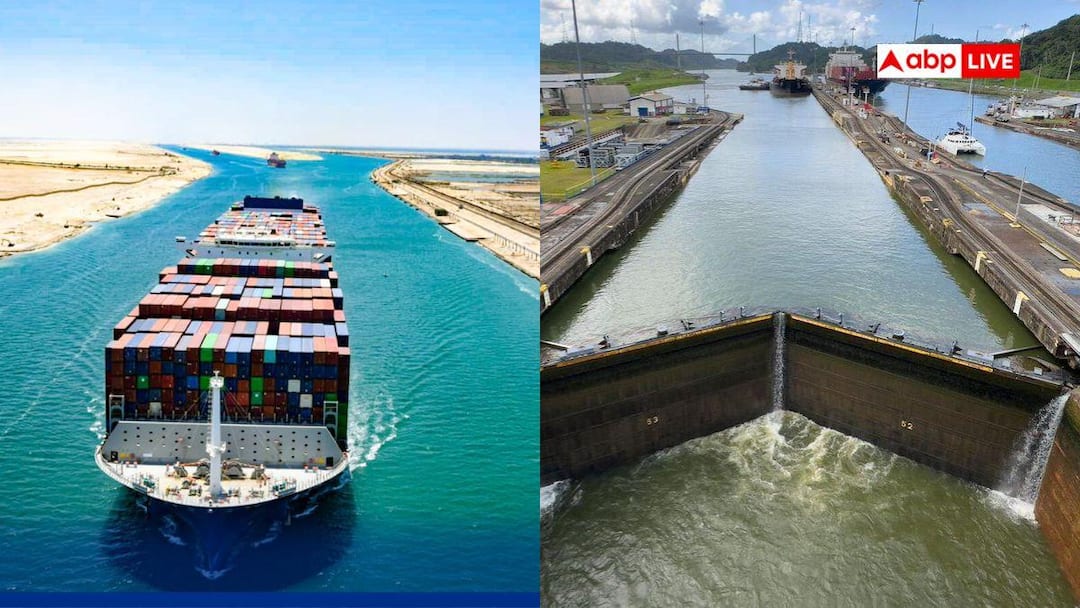
- Maintenance of roads is expensive, but a source of income for countries.
The world’s economy is not only dependent on the production of oil and gas, but is also dependent on the routes through which these goods pass. There are some countries whose geographical location is a miracle of nature. They neither mine gold nor have oil wells, yet they are earning billions of dollars just by collecting tolls. Canals like Suez and Panama have today become the heartbeat of global trade. Let us know how these sea routes are making countries rich?
World’s most expensive toll tax
When we talk about trade, we often mention factories and raw materials, but the real game is about those narrow roads which are called ‘choke points’. Some special sea routes and canals of the world are located in such places where international trade is not possible without passing through them. The countries occupying these routes charge huge fees from the ships. This earning is so high that a major part of the entire GDP of many countries comes from this toll tax alone.
Suez Canal changing Egypt’s fortunes
The Suez Canal is considered the world’s most important artificial sea route. It connects the Red Sea to the Mediterranean Sea, thereby reducing the distance between Europe and Asia by thousands of kilometers. For Egypt, this canal is no less than a ‘gold mine’. Every year thousands of ships pass through here and in return Egypt gets billions of dollars in revenue. If we look at the figures of 2023-24, Egypt has earned about 9 to 10 billion dollars from this one canal alone.
Also read: Strait Of Hormuz Blockade: What is the blockade, which America is threatening to do on the Strait of Hormuz?
Panama Canal’s dominance on the American continent
The Panama Canal connecting the Atlantic and Pacific Oceans is a wonderful example of engineering. Panama, a small country in Central America, stands in the ranks of the world’s richest countries because of this canal. This canal, which saves ships from taking the entire trip around South America, charges millions of dollars per ship. Here the ships are taken over the mountain through ‘lock system’. This canal is the biggest source of foreign exchange for Panama and without it the global supply chain is incomplete.
strait of malacca
The Strait of Malacca, located between Indonesia, Malaysia and Singapore, is the world’s busiest sea route. Although there is no canal here, Singapore has changed its fortunes by using this route. Every fourth ship passing through here has to stop in Singapore. Singapore earns so much from this route through refueling, repair and logistics services that today it has become the world’s largest shipping hub. 80 percent of China’s oil supply depends on this route.
Strategic Strength of the Strait of Hormuz
The Strait of Hormuz located between Iran and Oman is called the world’s ‘pipe of oil’. One-third of the world’s marine crude oil passes through this narrow passage. Although there is no direct system of toll collection like canals, but Iran and Oman prove their strategic strength in the name of security and surveillance of this area. Oman has taken advantage of its location near the Musandam Peninsula to develop large logistics hubs in the region, which generate huge revenues.
The increasing importance of Bab-el-Mandeb
The Bab-el-Mandeb Strait, located at the mouth of the Red Sea, is bordered by Yemen, Djibouti and Eritrea. This is the entrance to the Suez Canal. A small country like Djibouti has used its geographical position so well that today there are military bases of the world’s superpowers (America, China, France). Djibouti’s economy is driven by rents from these bases and port services. Even without any natural resources, this country is earning huge money in the name of security of global trade.
Impact of Bosphorus and Dardanelles on Türkiye
The Bosphorus and Dardanelles straits located near Türkiye connect the Black Sea to the rest of the world. Under the Montreux Convention, Turkey has considerable control over these routes. Although passing through here is subject to international rules, Türkiye charges hefty fees in the name of security, health inspection and guiding services of ships. The importance of these routes has increased further during the war between Ukraine and Russia, which has increased Türkiye’s diplomatic and economic power.
Huge cost of repairing canals and roads
As attractive as this income from toll looks, the maintenance of these roads is equally challenging. Canals like Suez and Panama have to be continuously deepened so that modern huge ships can pass through them. The drop in water levels due to drought in Panama has become a major problem, due to which the number of ships had to be reduced. Nevertheless, in view of the increasing global demand, the importance of these routes will never diminish and these countries will continue to earn money by becoming ‘watchmen’ of the world even without selling anything.
Also read: If Hormuz is completely closed, can’t another route be made, know how many options are available?