
 By Admin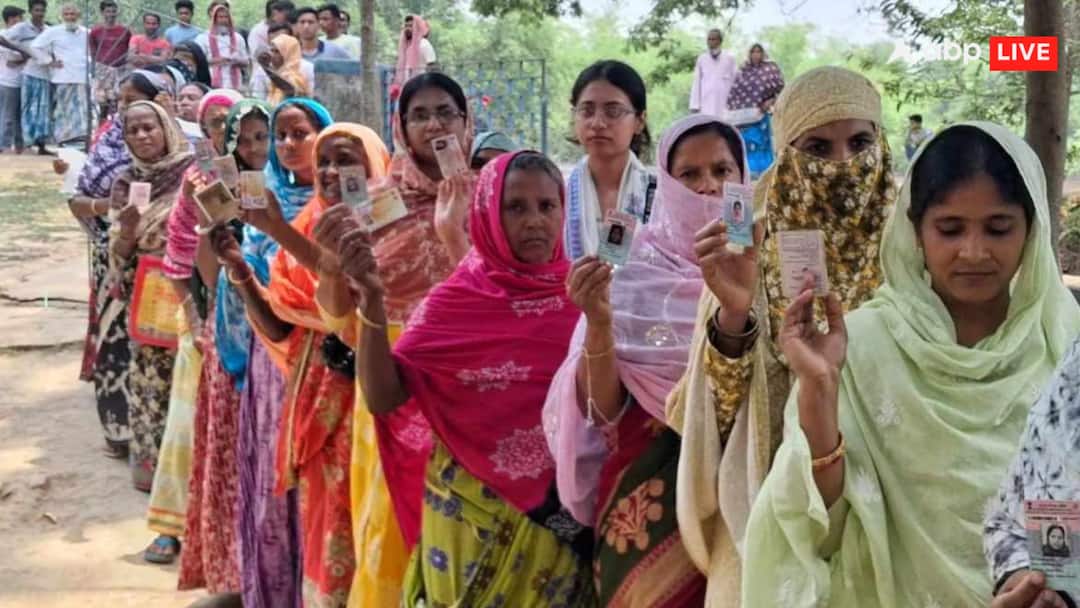
Bumper voting took place in the West Bengal assembly elections on Thursday. Out of 294 seats in Bengal, 89.93% voting took place in the first phase on 152 seats, which means that for the first time in history, the highest voting took place. Election Commission figures are till 6 pm. There may be changes in these. After voting, Mamta said – The people of Bengal have voted bumper against SIR, while the opposition says that now BJP government is coming in Bengal. The wind of voting in Bengal blew so fast that all the issues were left behind. Let us understand the magic of voting in Bengal in the explainer…
Question 1: What was the total voting percentage in the first phase of elections in West Bengal and why is this a record?
answer: 89.93% voting took place in the first phase of West Bengal Assembly elections 2026, which is more than 7% from 82.30% in 2021 and is the highest figure in the country. This is not an election figure, rather it is an indication of the deep political stir and social activism that is making this election extraordinary. This record was made after Special Intensive Review (SIR), in which 91 lakh duplicate names were removed. Out of total 3.44 crore voters, 3.11 crore have cast their vote.
More than 78% voting in Bengal till 3 pm itself was an indication that there would be a big surge in the last hours of the day and that is what happened. This pattern also reflects the electoral nature of West Bengal, where rural areas, women and late voting groups play a larger role.
In the first phase, voting took place on a total of 152 assembly seats, which are spread across 16 districts. Despite such a large-scale electoral process, such a high level of voting shows how serious and active the public is regarding this election.
If we look at the trend of the day, long queues were visible at the polling booths since morning. While till 9 am the voting was between 15-18%, by 11 am it crossed 40%. After this, this speed did not slow down even in the afternoon and by 3 o’clock the figure of about 78% was crossed. This continuously increasing graph indicates that there was no apathy among the voters, rather they were coming out to vote in an organized manner.
Question 2: In which districts of Bengal was the maximum voting done and where were the records broken?
answer: The region-wise trends clearly showed that maximum voting took place in North Bengal and border districts. In many areas around 80% voting was recorded till noon itself, which is a record situation in itself. Traditionally, there is more voting in rural and border areas, but this time this trend appeared stronger.
| District | Total voters (in lakhs) | voting % | How much more than 2021 |
| birbhum | 32.4 | 92.8 | 11.2% |
| Cooch Behar | 28.1 | 92.3 | 9.8% |
| Jhargram | 12.6 | 91.7 | 12.4% |
| South Dinajpur | 14.2 | 91.2 | 10.5% |
| Paschim Medinipur | 21.8 | 90.9 | 8.7% |
| Kalimpong | 3.4 | 78.5 | 2.1% |
Question 3: On which VIP seats were voting records broken?
answer: The Election Commission releases the exact voting percentage on the seats after some time, but initial indications show that the voting on VIP seats was also higher than the average. This makes the election contest more interesting.
| seat | candidate | voting % |
| Mathabhanga (SC) | Subhendu Adhikari (BJP) | 93.2 |
| Cooch Behar North | Nishit Pramanik (BJP) | 92.8 |
| falta | Abhishek Banerjee (TMC) | 89.5 |
| Toto | John Barla (BJP) | 91.1 |
Question 4: Where did the violent incidents take place during voting in West Bengal?
answer: Sporadic violent incidents took place in Bengal during voting and complaints of EVM malfunctioning were also received at many places:
- BJP candidate Suvendu Sarkar was attacked from Kumarganj seat in South Midnapore, West Bengal.
- The car of BJP candidate from Asansol South seat, Agnimitra Paul, was attacked in Rahmat Nagar area of Burnpur. Agnimitra said that while leaving a polling booth, stones were thrown at her car.
- After the EVM malfunctioned in Bodhpur village of Birbhum, people pelted stones at the police and central force. Also vandalized the police vehicle. Many security personnel were injured in the incident.
- There was a clash between BJP and TMC workers during voting in Siliguri.
- There was an uproar at a booth in Malda due to EVM malfunctioning. People surrounded the election officer and raised objections.
- Before voting in Murshidabad’s Nauda, a country-made bomb was thrown late on Wednesday night, in which many people were injured.
The situation in Bengal was not completely peaceful. There were reports of sporadic violence, clashes and bombings from many districts. Many booths were already declared ‘super sensitive’. Despite this, a large number of people came out to vote, which shows that the feeling of participation prevailed more than fear regarding the elections. This aspect is also an important part of the electoral culture of Bengal, where voting percentage often remains high despite political conflicts.
Question 5: What do 90% of the elections in West Bengal point towards?
answer: Political experts say that there is no direct meaning of more voting. This can be a sign of anti-incumbency i.e. anger against the government and also pro-incumbency i.e. rallying in support of the government. In the case of West Bengal, it is more likely that the election will be very close and thorny, hence supporters of both the parties turned out to vote in large numbers. A major reason behind this is the deep political polarization in the state, where the main contest is direct and sharp between the ruling party and the opposition.
Apart from this, the controversies that arose regarding the voter list before the elections also made people more alert and active. When there are reports of deletion of names or irregularities in the voter list, people usually try to reach the booth in large numbers on the voting day so that their vote can be registered. Similarly, active participation of women voters and rural population also played a big role in pulling the total percentage up.
If we look at it in the national context then this figure becomes even more important. Generally, the voting percentage in assembly elections in India is between 60 to 75 percent, while crossing 80% is considered a big deal. In such a situation, reaching around 90% is an extraordinary situation, which shows that the level of democratic participation in West Bengal is very high and people see elections not just as a formal process but as a matter of their rights and influence.