
 By Admin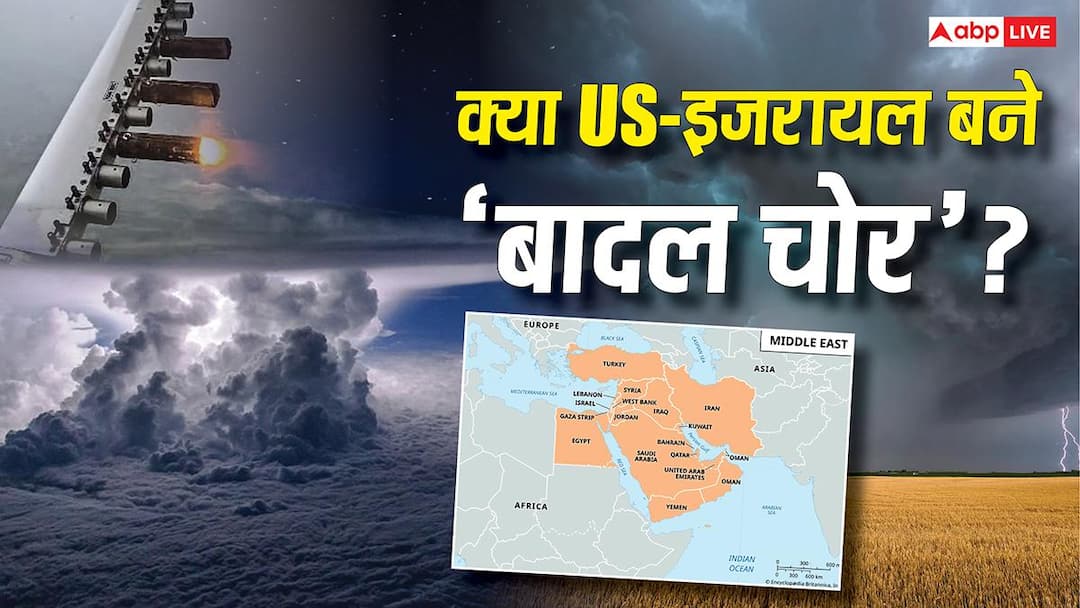
In the past weeks, a strange but extremely fast-spreading claim has emerged on social media. America and Israel have become busy in the war against Iran, due to which their efforts to ‘steal clouds’ from the countries of the Middle East have been hampered and that is why it is raining suddenly in some areas. However, officials of science and meteorological departments say that no such technology exists by which any country can ‘steal’ the clouds of another country. But there is no smoke without fire, so where did this question arise and can there really be theft of clouds? You will know in the explainer…
Question 1: How and where did this unique claim of cloud theft originate?
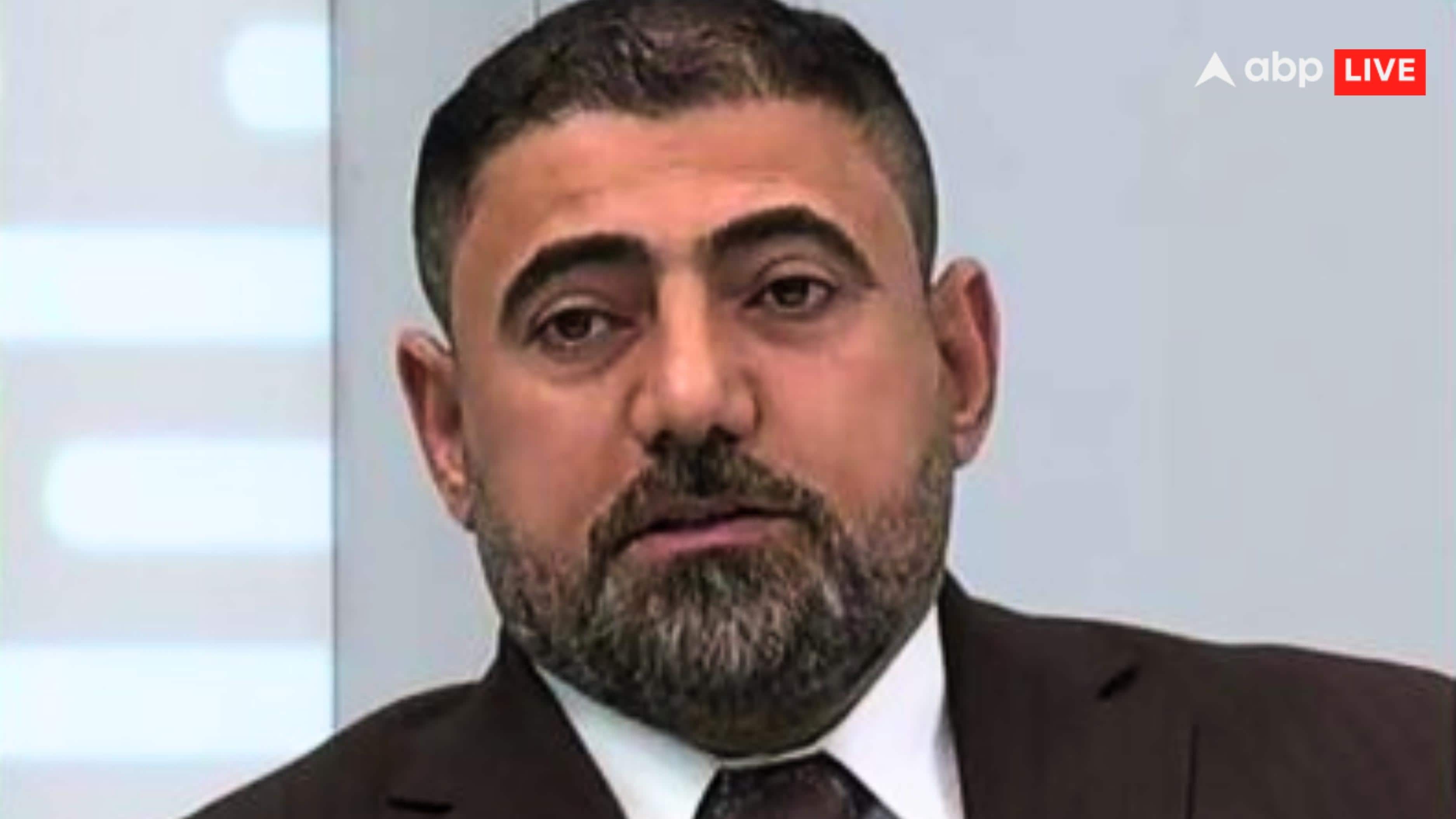
answer: A prominent person who has fueled this claim is Iraqi MP Abdullah al-Kheqani. In an interview given to TV channel Al-Rashid TV, he had said that neighboring countries Turkey and Iran have filed complaints against ‘breaking’ and ‘stealing’ clouds with the help of planes. He claimed that now it is raining again in Iraq because America is engaged in war with Iran. Khekani called it a seasonal weapon.
There was also a rumor on social media that the 66-year rainfall record in Turkey was broken in February 2026 because its air borders were closed due to the war and America could not steal the clouds there. Another claim said Iran’s worst drought in decades ‘ended in five days’ after the attacks on US assets. However, Khekani did not provide proof of the claims.
Question 2: What do science and experts say about the claim of ‘cloud theft’?
answer: Experts and scientists call this claim completely wrong and unscientific. Amer al-Jabiri, a spokesman for Iraq’s Meteorological Organization, told the BBC that the claim was ‘neither scientific nor logical.’ He said that as early as September 2025, that is, several months before the start of the war on 28 February 2026, it was predicted that there would be more than normal rainfall in Iraq in 2026.
Kaveh Madani, director of the United Nations (UN) Institute for Water, Environment and Health, considers ‘lack of understanding of the weather system’ as the main reason for this misunderstanding. Professor Diana Francis of Khalifa University explains this with an example, saying that the technology of man-made rain (cloud seeding) is ‘just giving a slight push to the already existing cloud, and not completely controlling the weather.’
According to Dr. Jeff French of the University of Wyoming, even if cloud seeding is done in one area, its effect on the rainfall of another area will be very minor and not noticeable more than the normal fluctuations of rainfall. Overall, no technology exists to directly control the direction or intensity of weather systems.
Question 3: If there is no such thing as theft of clouds then why are people believing?
answer: Along with psychological and social reasons, a technical reason is also responsible for this. There is an actual technology called ‘Cloud Seeding’, which is used by many countries like China, UAE, US and Iran. In this technique, fine particles like silver iodide are sprayed on the clouds from planes so that rain can be encouraged. But scientists clarify that this technology cannot ‘steal’ the clouds. With this, a maximum of 15 percent additional rainfall can be achieved from the existing clouds.
Oxford University researcher Dr. Sarah Smith says, ‘Complexity and uncertainty often attract conspiratorial thinking. People fill the void created with something simple and satisfying, but in doing so they move away from the real story. Jordan’s Dr. Isra Tarouneh emphasizes that growing public concern about water scarcity makes people more susceptible to believing such rumors.
Professor James Fleming, an atmospheric scientist at Colby College, America, says, ‘Clouds never stay in one place. These are temporary units that keep forming and disintegrating in a dynamic environment. Therefore, even if a country does seeding, there is no guarantee that rain will fall in that country.

Question 4: Is there any international law on ‘weather weapons’?
answer: There is an international treaty on the weaponization of weather, called the Convention on the Prohibition of Military and Any Other Hostile Use of Environmental Modification Techniques (ENMOD). It came into force in 1978. It has been signed by 78 countries including America, China, Britain, Germany and Russia. This treaty prohibits any type of environmental weapon (weather modifying weapon) for military or hostile use. But the problem is:
- This treaty is very weak. There is no explicit ban on modern technologies like cloud seeding.
- Not all countries have signed it.
- There is no strong system of verification and monitoring of treaty violations.
Arvind Venkataraman, founder of the University of Sustainability, Innovation and Good Governance, says, ‘Any intervention or manipulation of climate has its own risks. Studies show that some methods could bring more droughts and floods, impact our food chain and increase geopolitical conflict.
Question 5: So could there be a war over cloud theft in the future?
answer: Experts believe that if the world does not make strict rules, then the allegation of ‘cloud theft’ can become an excuse for war. Keve Madani says, ‘The existing legal avenues and international agreements are very weak. They are not sufficient to deal with the modern and unprecedented problems that the world faces today. Therefore they cannot really protect the rights of nations.
This could become a major political issue in the next decades. Already, when airspace is closed or there is a sudden flood/drought in a country, the neighboring country starts being accused of ‘cloud stealing’.
Tracy Ressek, climate adviser to former UN chief Ban Ki-moon, warns: ‘The international community needs to urgently strengthen international policy on the security risks of cloud seeding and other climate modification technologies, and soon.’
At the same time, some experts give the opposite answer. He believes that there is no such technology in the world as lifting clouds from one place and taking them to another, i.e. ‘cloud stealing’. Therefore, the question of war in future because of this imaginary thing does not arise. This is a rumor which has spread on social media. As Dr. Jeff French, professor at the University of Wyoming, explains, ‘Even if an attempt is made to increase rainfall in one place by cloud seeding, it will have very little impact on the rainfall in neighboring areas.’
Question 6: Then what is the real and important aspect of this whole story?
answer: The real and serious angle of this whole story is that the false story of ‘Badal Chori’ serves to divert attention from a much bigger and real threat. When rumors like ‘Badal Chori’ spread, people’s anger and fear turn towards an imaginary enemy. Dr. Isra Tarouneh of Jordan’s Muta University says, ‘This situation is increasing people’s uneasiness regarding water conservation.’
Taking advantage of this restlessness, simple and conspiratorial theories like cloud theft spread. The real story is that if there will be wars for water, they will not be over the clouds, but over the control of water sources on the ground.
According to the United Nations Climate Panel (IPCC), due to climate change, the pressure on the already limited sources of water is continuously increasing. When rivers dry up, lakes shrink and groundwater levels fall, it is natural for tensions to arise between countries and communities dependent on these resources. This is the real and serious fight for which the world needs to be prepared now and find solutions, and not focus on imaginary stories like ‘cloud theft’.