
 By Admin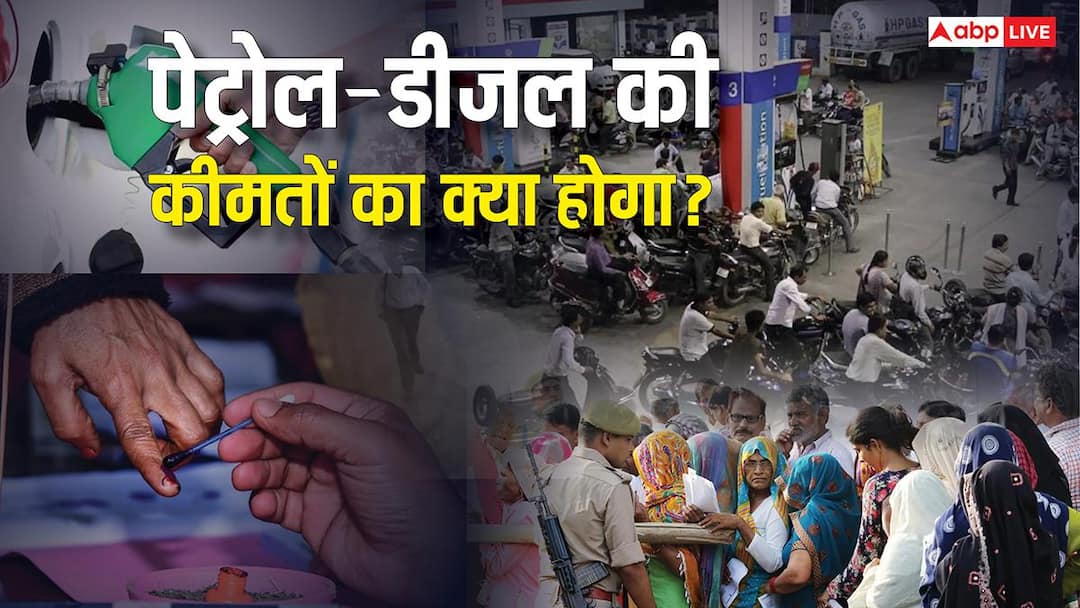
With the end of assembly elections in West Bengal, Tamil Nadu, Keralam, Assam and Puducherry, the biggest concern has arisen – the prices of petrol and diesel. For the last one month, there has been discussion that after the elections, oil prices will increase by Rs 25 to Rs 28. Due to this news, panic buying was seen in Andhra Pradesh, where more than 400 petrol pumps dried up. On the other hand, there has been a ceasefire between America and Iran, but tension remains on Hormuz. The general public is troubled by the shortage of oil at the ground level. Now that the elections are over, can it be assumed that the prices of petrol and diesel will increase?
Question 1: Did the prices of petrol and diesel increase immediately after the last elections?
answer: In the last 8 years, prices of petrol and diesel have increased rapidly after elections:
- 2022 assembly elections: This was the latest and biggest shock. After the elections ended on March 10, 2022, the process of increase in prices started after the ban imposed for 137 days was lifted from March 22. On March 22, 2022, there was a huge increase of 80 paise per liter on both petrol and diesel simultaneously. This was the biggest one-day increase since the start of daily price revision. After this, there was an increase of only 80 paise every day for four consecutive days. Within just 5 days, petrol and diesel had become costlier by Rs 3.20 per litre.
- 2021 assembly elections: After the election results were announced on May 2, 2021, prices started rising daily for the last 18 days from May 4. In the first three days (4, 5 and 6 May), petrol became costlier by 25 paise and diesel by 30 paise per liter every day. In these three days itself, petrol increased by 59 paise and diesel by 69 paise. During this period, prices went up continuously and by July of the same year petrol had crossed Rs 100 per liter.
- 2019 Lok Sabha elections: As soon as the elections ended on 19 May 2019, prices started rising the next day after about 30 days of stability. On May 20, 2019, petrol increased by 9 paise and diesel by 15 paise per litre. The initial increase may seem small, but after this the prices increased for 16 consecutive days and overall petrol and diesel became costlier by about Rs 3.5 per liter.
- 2018 Karnataka Assembly elections: After voting on 12 May 2018, the wait of 19 days from 14 May ended. On May 14, 2018, petrol became costlier by 17 paise and diesel by 21 paise per litre. It is estimated that during the period when the government companies did not increase the prices, they had suffered a loss of about Rs 500 crore, which was gradually compensated later.
Question 2: So will the prices of petrol and diesel increase by Rs 25 after the elections?
answer: No, the Central Government has completely declared it ‘fake news’. On April 23, 2026 itself, the Ministry of Petroleum and Natural Gas had clearly stated through a post on social media platform X that no proposal to increase the prices of petrol and diesel is under consideration of the government. The ministry termed such news as ‘mischievous and misleading’, which are being spread to create fear and panic among the citizens.
🚨FAKE NEWS!
An order circulating on social media claims to be issued by the Ministry of Petroleum and Natural Gas, stating that petrol and diesel prices have been increased by ₹10 and ₹12.50, respectively.#PIBFactCheck: :
❌This order is #FAKE .
✅ The Government of India… pic.twitter.com/tMmJa0Y4qA
— PIB Fact Check (@PIBFactCheck) April 29, 2026
On 28 April 2026, i.e. a day before the end of the elections, Sujata Sharma reiterated the same thing again in the press briefing. He said in clear words, ‘There is no proposal to increase the prices of petrol and diesel.’ He appealed to the people not to believe in rumors and avoid panic buying.
However, due to tension on Hormuz, the situation is saying something else.
Question 3: What is going on in the Strait of Hormuz and what is its impact on us?
answer: The increasing geopolitical tensions in the Middle East, especially the ongoing conflict between Iran and the US-Israel, have affected the Strait of Hormuz. This is a narrow sea route, through which a large part of the world’s oil supply passes. Since Iran’s threat to shut it down, concerns about the impact of crude oil supply in the global market have increased.
The direct result of this was that the prices of crude oil started touching the sky. On March 30, 2026, crude oil had crossed $115 per barrel and the average price of the Indian crude oil basket during March was around $117 per barrel. Since India imports 88 to 90 percent of its crude oil requirement, this surge in global prices is a major blow to our economy.

Question 4: How much loss are Indian oil companies running?
answer: Government oil marketing companies (OMCs) like Indian Oil (IOC), Bharat Petroleum (BPCL) and Hindustan Petroleum (HPCL) are incurring huge losses. They are forced to buy expensive crude oil from the international market and sell it at a much cheaper price in India.
According to Petroleum Minister Hardeep Singh Puri, at the end of March 2026, companies were incurring losses of about Rs 24 per liter on petrol and Rs 30 per liter on diesel. At the same time, on April 28, Sujata Sharma, Joint Secretary of the Petroleum Ministry, quoted a report and said that now this loss on diesel has increased to about Rs 100 per liter. Overall, the daily loss of these companies is about Rs 2,400 crore.
Question 5: Despite such losses, why is the government not increasing the prices?
answer: The main objective of the government is to protect the general public and the economy from the volatility of global oil prices so that inflation can be controlled. For this, instead of increasing the prices, the government itself decided to bear the huge loss of revenue.
The government reduced the excise duty on petrol and diesel by Rs 10 per liter. If this cut continues for the entire financial year 2026-27, the government is expected to suffer a revenue loss of Rs 1.3 lakh crore to Rs 1.7 lakh crore. Apart from this, the government also imposed additional duty on the export of diesel and Aviation Turbine Fuel (ATF) to ensure that the supply in the domestic market is not affected and unnecessary profits are not made abroad.
The government says that it is reviewing the situation every two weeks, but at present there will be no increase in retail prices. The prices of petrol and diesel in India have been stable for the last four years, which is a record, whereas there was a lot of fluctuation in the international market during this period. The government has also taken steps to deal with the situation like increasing oil imports from alternative sources like Russia and using its strategic storage.
Question 6: So what will ultimately happen to the prices of petrol and diesel?
answer: At present, the government says that consumers are relieved because prices are not going to increase. In Delhi, petrol is being sold at a fixed rate of Rs 94.77 and diesel at Rs 87.67 per litre. However, this situation completely depends on the tensions in West Asia and the status of the Strait of Hormuz. But price trends during the last elections tell a different story.
If global supply normalizes and crude oil prices come down, the pressure on the government and companies will reduce. If the tension continues for a long time, it may be difficult for the government to bear the revenue loss and for the companies to bear this loss for a long time. However, the government has clearly refused the proposal of any increase.