
 By Admin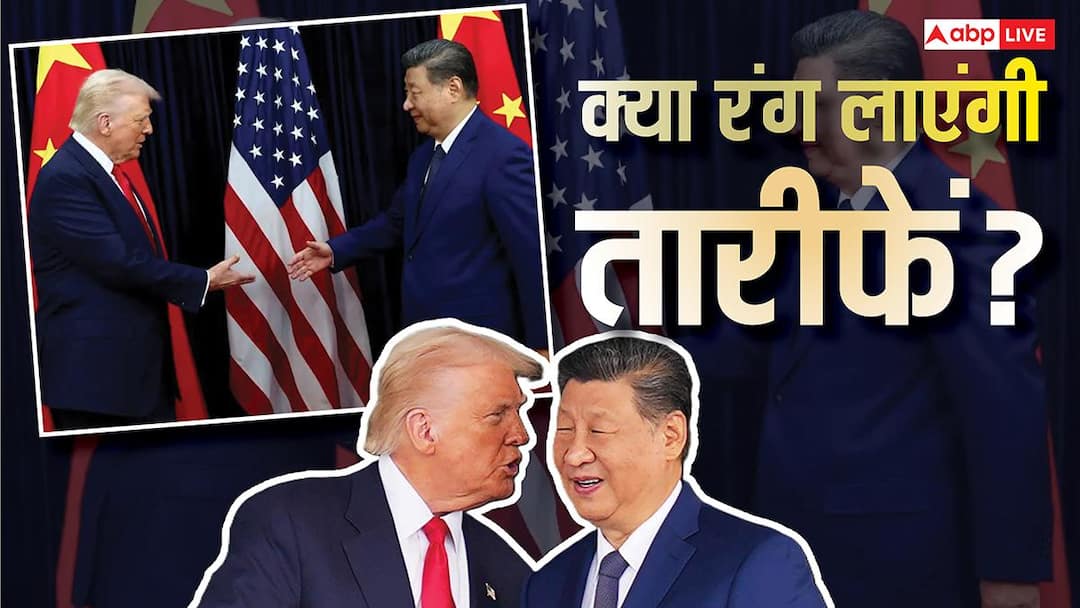
On one side, America is the world’s largest military power and on the other side, China is the fastest emerging economic superpower. In the last few years, the conflict between the two countries increased continuously over trade war, Taiwan, technology and military tension, but now the picture of Beijing has caught the attention of the world. When US President Donald Trump reached China, he openly praised Chinese President Xi Jinping. Trump said, ‘I tell everyone that you are a great leader.’ He also said that ‘It is an honor to be your friend.’ Jinping also said in a very soft tone, ‘China and America should not become competitors, but partners.’ So is this just a diplomatic smile in front of the cameras, or do both countries really want to reset relations?
What happened in the meeting?
On May 14 (Thursday), Trump received a warm welcome at the Great Hall of the People in Beijing. Trump said that whenever any problem arose between the two countries, he and Xi Jinping resolved it by talking directly. Trump said, ‘I used to call you and you used to call me. People don’t know, but we solved many problems very quickly.
He also said that he has brought along America’s ‘best business leaders’ on this tour. This statement was not just a compliment, but also an economic signal that Trump wants to strengthen trade relations with China again.
Xi Jinping gave a big message, not just friendship
Trump’s style was personal and friendly, but Xi Jinping’s message is considered to be deeper and strategic. He said, ‘We should support each other’s success and growth and find the right path for relations between big countries in the new era.’
Jinping also mentioned the Thucydides Trap. This is a principle in international politics which states that when a new power challenges an old power, the risk of conflict or war increases. Jinping’s indication was clear that China does not want open conflict with America, but wants a balance between competition.
But how did the atmosphere change so suddenly?
This is the most interesting question. Till some time ago the atmosphere between the two countries was extremely tense:
- Trade War: Fight over tariffs and import duties.
- Technology War: Competition on semiconductors, AI and 5G.
- Taiwan: China considers it as its part, while America speaks openly about the security of Taiwan.
- South China Sea: Tension over military presence and maritime claims.
- Iran and global security: Changing equations in the Middle East are also part of the conversation.
In such an environment, Trump reaching Beijing and adopting such a soft tone in the beginning is big news in itself.
What will be the consequences of praise?
This meeting focuses on issues like trade, tariffs, agricultural products, rare earths, technology and Iran crisis. Trump’s emphasis is mainly on economic deals. They want more purchases of American soybeans, beef, Boeing aircraft and other products from China. There is talk from both sides about strengthening last year’s trade truce and creating a new investment forum.
The Chinese side said that the talks between the economic teams have yielded ‘balanced and positive’ results. Relaxation of export controls on rare earth minerals and better access of American products to the agricultural market seem possible. Both the countries also seem to have agreed on creating a trade and investment mechanism.
According to experts, more stability and limited deals are expected from this conference rather than major breakthroughs. America wants to maintain its policy on the issue of selling arms to Taiwan, while China considers it sensitive. The issue of Iran war and Hormuz Strait was also discussed between the two. Top businessmen, including Nvidia’s CEO Jensen Huang, who accompanied Trump, are considering this trip as an opportunity for American companies to gain better access to the China market.
Will praise be enough?
Foreign affairs expert and JNU professor Rajan Kumar says, ‘Compliments definitely warm the atmosphere. Trump’s personal chemistry style and Xi’s partner-oriented approach are giving positive messages to both sides. But real success will depend on closed-door talks and concrete agreements. Past experiences show that despite personal friendship, trade deficit, technology restrictions and security issues remain challenges.
According to the information so far, both the leaders can also agree on each other’s visit to America and the program of meeting at forums like APEC, G20. If this meeting goes in the right direction, it can make 2026 a year of stability and cooperation in the relations between the two countries. The exchange of compliments between the world’s two largest economies gives hope that despite difficulties, a path to cooperation can be found. The results will become clear in the coming days, but the beginning has definitely been good.