
 By Admin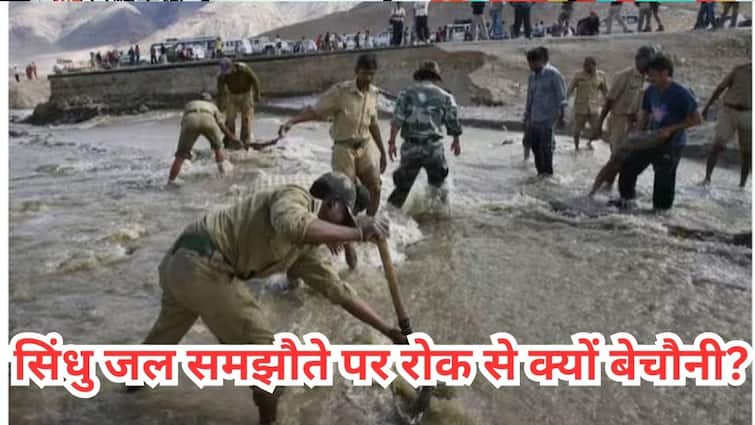
Indus water treatment: After Pakistan’s audacious steps in Pahalgam, Kashmir, the kind of tough action India took out the air of neighboring country and forced it to come on his knees. India has postponed the Indus Water Treaty with Pakistan. This treaty is an important water-sharing agreement implemented from the year 1960. Even during the three wars fought between India and Pakistan, this treaty was not brake. In such a situation, this move of the Government of India has forced the neighboring country to think and it is getting out.
A day after the attack on tourists in Pahalgam, Foreign Secretary Vikram Misri announced this tough decision on Wednesday. The Government of India has said that this Indus Water Agreement will continue till Pakistan ends its support for terrorism across the border. The decision against Pakistan has been taken by India’s Top Security Body CCS (Cabinet Committee on Security) after preliminary inquiry. In the investigation, connections of groups at the border of the attackers were found.
What is Indus Water Agreement?
This is the first time India has officially stopped the Indus Water Treaty despite many years of political tension and conflict between the two countries. In such a situation, the question arises that what is this Indus water will be used? In fact, the Indus Water Treaty was signed after years of talks between India and Pakistan in 1960 and the World Bank served as an intermediary.
The treaty divides six rivers of the Indus basin between the two countries- Eastern Rivers: Ravi, Beas and Sutlej were given to India while Western rivers: Indus, Jhelum and Chenab were given to Pakistan. India is allowed to use Western rivers for non-consumption objectives such as irrigation and hydroelectric, but it is not allowed to storage or bend a large amount of water from them.
Under this agreement, India gets about 20 percent of the total water in the system – ie about 33 million acres of acre (MAF), or 41 billion cubic meters (BCM), while Pakistan gets about 80%, which is about 135 MAF or 99 BCM.
What will be the effect on Pakistan?
The neighboring country Pakistan is already facing water crisis. In such a situation, there is very little water storage in the country, with two main dams- Mangala and Turbella, only about 14.4 MAF has the capacity to deposit. This is only 10 percent of the annual water part of Pakistan under the treaty. The Indus Water Samajat plays an important role in Pakistan’s economy. About 80% of its agricultural land, or 16 million hectares, is irrigated by the Indus system. 93% of water from these rivers is used for cultivation including wheat, rice, sugarcane and cotton. It mainly contributes about 25% to Pakistan’s GDP through agriculture.
In such a situation, Pakistan is already one of the most water-stunned countries in the world. The average amount of available water per capita there is decreasing rapidly. In such a situation, if any sudden or large cut in the flow of water will spoil the situation. Experts believe that serious consequences of brakes on the Indus Water Agreement can be revealed.
This may cause a steep fall in food production in Pakistan, affecting prices and availability. Power cuts may increase, especially in rural areas, there may be a shortage of drinking water in cities, which will increase pressure on urban systems. In addition, unemployment may increase, especially between farmers and daily wage workers. Migration from rural areas may increase in cities, which will put congestion and more pressure on resources.
Also read: Shocking move, after Vodafone Idea, now Airtel also requested the government, sought a stake to repay the arrears