
 By Admin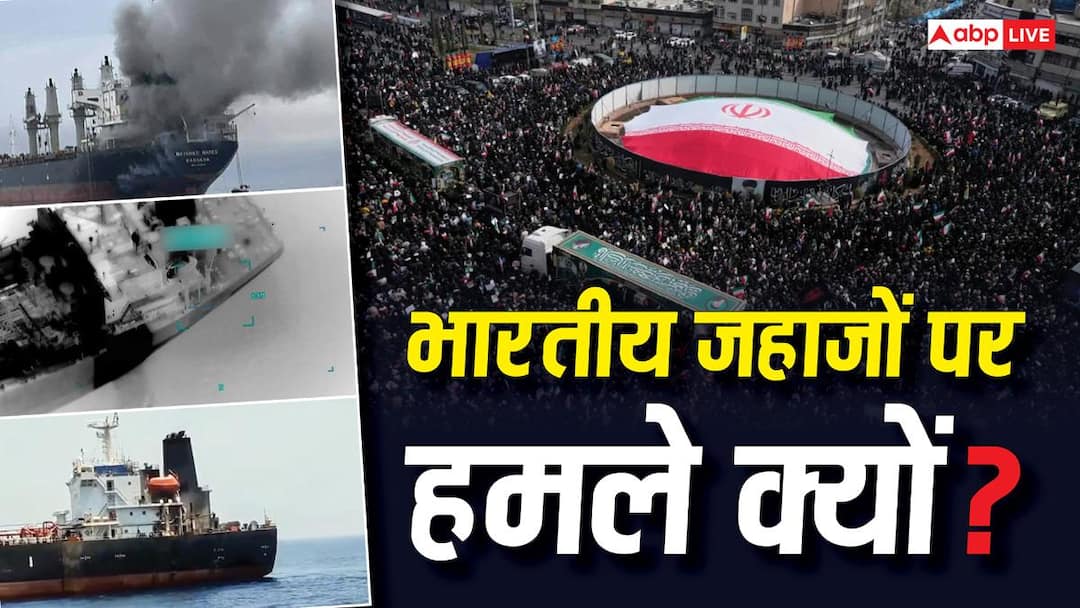
The sea area from the Oman coast to the Strait of Hormuz has turned red with blood these days. In the last three days, three different ships carrying Indian sailors have been attacked one after the other. First the American army targeted one tanker, then attacked another and now the third ship also caught fire. So far three Indian sailors have died in these attacks. The Indian government took strict action and expressed its displeasure by summoning the American diplomat. Why is this happening, is it the effect of America-Iran war and how big is this problem for India?
First attack (8 June): accurate hit on MT Marivex
The first attack took place on 8 June. Palau Islands-flagged tanker MT Marivex was attacked by US forces. There were 24 Indian sailors on board this ship. The US Central Command (CENTCOM) said that they carried out this attack because the ship was going towards Iran in violation of the US blockade. No Indian sailor died in this attack. All 24 sailors were rescued safely with the help of Omani authorities.
According to the Central Command, an F/A-18 Super Hornet fighter aircraft fired a precision missile at the engine and steering part of the ship. The ship will no longer be able to go to Iran.
Second attack (9–10 June): Deadly attack on MT Setebelo
The most dangerous and painful attack took place on the intervening night of 9-10 June. The Palau-flagged tanker MT Setebello was again attacked by the US military. This time the situation was more serious. There were a total of 24 Indian sailors on the ship. The US Central Command once again said that the ship did not follow American orders and was carrying oil from Iran.
American fighter plane fired an accurate missile into the engine room of the ship. There was a stampede after this attack. The ship caught fire and started sinking. 21 Indian sailors were rescued by Omani authorities, but three sailors went missing. Indian Shipping Minister Sarbananda Sonowal later confirmed that all three were killed and that their bodies had been recovered.
Central Command posted on This attack is being described as the first case of death of sailors under the American blockade.
Third attack (11 June): MT Jalveer fire
On June 11, Guinea-Bissau-flagged tanker MT Jalveer ran aground near Shinas port in Oman. There were about 20 Indian sailors on this ship. It is not officially clear whether it was an attack or some other incident, but a fire broke out in the engine room of the ship. The Indian Embassy has confirmed this and contacted Omani authorities. After this incident, the sea route has become even more dangerous for Indian sailors.
Why are these attacks happening on Indian ships?
The real reason for these attacks lies in the ongoing war between America and Iran. Come, let us understand the complete mathematics:
- 28 February 2026: America and Israel started the war by attacking Iran.
- Iran’s action: ERan immediately closed the Strait of Hormuz. This route is the main source of supply of 20% of the world’s oil and gas.
- American Blockade: From April 13, America imposed a blockade on every ship going to Iranian ports. America says that no ship can carry oil from Iran.
- Action so far: The US has destroyed 8 ships, diverted 134 ships and allowed only 42 humanitarian aid ships to go.
When a ship tries to break the American blockade, the American military attacks it. This is the reason why these ships with Indian sailors also came under target.
What does India want?
The Indian government is adopting a very strict stance in this entire matter, but very thoughtfully. Because on one hand there are good relations with America, on the other hand the lives of Indian sailors are also at risk.
The very next day (June 10) of the attack, India called US Ambassador Jason Meeks to the Ministry of External Affairs and lodged a strong protest. Nagaraj Naidu, Additional Secretary (America) of the Ministry of External Affairs, talked for about 30 minutes and made it clear that threatening the lives of Indian sailors will not be tolerated.
India also raised this issue in the UN Security Council. India’s permanent representative Harish Parvatneni said, ‘We are strongly against attacks on merchant ships. Many of our citizens work in this area and their lives are in danger.
India’s three main demands:
- Targeting of merchant ships and civilian infrastructure should be stopped immediately.
- Movement on international waterways should be restored free and without hindrance.
- A diplomatic solution to this entire crisis should be found and tension should be reduced.
The Indian government has also said that the attacks on merchant ships are a result of the ongoing conflict in the region.
Why have difficulties increased for India?
This situation has become difficult for India on three fronts:
First difficulty: lives of Indian sailors
Indian sailors have the largest number in the world. According to data from the Indian Shipping Ministry, the proportion of Indians among sailors working on global merchant ships is about 15-20 percent. Thousands of Indian sailors work every day on the sea routes from the Gulf countries to the Strait of Hormuz. This is the reason why when the US Army attacked three ships with Indian crew between June 8 and June 11, this matter emerged as a direct challenge for India.
This is not limited to just these three ships. A total of 10 Indian citizens have been killed since the war between America and Iran started. Manoj Yadav, general secretary of Forward Seamen’s Union of India (FSUI), says that if the ships did not follow US instructions, detaining them was a viable option, not precision missile attack on them. The question is whether the American Army was not aware of the nationality of the boats? And even if it was, why a direct missile attack?
Second problem: Crisis on India’s oil supply
The Strait of Hormuz is not a common sea route. This is the route for about 20 percent of the total oil and gas transport in the world, that is, about 20 million barrels of oil passes through this route every day. Now this route has been closed due to the war between America and Iran. Iran has closed Hormuz, while America has imposed a blockade on every ship going to Iranian ports. So far, the US military has destroyed 8 ships, forced 134 ships to change course and allowed only 42 humanitarian aid ships to pass.
India imports about 88-90 percent of its total energy needs. That means nine out of every ten units of energy comes from abroad:
- Crude Oil: About 40-50 percent of India’s total crude oil needs come through Hormuz. This means that out of every two barrels, the path of one barrel passes through this dangerous strait.
- LPG: This is even more worrying. 60 percent of India’s total LPG needs are imported. 90 percent of this import comes through Hormuz. This means that every cylinder that reaches your kitchen passes through this sea route. According to government data, there are more than 33 crore active domestic LPG connections in India and more than 10 crore Pradhan Mantri Ujjwala Yojana connections. If this supply stops, everything from kitchen to politics will be affected.
- LNG: About 50 percent of India’s gas requirement is dependent on imports and 55-60 percent of that import comes through Hormuz.
- Decline in oil imports: Before the war (February 2026), India’s oil imports were 5.2 million barrels per day. In March 2026, it fell to 4.5 million barrels per day i.e. a decline of 13.5 percent. In April it fell further to 4.4 million.
The Indian government claims that the country has about 76 days of crude oil stock and 25-30 days of LPG stock. But this stock is only for emergencies. If the Hormuz crisis lasts for months, then the shortage of LPG will start after 25-30 days. The government has already increased the price of domestic cooking gas by Rs 60 per cylinder and this is just the beginning.
Third difficulty: Diplomatic crisis with America
This is a most delicate matter. On one hand, America is a major strategic partner of India and on the other hand, Indian sailors are dying in attacks by the American army. India has to walk on two tightropes simultaneously, that is, it has to protest and also save relationships.
On June 10, 2026, the Government of India summoned Jason Meeks, Deputy Chief of Mission of the US Embassy, to the Ministry of External Affairs. Nagaraj Naidu, Additional Secretary (America) of the Ministry of External Affairs, talked to him for about half an hour and lodged a ‘strong protest’. India made it clear that actions that endanger the lives of Indian sailors will not be tolerated.
The US Embassy tried to calm the issue by saying that they are in touch with India and are helping in finding the missing sailors. But the real question is will America stop these attacks? No such indication has been found yet. US CENTCOM says they are enforcing the Iranian blockade and will take action against ships that do not follow instructions.
After the American attacks, India may have to rethink its foreign policy. If a friendly country can target your citizens, how much can that friendship be trusted? This question is now being raised in Indian strategic circles.
Experts say that the situation is very critical. America and Iran have started attacking each other again. On June 10 also there were attacks between the two countries. Meanwhile, Iran has threatened to completely close the Strait of Hormuz, while America says that it has control. The Indian government is now making a new strategy. Talks are going on at the diplomatic level.