
 By Admin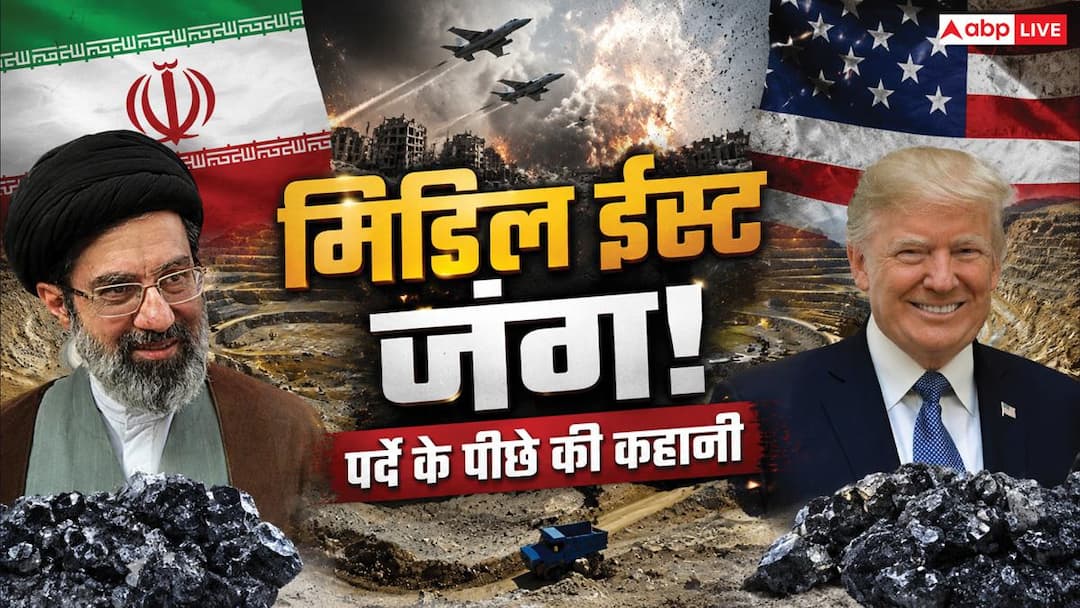
The discussion about Iran is often limited to oil and Hormuz, but experts believe that the real picture is much bigger than this. Iran is home to more than 3% of the world’s zinc and lead mines. This is the reason why its mineral resources have also become very important for global powers.
Due to strict sanctions by Western countries, the markets of America and Europe are almost closed for Iran. For this reason, no American lead mining company operates in Iran, while Iran continues to export its minerals through Asian countries like China.
Foreign affairs expert Robindar Sachdev says, ‘This war is not only about Hormuz and oil, but it is also about ideology and also about critical minerals. While Iran has more than 3% of the world’s zinc and lead mines, the world is also keeping an eye on it, because in today’s era, countries need critical minerals for development.
He also said that Iran also has large reserves of copper, which is needed by the whole world including America. In such a situation, it is clear that this conflict is not limited only to oil and Hormuz, but is also related to future global mineral and strategic competition.
The world’s biggest zinc-lead treasure is hidden near Iran!
Iran, famous for oil and gas, has another natural resource which is considered very important for global industries. Iran has reserves of more than 220 million tons of zinc and lead ore, which is considered to be about 5% of the world’s total reserves. For this reason, Iran has become the fourth largest zinc and lead producing country in Asia.
Angouran, the biggest strength of Iran’s mining industry (Angouran) and mehdiabad (Mehdiabad) There are mines. The Angouran mine, located in the Zanjan province, is considered the largest lead and zinc mine in the Middle East. There are more than 16 million tonnes of high quality ore here, which has an average of 26% zinc and 6% lead.
Iran has the capacity to produce about 4.5 lakh tons of zinc ingot every year. About 80% of its production is exported to 15 countries. This creates an export potential of about $2 billion annually. There are approximately 11 million tonnes of zinc and 50 lakh tonnes of lead metal in the current reserves. This is the reason why along with energy, the mineral sector can also prove to be an important foundation of Iran’s economy and global supply chain.
Also read: PoK became a sore for PAK, Kashmiris troubled Munir, will it automatically be included in India, read the full story
Who has real control over Iran’s mines?
Iran’s lead mining industry is entirely under the control of domestic state and private companies, but its real strength comes from its strategic relationships with China and Russia. Amidst Western sanctions, Iran has built its mineral business on the basis of a network in which China and Russia are playing the roles of investment, technology and the biggest market.
Zinc and silver along with lead are mainly mined in Iran. Iran Zinc Mines Development Co. (IZMDC), Bama Mining & Industrial Co., Zarin Industrial and Mining Group and Calsimin Co. Like domestic companies do. However, these mines are not directly owned by Russia or China.
China’s role is that of the biggest buyer. Chinese companies buy semi-processed lead and zinc concentrate from Iran. Other than this China Nonferrous Metal Mining Group (CNMC) Engineering companies like Irani also cooperate in creating metal processing and smelter infrastructure in Iran.
At the same time, Russia is active as a partner in investment and mineral exploration projects. Russian companies such as Ural Mining and Metallurgical Company (UMMC) have previously negotiated consortium investments in large mining projects in Iran.
Why are lead and zinc so important?
Lead and zinc are considered the backbone of modern industry, energy and infrastructure. More than 80% of the world’s lead is used to make lead-acid batteries, which are needed to start vehicles, telecom backup, and off-grid energy storage. Apart from this, lead is also widely used for radiation protection in electronic circuits, soldering, X-ray machines and nuclear plants.
At the same time, zinc is the most used material in the world after aluminum and copper. Non Ferrous Is metal. Its biggest use is in preventing rust on steel and iron through galvanizing. Zinc also plays an important role in brass, rubber, paint, sunscreen, medicines and many consumer products. Besides, it is also an essential mineral for the immunity of the human body and the development of cells.
Also read: Massive explosions in many cities including Bushehr in Iran, America denies new attack, what did Trump talk to Netanyahu on phone?