
 By Admin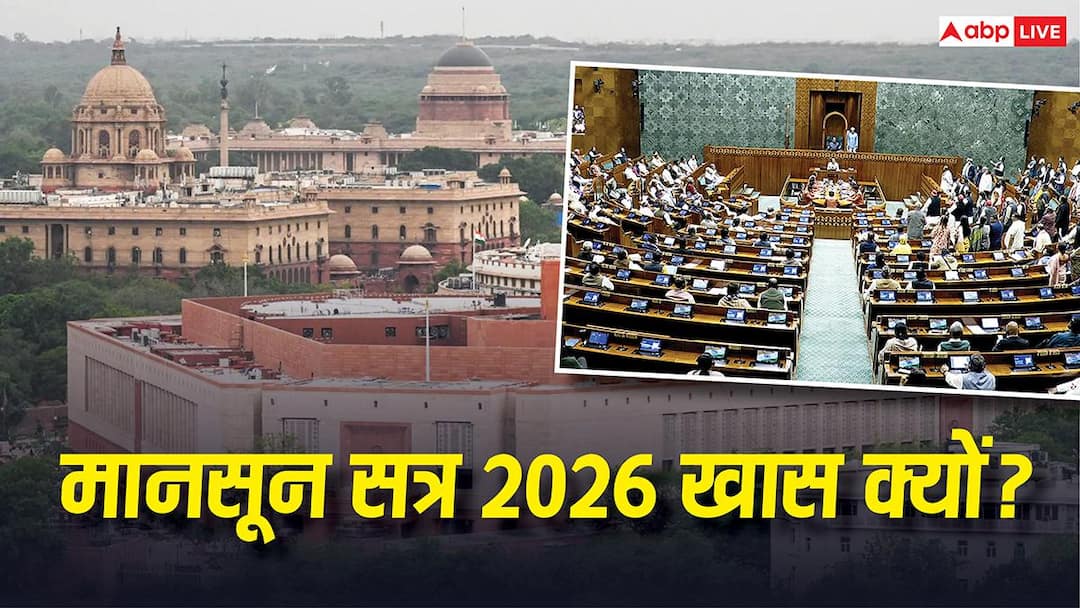
The monsoon session of Parliament is starting from 20 July 2026. The bills that the government is bringing this time can completely change the country’s politics, election system, reservation and power equations. On one hand, the government is preparing to pass its important bills, while on the other hand, the opposition is preparing to corner the government on issues like unemployment, inflation and NEET paper leak. Its Meanwhile, there have been such changes in parliamentary arithmetic, which have broken the back of the opposition…
How much has the game changed in Parliament since the budget session?
This part is the real game changer of this entire session. Parliamentary arithmetic has changed from the budget session (February 2026) to July 2026. NDA is strong and opposition ‘INDIA’ alliance has weakened.
Since the budget session of April 2026, there has been such a big upheaval in politics that the picture of Parliament has completely changed.
What changed in Lok Sabha:
| aspect | Budget Session (April 2026) | Monsoon Session (July 2026) |
| NDA support | about 293 MPs | 319 MPs (20 rebel TMC and 6 UBT Shiv Sena) |
| two-thirds figure | 363 out of 543 | 360 (Basirhat, Shillong and Naugaon vacant) |
| NDA’s reach | 298 votes (got in April) | potential 348 |
| difference (by two-thirds) | 54 votes less | just 12 votes less |
3 big reasons for the strength of NDA:
- TMC’s division: 20 out of 28 MPs of Mamata Banerjee’s party have broken away and joined the National Common People’s Initiative (NCPI) and are supporting the NDA. Speaker Om Birla will take a decision on their merger.
- Weakness of Shiv Sena (UBT): 6 MPs from Uddhav Thackeray’s group joined Eknath Shinde’s camp.
- DMK-Congress alliance breaking: After Congress’s alliance with TVK in Tamil Nadu, DMK INDIA separated from the alliance. DMK’s 22 MPs will no longer be counted with the opposition. Although DMK has not joined the NDA, BJP hopes that it can provide issue-based support on select bills.
Changes in Rajya Sabha:
| aspect | figure |
| total seats of the house | 245 (currently 242) |
| Strength of NDA | Total 151 including 141 MPs and 10 nominated/independents. |
| simple majority | 121 (cross) |
| two-thirds majority | 163 |
| lack of nda | just 11 votes less |
The NDA has benefited from seven AAP MPs joining the BJP and winning 19 seats in the recent Rajya Sabha elections.
Which bills is the government bringing in the monsoon session?
1. Women’s Reservation Bill (Nari Shakti Vandan Act)
This is the same bill which was passed in the special session of Parliament in September 2023, but has not been implemented yet. Under this law, 33 percent reservation is to be given to women in the Lok Sabha and state assemblies. There is a big condition attached to it that this reservation will be implemented only when the process of delimitation is completed. The participation of women voters in the 2024 Lok Sabha elections was 65.78%, which was slightly more than that of men (65.55%). This figure shows how big a force women have now become in electoral politics. Every party wants to show this bill in its favor.
2. Delimitation Bill
This could be the most explosive issue of this session. Delimitation means fresh distribution of Lok Sabha and Assembly seats on the basis of population. This process is to start after the 2026 census. There is strong opposition to this in the South Indian states of Tamil Nadu, Kerala, Karnataka, Andhra Pradesh and Telangana. South India has succeeded in controlling population and they fear that their seats will reduce, while the states of North India will benefit from it.
3. One country, one election
With the 129th Constitutional Amendment Bill, the government is coming up with a big plan to hold elections for the Lok Sabha and all the state assemblies simultaneously. The committee headed by former President Ramnath Kovind had submitted its report to the government in March 2024, in which it was recommended. According to the report, holding simultaneous elections will save thousands of crores of rupees spent on elections every year and will eliminate obstacles in development work. For this, at least five articles of the Constitution (83, 85, 172, 174, 356) will have to be amended and for this two-thirds majority will be required. Opposition parties are calling it an attack on the federal structure.
4. FCRA Amendment Bill
By amending the Foreign Contribution Regulation Act (FCRA), the government wants strict control on foreign funding received by NGOs and religious institutions. Under this, provisions like reducing the period of FCRA registration, strict monitoring on the use of funds and criminal prosecution for violations can be brought. The government argues that this will stop foreign interference, while critics say that this will lead to harassment of social workers and institutions.
5. 130th Constitution Amendment Bill
This bill is the most shocking and discussed proposal of this session. Under this, if a Prime Minister, Chief Minister or Minister is found guilty in a criminal case and is sentenced to jail, he will automatically step down from his post within 30 days of the commencement of the sentence. Till now there is no such provision and convicted leaders try to remain in office. However, it will not be easy to pass it, because leaders of many parties themselves may fall prey to it.
Apart from this, Vikas Bharat Education Foundation Bill, Anti-Doping Bill, Bill to increase the number of Supreme Court judges and reforms in corporate law will be introduced.
On which issues will the opposition corner the government?
The opposition will corner the government on 5 big issues in this session:
- Unemployment: According to data from the Center for Monitoring Indian Economy (CMIE), the unemployment rate in May 2026 was 8.1%, which is higher than 7.4% last year. This rate is even higher among youth in the age group of 20-24. The opposition will call it a failure of the government’s policies.
- Dearness: Food inflation is continuously breaking the back of the common man. The Consumer Price Index (CPI) stood at 5.1% in June 2026, but the inflation of food items has reached 7.4%. The prices of pulses, oil and vegetables are skyrocketing.
- Petrol-Diesel Prices: Due to the Iran-America war and the closure of the Strait of Hormuz, crude oil prices have crossed $ 100 per barrel. This has had a direct impact on the retail prices of petrol and diesel, which have increased by Rs 8-12 per liter. This is a direct hit on the common man’s pocket and the opposition will not fail to corner the government on this issue.
- NEET paper leak scandal: The issue of paper leak of NEET exam held in May 2026 is still fresh. The future of lakhs of students has been affected by this and the Supreme Court is hearing this case. The opposition will strongly criticize the government on this issue and the demand for the resignation of the Education Minister will intensify.
- Rajnath Singh’s ‘lies’ controversy: Congress wants to initiate breach of privilege proceedings against Defense Minister Rajnath Singh. It is alleged that Rajnath Singh, during the discussion on Operation Sindoor, had said in the Lok Sabha that ‘no Indian soldier was martyred’, while the government later accepted the military casualties.
Will NDA be able to pass the bill?
There are two conditions for constitutional amendment:
- Majority of total membership i.e. at least 272 MPs out of 543
- Two-thirds of those present and voting, that is, if 500 MPs vote, then at least 334 votes.
Now see the current position of the government in Parliament:
- Current strength of NDA: 319 MPs
- Two-thirds figure: 360 (due to 3 seats being vacant)
- Difference: 41 votes
Where else can the government get votes?
- 22 DMK MPs (issue-based support).
- In April, NDA had got 5 votes separately.
- Support of other regional parties.
If everything goes well then NDA will have 346 votes. Only 14 votes will fall short.