
 By Admin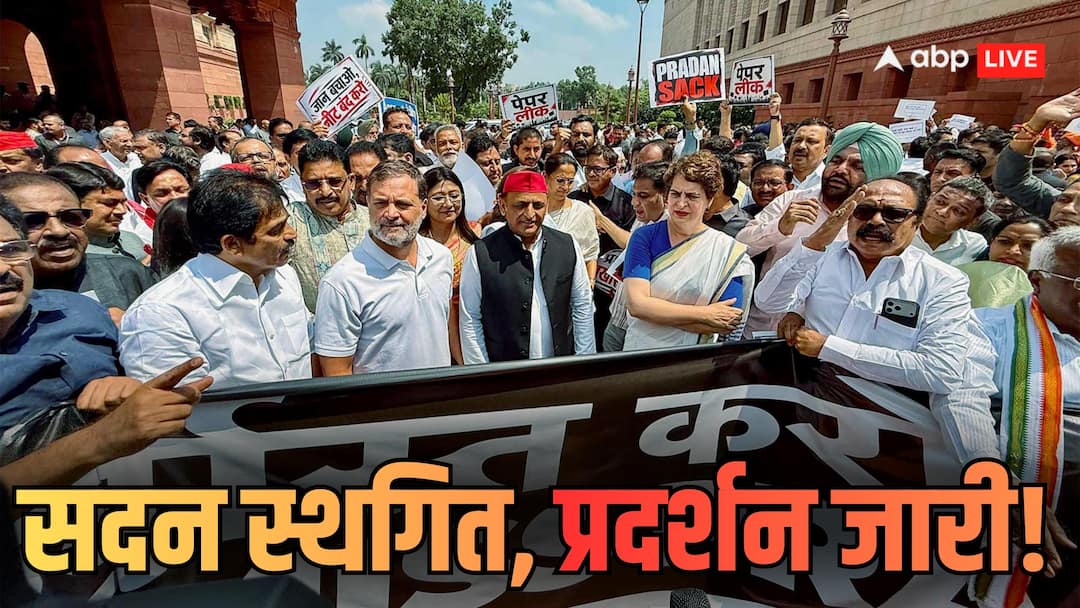
The NEET paper leak issue so gripped the Parliament that no work could be done in both the Houses for four days. There was uproar, sloganeering and repeated adjournments for four days in the monsoon session 2026. Now the action has been postponed till July 27. This postponement is not a common thing. This is the result of the deadlock that has widened between the government and the opposition. The government is saying, ‘Discuss, without conditions.’ The opposition is saying, ‘First resign, then we will discuss.’ Meanwhile, CJP’s nationwide movement has taken the issue to the streets…
What happened in Parliament in five days?
Monsoon session started on 20 July 2026. The opposition immediately started creating ruckus regarding the NEET-UG paper leak issue. Sloganeering started in both the houses from the very first day and the House was adjourned. after this:
- 21 July (2nd day): Opposition MPs gave notices under Rule 267. Congress MP K. C. Venugopal gave an adjournment motion. The proceedings of both the houses were repeatedly adjourned.
- 22 July (3rd day): Again the same atmosphere of uproar, sloganeering and adjournment remained. The opposition clearly said, ‘There will be no discussion on the NEET issue without the resignation of the Education Minister.’
- 23 July (fourth day): Parliamentary Affairs Minister Kiren Rijiju folded hands and said to the opposition, ‘We are ready for discussion, you come without conditions.’ The opposition refused. Both the houses had to be adjourned for the day.
- July 24 (Fifth Day): Opposition MPs demonstrated outside the Makar Gate of Parliament at 10:30 am. Many opposition leaders including Sonia Gandhi, Rahul Gandhi, Priyanka Gandhi, Mallikarjun Kharge and Akhilesh Yadav participated. NDA MPs also retaliated and the House proceedings were adjourned till July 27.
That means the House did not function properly even for a single day in five days. The bills were not passed nor were questions and answers taken. In the first four days of the monsoon session, both the houses were adjourned without any work. At present there are 28 pending bills in the House and the action has now been postponed till July 27.
Congress and opposition’s demands: Rahul’s three ‘non-negotiable’ conditions
All opposition parties including Congress and SP are standing with CJP. But Congress has also put forward its own demands. Leader of Opposition in Lok Sabha, Rahul Gandhi made three demands in the press conference and termed them as ‘non-negotiable’:
- Resignation of Education Minister Dharmendra Pradhan: Rahul said, ‘This is a legitimate demand. He showed the country and the world that he cannot run the education system. Rahul alleged that Pradhan is ‘not worthy of this post and may be involved in the conspiracy of paper leak.’
- Action against policemen: Rahul Gandhi has demanded action against the policemen involved in the strict police action on July 20. Rahul said, ‘Whoever attacked the students should be held accountable’.
- PM Modi should apologize to the students: In a TED-style presentation, Rahul claimed that 152 papers have been leaked in the last 10 years, 7.5 crore students have been affected and not a single culprit has been punished. Rahul also said that Rs 1.32 lakh crore is spent annually on NEET coaching, while the entire education budget is around Rs 1.4 lakh crore.
Rahul said, ‘The government alone cannot decide how the discussion will be held. First Pradhan will have to resign and PM will have to apologize. These are the first steps. Then we want to see change in the system.
Congress General Secretary K. C. Venugopal also clearly said, ‘We will not back down on our core demands, which start with the resignation of Dharmendra Pradhan.’ He said that except AAP and DMK, all other opposition parties agree on this stand. Leader of Opposition in Rajya Sabha Mallikarjun Kharge also reiterated, ‘Until Pradhan resigns, the discussion will not begin.’
CJP’s demands: What does ‘people’s court’ want?
CJP is the backbone of this movement. On July 24, a meeting was also held with the CJP government at the Constitution Club. CJP clearly said that the protest will continue until the demands are met. CJP has three main demands:
- Dharmendra Pradhan’s resignation: This is the biggest and non-negotiable demand of CJP.
- Compensation of Rs 1 crore to the families of students affected by NEET paper leak.
- All FIRs registered against peaceful protesters withdrawn.
CJP spokesperson Saurav Das termed PM Modi’s announcement of fast-track court as a ‘band-aid’, i.e. a superficial treatment, not a solution to the real problem. CJP also made it clear that the movement will continue until Dharmendra Pradhan resigns.
What is the government saying now?
The government’s stand is clear that it is ready for talks, but there should be no conditions…
Parliamentary Affairs Minister Kiren Rijiju joined hands with the opposition and said, ‘We are ready to discuss the NEET paper leak. The opposition is running away from the discussion by imposing pre-conditions and making excuses. He said, ‘We request the opposition with folded hands to please decide when to start the discussion. We are ready, but you are imposing conditions.
PM Modi announced the creation of a fast-track court in a selfie video on the night of 23 July. He said, ‘Nothing is bigger than the future and welfare of our youth.’ But CJP and the opposition rejected this announcement. BJP President JP Nadda said, ‘The opposition neither wants discussion nor wants to allow the House to function.’ BJP issued a whip to all NDA MPs asking them to remain present in the House.
What is happening outside the Parliament?
There is uproar inside the Parliament, there is uproar outside also…
- Face to face at Makar Dwar: On July 23, MPs from NDA and INDIA block stood face to face at the Makar Gate of Parliament. Opposition was protesting over NEET paper leak, NDA counter protested. On July 24, opposition MPs demonstrated again at Makar Dwar at 10:30 am.
- CJP’s nationwide movement: CJP has started a nationwide protest on July 24 with the slogan ‘Every district, one day, one demand’.
So what now after July 27?
According to experts, there could be three possible ways in which the three days go by:
- Movement and fast: If CJP’s nationwide agitation spreads further and the opposition does not allow the House to function even on July 27, then this deadlock may deepen further. The opposition and CJP have already said that the agitation will continue until Pradhan resigns.
- BJP should find a middle path: The government can give some concessions, like withdrawal of FIR or announcement of compensation. But the main demand of CJP and opposition is still the resignation of Dharmendra Pradhan. Rahul has called it ‘non-negotiable’.
- Big step of the government: According to experts, if the government decides to remove Dharmendra Pradhan, it will be a major political change. If this happens then it will be considered a weakness of the government and it will affect the internal corridors of BJP as well.
How come this is not just a matter of NEET?
This movement started with the NEET paper leak, but now it has reached the big question whether India’s examination system is trustworthy? Is the government listening to the voice of the youth? Are institutions accountable?
Rahul Gandhi said, ‘The crisis of the system is not just paper leaks, but also that the system is no longer affordable for the poor and the middle class.’ At the same time, CJP says, ‘Strict punishment will not stop paper leaks, rather the system will have to be changed.’