
 By Admin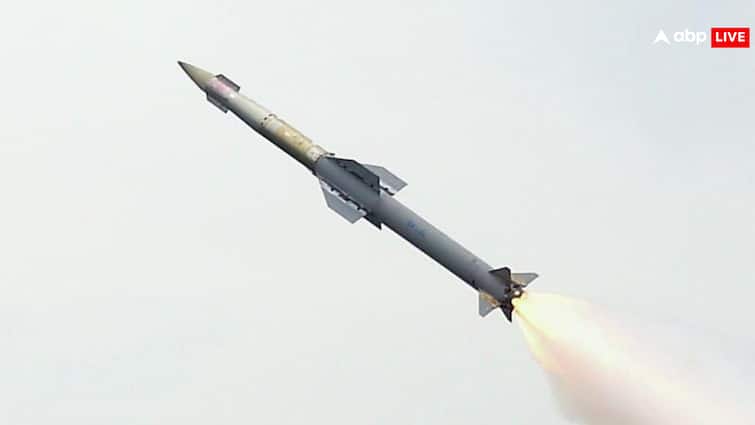
After Operation Sindoor, Pakistan may be making big claims, but India’s real power is in its high-tech technology and hypersonic weapons. India is no longer limited to traditional weapons, but it has developed such advanced systems that have the ability to respond in a moment by dodging the enemy’s radar. Whether it is hypersonic glide vehicle or deadly missiles like BrahMos-II, strategic preparation of India is now being done keeping in mind the future wars. This is the reason why India is now considered to be an edge country, not just a response.
HSTDV: Self -sufficient flight to India
Hypersonic Technology Demonstrator Vehicle (HSTDV) is India’s first and very special effort in which scramjet technology has been developed. DRDO has made it. Its biggest feature is that it blows with oxygen from the air, that is, it does not need to fill oxygen in the tank to fly. This makes the fuel less and speeds up.
It took a successful flight for the first time in 2020 and flying at the speed of Mach 6 (six times faster than sound) for about 20 seconds. Now the work of converting this technology into missile system has started. It is expected that by 2026 India will have its first hypersonic missile, which will strengthen the country’s security strength.
Brahmos-II: Next generation deadly missile
If in the supersonic era, BrahMos proved India’s military strength to the world, then its hypersonic form is going to become BrahMos-II even more deadly. A target has been set to deliver this missile to Mach 7 (ie seven times faster than the speed of voice). The special thing is that it can be launched with land, sea and air, all three platforms.
This project is being prepared by BrahMos Aerospace in collaboration with DRDO and Russia’s NPOM company. There are technical challenges, but progress is becoming fast. It is expected that by 2026 its first test flight can be done successfully.
SFDR: Game Chanceser for Air Force
The Solid Fuel Ducted Ramjet (SFDR) project is a big step towards giving India’s air power a faster and deadly edge. This technique is based on solid fuel, making it easier and more reliable for mission. The speed of SFDR can range from Mach 4.5 to Mach 6, that is, it can fly four to six times faster than the speed of voice.
This engine will be used especially in future long-range air-to-air missiles such as Astra MK3. It has been done many successful tests since 2018 and now it has reached the stage to prepare weaponization, ie as a weapon. It is expected that by 2025-26 this technology will be completely operational and will give a new strategic lead to the Indian Air Force.
Shaurya: Missile’s new speed
India’s valor missile is already stationed in the army, but now a new and more powerful hypersonic version is being prepared. It is a canister-based Tactical missile, which is launched from the ground. After the launch, it reaches the upper layer of the atmosphere and glides, which makes it very difficult to catch and stop its way.
Its speed reaches Mach 7.5, which gives it a big boost in India’s strategic capacity. Currently, it is included in a limited number of army, but the upcoming hypersonic version will be much more deadly and advanced, which will further strengthen India’s defense system in future.
HGV: the most silent but most dangerous
Now the matter of the project which is the lowest discussion, but perhaps the most dangerous can prove to be the Hypersonic Glide Vehicle (HGV) project of India. Its information is very limited and confidential, but experts believe that it is a system that will be launched from ballistic missiles. After the launch, it will glide at more than Mach 10 speed in the atmosphere and will penetrate the target with faster, accuracy and ambush than traditional missiles.
If this project is successful, then it will make India stand in equal to superpowers like America and China in terms of hypersonic weapons. Its first weaponized version can be revealed between 2028 and 2030 and it can bring revolutionary changes to India’s strategic capabilities.
How much DRDO’s annual budget?
The annual budget of DRDO ranges from around ₹ 23,000 to ₹ 25,000 crore, out of which ₹ 3,000 to ₹ 5,000 crore is being invested on hypersonic and missile techniques. These figures are clear indications that India is now not only the buyer of defense equipment, but is taking concrete and well -planned steps towards becoming a self -sufficient defense manufacturer.
Also read-
America imposed 50 percent tariff and angry red President Lula, gave the challenge of revenge to Trump