
 By Admin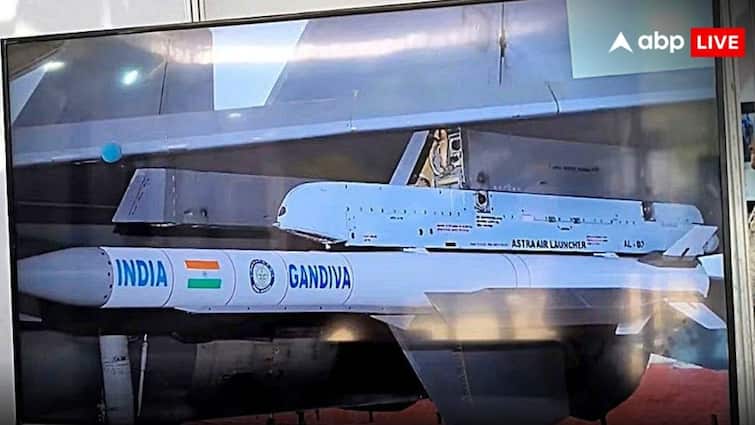
The Defense Research and Development Organization of India (DRDO) has recently developed a new weapon, it is very important not only in technical terms but also strategic importance. The missile is named Gandiv, which was the name of the bow of Arjuna, the great archer of Mahabharata.
The Gandiv missile is going to give India new heights in the 21st century air war. It is not just a missile, but a revolutionary step in India’s air security. Its range, speed and power takes it beyond the missiles of superpowers like China and America. Especially its ‘Beyond Visual Range’ (BVR) capacity gives India the ability which was only with only selected countries of the world.
Technical features and range of Gandiv missile
The biggest feature of the Gandiv missile developed by DRDO is the ability to hit its excessive distance. This missile weapon has been developed under the MK-3 project, which can become an important asset for the Indian Air Force (IAF). Its range is up to 340 kilometers. Its engine is of dual-fuel ductic ramjet. It can target even the enemy’s fighter jet, bomber, cargo and AWACS aircraft. On launching it from 20 kilometers, the firepower reaches 340 kilometers. At the same time, by launching from 8 kilometers, 190 km capacity is increased. This range is more than China’s PL-15 missile (300 km) and America’s AIM-174 BVRAM (240 km), which gives a significant increase in India’s air security.
Role of dual-fuel ductured ramjet engine
The dual-fuel duct dated ramjet engine installed in Gandiv missile makes it different from other missiles. This technique enables it to cover a greater distance in low fuel. With its help, the missile can hit the target at a long speed. It saves fuel, due to which it covers more distance. The most important thing is that it is suitable for different heights and missions. For this reason, the Gandiv missile becomes necessary not only for defense but also for strategic air control.
New possibilities with weapons MK-1 and LCA MK1A
India successfully tested the weapon MK-1 missile on 11 July, which was done by Sukhoi-30 MKI aircraft in the Bay of Bengal. This test showed that India has now become self -sufficient in the ‘Beyond Visual Range’ missile technology. Now LCA MK1A, ie a better version of indigenous Tejas fighter aircraft, can strengthen India’s aerial power by armed with weapons missiles. With this, India also achieves great achievement in Aatmanirbhar Bharat.
Also read: India accepted this thing of Muslim country Kuwait, 50 percent seats increased in aircraft