
 By Admin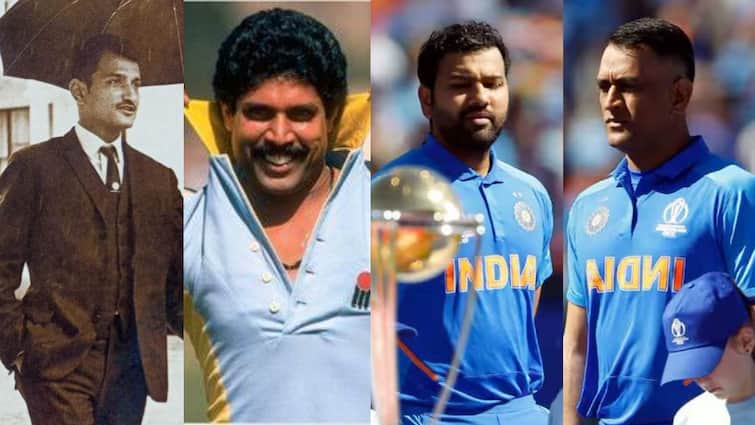
Rohit Sharma is currently the captain of the ODI team. He was the 24th player of India, who took charge of the ODI team, now his career is at the last stop, so the questions have arisen as to who will be the next captain? If someone is suggesting Shubman Gill, a report said that BCCI is looking at Shreyas Iyer as the next captain. Well, here we are telling you about the 27 players who have captained India’s ODI team.
Ajit Wadekar (1974)
Ajit Wadekar was the first captain of the Indian ODI team, captaining in a total of 2 matches. However, both matches lost both matches.
Srinivasaraghavan Venkataraghavan (1975-79)
Srinivasaraghavan captained India in 7 matches, out of which India was able to win just 1 while 6 matches were lost.
Bishan Singh Bedi (1975–1978)
Under the captaincy of Bishan Singh Bedi, India played 4 ODIs, India won only 1 match under his captaincy and lost in 3.
Sunil Gavaskar (1980-1985)
Sunil Gavaskar took command of the Indian team in 37 ODIs, his win percentage was 37.83. Of these, India won 14 matches and lost 21. There was no result in 2 matches.
Gundappa Vishwanath (1980)
Gundappa Vishwanath became the fifth ODI captain of India, although he was able to captain it in only one match. The Indian team lost this match.
Kapil Dev (1982–1992)
In 1983, captain Kapil Dev, who won the first World Cup to India, captained 74 ODIs in his career. Out of this, India won 39 matches and lost 33, their win percentage was 52.70.
Saeed Kirmani (1983)
Saeed Kirmani had a chance to captain it in a match, which Team India lost.
Mohinder Amarnath (1984)
In 1984, Mohinder Amarnath became the captain for just one match, although this match did not result in the result.
Ravi Shastri (1986-1991)
During the era of Kapil Dev, Ravi Shastri also captained 11 ODIs, out of which India won 4 matches and lost 7 matches. Shastri is now seen in the commentary, he has also been the head coach of India.
Dilip Vengsarkar (1987-88)
India’s 10th ODI captain was Dilip Vengsarkar, under whose captaincy India played a total of 18 matches. Of these, 8 matches won India and lost in 10.
Krishnamachari Srikanth (1989)
In a year, Krishnamachari Srikanth captained 13 ODIs for India, out of which he won in India 4 and had to face defeat in 8. His win percentage was 30.76.
Mohammad Azharuddin (1989–1999)
Azharuddin took over the captaincy in 174 matches in India’s ODI team within 10 years, out of which Team India won 90 matches and lost 76. Azharuddin’s win percentage is 51.72.
Sachin Tendulkar (1996-99)
Sachin Tendulkar, who is called the God of Cricket, captained the Indian ODI team in 73 matches. Out of this, 23 won while 43 had to face defeat. Sachin’s winning percentage as captain is 31.50.
Ajay Jadeja (1998-1999)
Ajay Jadeja played 13 ODIs as captain for India, won 8 of them and defeat in 5.
Sourav Ganguly (1999-2005)
Ganguly became the second captain who took over the captaincy of the Indian team in more than 100 ODIs. In 146 ODIs played under the captaincy of Ganguly, India won 76 and lost 65. Ganguly’s winning percentage as captain is 52.05. India reached the final of the 2003 World Cup under the captaincy of Ganguly.
Rahul Dravid (2000-2007)
Rahul Dravid captained India in 79 ODIs, out of which 42 won and defeat in 33. Under the captaincy of Dravid, India played the 2007 ODI World Cup, where the team was out of the group stage after losing to Bangladesh and Sri Lanka.
Anil Kumble (2002)
Anil Kumble captained the Indian team in the only ODI, India won this match. Kumble also became the head coach of India.
Virender Sehwag (2003-2011)
Virender Sehwag captained 12 ODIs for India, out of which India won 7 and lost 5.
MS Dhoni (2007-2018)
MS Dhoni captained 200 ODIs for India, which is the highest. Of these, India won 110 matches and lost 74, their win percentage was 55. India won the 2011 World Cup under Dhoni’s captaincy.
Suresh Raina (2010-2014)
Suresh Raina became India’s 20th ODI captain, captaining 12 matches. Of these, Team India won 6 and lost 5.
Gautam Gambhir (2010-2011)
Currently, the head coach of the Indian cricket team Gautam Gambhir captained India in 6 ODIs, India won all 6 matches.
Virat Kohli (2013-2021)
Virat Kohli captained India in a total of 95 ODIs, out of which he won 65 and defeat in 27. Kohli’s winning percentage in ODIs as captain is 65.42. Virat Kohli now plays only in ODI format, he has retired from Test and T20.
Ajinkya Rahane (2015)
Rahane captained the Indian team in just 3 ODIs, India won all 3 matches.
Rohit Sharma (from 2017 to now)
Rohit Sharma became the 24th captain of the Indian ODI team, in 2017 he took the captaincy for the first time. The team reached under his captaincy by the final of the 2023 World Cup. This year, India won the title of Champions Trophy in ODI format this year under the captaincy of Rohit. Rohit has also retired from T20 and Tests, now the big question is, will Rohit Sharma play 2027 World Cup and who will be the new captain after him?
Shikhar Dhawan (2021-2022)
Shikhar Dhawan, popularly known as Gabbar, took the captaincy in 12 ODIs for India, in 7, Team India won and defeat in 3.
KL Rahul (2022-2023)
KL Rahul has captained 12 ODIs for India. Under his captaincy, India have won 8 matches and 4 have lost.
Hardik Pandya (2023)
Hardik Pandya captained the Indian ODI team in 2023, he became the 27th player of India who took charge of the ODI team. Under his captaincy, India won 2 out of 3 matches and lost 1.
Who is the most successful ODI captain of India?
Among the most successful captains of India, MS Dhoni, Kapil Dev, Rohit Sharma can be named in the top 3.
Who will be the next captain of the Indian team in ODIs?
Many former cricketers from Mohammad Kaif believe that Shubman Gill will be the captain of ODI after Rohit Sharma. At the same time, a media report says that Shreyas Iyer can be made the captain. BCCI is planning to keep 2 captains in 3 formats. Shubman Gill can also be made the captain of T20 after the Test. Currently, T20 captain is Suryakumar Yadav, whose India will play the Asia Cup.