
 By Admin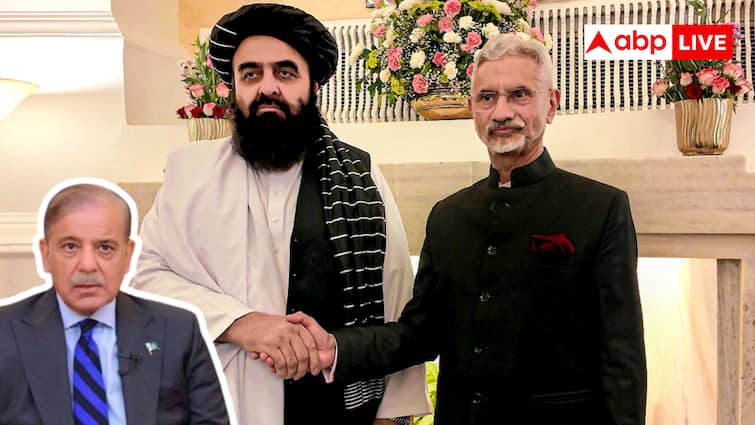
Pakistan could not tolerate Afghanistan’s Foreign Minister Amir Khan Muttaki coming to India. Muttaki reached India on 9 October and the same night Pakistan carried out an air strike on Afghanistan. Taliban also counterattacked and captured Pakistani posts. Saudi Arabia and Qatar tried to bring about reconciliation between the two. Now it remains to be seen what India’s stand will be.
So let us understand in ABP Explainer how two Muslim countries became enemies of each other, will there be a big war in the future and what is India’s stand…
Question 1- What is going on on the border of Afghanistan and Pakistan?
answer- The borders of both the countries are being bombed and posts are being captured…
- On the night of 9 October, Pakistan carried out airstrikes in Khost, Jalalabad and Paktika provinces including Afghanistan’s capital Kabul. The reason for this was told to Tehreek-Taliban Pakistan i.e. TTP Chief Noor Wali Mehsud.
- On October 10, TTP attacked a police training school in Pakistan. In this, 20 soldiers and 3 civilians including a Major and Lieutenant Colonel rank officer were killed.
- On the night of October 11, Taliban forces retaliated on the Pakistani border. Taliban government spokesman Zabihullah Mujahid claimed in a press conference in Kabul that more than 58 Pakistani soldiers were killed and 30 were injured in the action. Captured 25 Pakistani posts, but returned them after the fighting ended.
- The Afghan Defense Ministry said, ‘Our operation ended at midnight. If Pakistan acts again, our army is fully prepared to protect the country.
Foreign affairs expert and retired JNU professor A. Of. Pasha says that the matter may calm down after the action is completed from both sides. If attacks from both sides do not stop, war may arise.
Question 2- What are the reasons for the conflict between Pakistan and Taliban?
answer- There are 4 big reasons for the fight between Pakistan and Taliban…
1. Afghanistan and Pakistan border dispute
There is about 2,640 km long border between the two countries, which was drawn by British officer Mortimer Durand in 1893. Afghanistan does not recognize this border. This line was drawn from the areas of Pashtun and Baloch communities, due to which the people of these communities were divided into two countries.
2. Accusations of Taliban giving shelter to TTP
TTP is considered the biggest terrorist threat of Pakistan. From 2007 till now TTP has killed more than 14 thousand Pakistanis. This group also targeted universities, religious leaders and common people. Since the Taliban came to power in Afghanistan in 2021, TTP has been waging a ‘guerrilla war’ against Pakistani security forces.
3. Afghan refugees evacuated from Pakistan
Afghan refugees have been a big problem for Pakistan since the time of Soviet Russia’s attack on Afghanistan. By the 1990s, 3 million refugees reached Pakistan. After this, even during the American attacks, Afghan refugees camped in Pakistan. According to the United Nations High Commissioner for Refugees (UNHCR), there are currently about 1.5 million Afghan refugees in Pakistan. Pakistan started a plan to deport Afghans living illegally in 2023. He calls this necessary to avoid infiltration of terrorism.
4. Anxiety about Muttaki coming to India
When Muttaki reached India on 9 October, on the same day Pakistan Defense Minister Khawaja Asif described Afghanistan as the biggest enemy. He said, ‘Now the patience of the army and the government is wearing thin. Terrorism against Pakistan from the soil of Afghanistan will not be tolerated. Indian Foreign Minister S. Pakistan was also stunned by the joint statement issued after the meeting of Jaishankar and Muttaki. Taliban had condemned the Pahalgam attack in Jammu and Kashmir.

Question 3- What will happen if the war between Pakistan and Taliban increases?
answer- Pakistan is stronger on military and diplomatic front…
- Pakistan: According to Global Fire Power, there are 6.54 lakh active soldiers, 17 thousand armored vehicles, more than 2,600 tanks, 328 fighter aircraft. There are also advanced ballistic and nuclear missiles.
- Taliban: There are 1.5 lakh fighters, about 500 tanks, about 100 helicopters and jets.
Kabir Taneja, ORF’s deputy director and research fellow on Middle East affairs, says, ‘If there is a war between Pakistan and Afghanistan, the Taliban may not win, but its thinking is still like that of a militant organization. He will increase problems for Pakistan by attacking in guerilla manner. At the same time, TTP gets support from both Taliban and Pakistan. However, this support is hidden. In such a situation, if tension increases, Pakistan will have to compete with TTP also.
Question 4- In such a situation, what will be India’s stand and how will it help Taliban?
answer- Kabir Taneja says, ‘India will benefit from increasing tension between Pakistan and Taliban because relations between India and Afghanistan will improve. However, there is also a challenge for India that the conflict between Taliban and Pakistan will destabilize the security of the entire region. But India will not openly support Taliban. As long as it makes sense for India, it will support Taliban. After that India’s interest will end.
Question 5- What did Saudi Arabia say on the Pakistan-Afghanistan conflict?
answer- Saudi Arabia expressed concern over the tension between Pakistan and Afghanistan. Giving a statement, Saudi Arabia’s Foreign Ministry said, ‘Saudi Arabia is monitoring with concern the increasing tension and clashes in the border areas between Pakistan and Afghanistan.’
Kabir Taneja says, ‘Saudi Arabia and Qatar will try their best to resolve this matter. Now this matter will be entrusted to the Ulemas. On which both the countries will have to agree. Recently, a defense agreement has been signed between Pakistan and Saudi Arabia, under which if any third country attacks any one country, it will be considered an attack on both the countries. For this reason, Saudi would not want to get caught in any kind of war.
At the same time, Qatar also expressed concern about the clashes in Pakistan and Afghanistan and the security of the area. Qatar’s Foreign Ministry has appealed to both sides to adopt dialogue and diplomatic path to reduce tension.