
 By Admin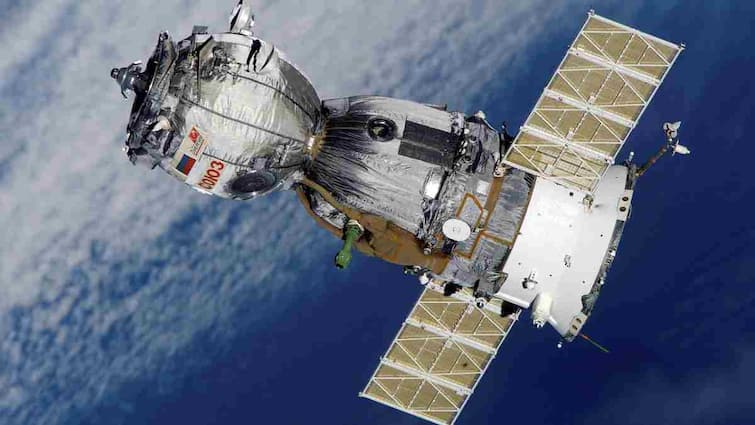
Satellite Technology: Satellites moving in space appear millions of kilometers away, yet we are able to control them, send commands, take data and change their orbit. All this is possible due to the systematic combination of signal, antenna and ground-based control center. Let us understand in simple language how this entire process works.
Ground Station and Mission Control
Each satellite has one or more ground stations, centers with large antennas that send and receive radio signals to and from the satellite. Mission control i.e. control room decides which commands to send, when to give psychological commands to the satellite and the received telemetry data is monitored. The ground station always keeps track of the satellite and gives it necessary commands. This process is known as Telemetry, Tracking & Command (TT&C).
How does the signal come and go
When the control center sends a command, it comes out from the ground antenna in the form of radio waves, this is called uplink. The satellite receives that signal and reads it through its on-board computer and implements the command. Whereas the data sent by satellite such as images, system health or results of experiments, the signal coming to the ground is called downlink. Both these signals are in different frequency bands (like S-band, X-band, Ka-band) to reduce interference and increase data speed.
Ledger and real-time connection
Some modern missions also use laser communications instead of radio. Laser beams provide very high speed and low interference links but require precise pointing and clear weather.
The biggest challenge of signal is distance. Signals take time even at the speed of light. For example, signals to satellites near low-Earth orbit (LEO) take milliseconds to reach, while signals to geostationary-orbit (GEO) — about 36,000 km from Earth — take about 120 milliseconds one way (double the round-trip). Relative motion between the satellite and the ground station in space causes Doppler shifts, so the ground station constantly adjusts the frequency to accurately capture the signal.
antenna and pointing
Large dish antennas or phased-arrays of ground stations are pointed precisely in the direction of the satellite. Satellites also have high-gain antennas that target small areas of the ground. Precise pointing ensures that the signal remains strong and clear.
Data security and reliability
Encryption and authentication are required on the command and telemeter so that no unauthorized party can control the satellite. Also, error-correction coding is used so that despite noise and interference, the data is delivered clean.
Many satellites are now autonomous in some cases, that is, they take small decisions on their own (such as power-management or antenna-re-alignment) because quick commands from the ground are not always available. In addition, mission-control has redundant ground stations and automated scripts to ensure the satellite remains safe in the event of an emergency.
Also read:
Know this important thing before using geyser in winter! Otherwise one mistake can cause a blast