
 By Admin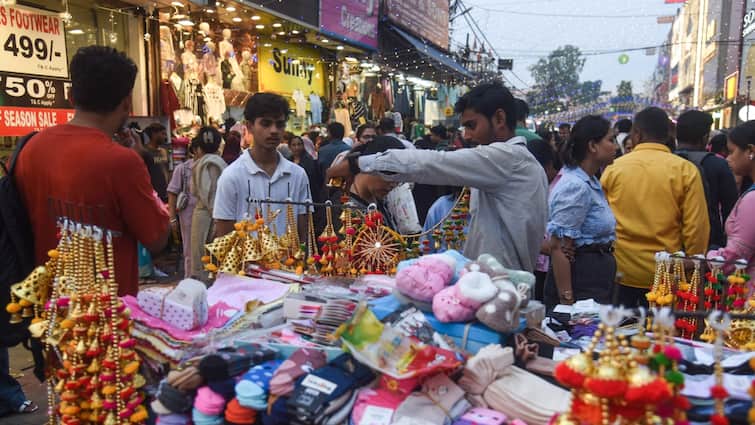
This year’s Diwali in Delhi became a symbol of prosperity and self-reliance for Indian markets. The new report of the Confederation of All India Traders (CAT) shows that the festive business across the country broke all records so far with total sales of Rs 6.05 lakh crore. 87 percent out of 100 people gave preference to indigenous goods.
At the same time, campaigns like “Vocal for Local” and “Swadeshi Diwali” attracted consumers towards Indian products, which not only led to a boom in business but also gave new hope to small traders.
Record business of Rs 6.05 lakh crore in festive season
According to the survey conducted by CAT Research and Trade Development Society, total sales across the country reached Rs 6.05 lakh crore on Diwali 2025. This included goods trade worth Rs 5.40 lakh crore and services trade worth Rs 65,000 crore. This is considered to be the biggest festive business in Indian business history.
CAT National General Secretary and Delhi MP Praveen Khandelwal said that Prime Minister Narendra Modi has been successful in deeply influencing both traders and consumers through “Vocal for Local” and “Swadeshi Diwali”. According to him, Modi’s policies have instilled confidence in small traders and inspired consumers towards Indian products.
Shine of Indian goods, decline in demand for foreign products
According to the report, 87% consumers preferred Indian products over foreign goods. Due to this, there was a huge decline in demand for Chinese goods, while the sales of Indian manufactured goods increased by 25% compared to the previous year. This change is a testament to the success of the “Vocal for Local” campaign.
Return of traditional markets, big win for small traders
It was told in the report that this time an increase of 25% was recorded in festive trade as compared to last year. Non-corporate and traditional markets contributed 85% to total sales, leading to a strong comeback for small traders. This is a clear sign of the revival of the Indian retail sector.
Which items were most in demand in the festive sale?
CAT National President B.C. Bharatiya said that in the sales of various items, grocery and FMCG were 12%, gold and silver 10%, electronics and electricals 8%, readymade garments 7%, gift items 7%, home decor and furniture 5-5%, sweets and namkeen 5%, clothes 4%, worship material, fruits-dry fruits and bakery 3-3%, footwear 2% and other items 19%. This diversity shows that the scope of consumer spending spread across every class and region.
Unprecedented boom in service sector also
A tremendous growth was recorded not only in goods but also in the service sector. According to the report, business worth Rs 65,000 crore was done in sectors like packaging, hospitality, travel, event management and delivery services. This also created new opportunities for employment generation.
Demand increased due to relief in GST rates, traders expressed confidence
72% of the traders surveyed believe that rationalization of GST rates played an important role in increasing their sales. Consumers also expressed satisfaction with price stability, due to which the trend of festive shopping continued.
Highest level of confidence in the retail market
According to the report, the Trader Confidence Index (TCI) has reached 8.6/10 and the Consumer Confidence Index (CCI) has reached 8.4/10 — the highest level in the last decade. These figures reflect growing confidence in the Indian economy and stable consumption patterns.
Creation of 50 lakh temporary jobs
Praveen Khandelwal said that this year about 50 lakh temporary jobs were created from Diwali business. The non-corporate and non-agricultural sector, comprising 90 million small traders and millions of small manufacturing units, continues to be the main engine of India’s economic growth. Rural and semi-urban areas set a new example of economic empowerment by contributing 28% to the total turnover.
CAT gave these suggestions to the government
Based on the report, several suggestions have been given to the government, such as simplifying the GST process for small traders, increasing loan availability, developing logistics hubs in tier-2 and tier-3 cities, and abolishing bank commission on digital payments. Besides, emphasis has also been laid on strengthening traffic and encroachment management in urban markets.