
 By Admin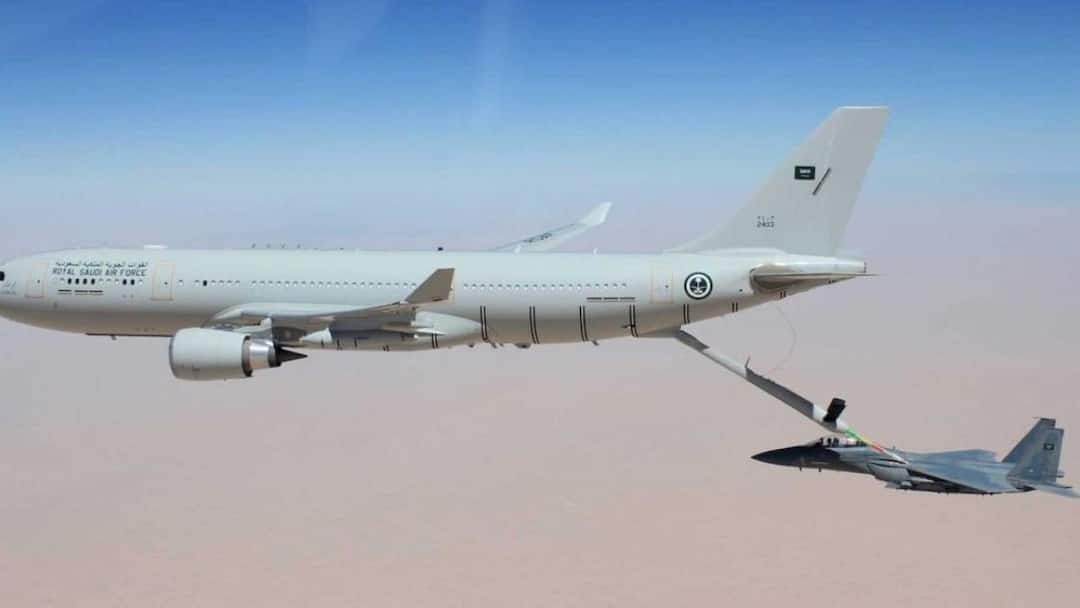
India is investing extensively to strengthen its defense power. Thousands and lakhs of crores of rupees are being spent in modernizing the country’s defense system. The plan to purchase 114 Rafale fighter aircraft at a cost of about Rs 3.25 lakh crore is the latest example of this. Apart from this, huge amount is also being spent on strengthening the air defense system.
Under Mission Sudarshan Chakra, an air security system is being prepared for the entire country, which can make every part of India safe from air attacks by 2035. Moving forward in this direction, the Central Government has taken another big and important decision to increase the strength of the Indian Air Force.
Approval to purchase 6 new multirole tanker transport aircraft
To strengthen air-to-air refueling capability, the Government of India has given green signal to the purchase of six Multirole Tanker Transport (MRTT) aircraft. The total estimated cost of this deal is US $ 1.1 billion i.e. approximately Rs 9,978 crore. With the help of these tanker planes, fighter planes deployed on long-range missions will be able to refuel in the air without landing. With this, fighter jets will not have to face problems like fuel shortage during extended missions. Countries like America and Russia already have strong capabilities in this region and now India is also moving towards joining this club strongly.
India’s strategic reach will be strengthened in the Indo-Pacific region
This deal will not only enhance the operational capability of the Indian Air Force, but will also broaden India’s strategic reach and influence in the Indo-Pacific region. This program is being led by Israel Aerospace Industries (IAI), while Hindustan Aeronautics Limited (HAL) will have important participation in it.
Old Il-78 tanker now in final stages
Currently the Indian Air Force mainly has Il-78MKI air-to-air refueling tanker aircraft of Russian origin, which were inducted in the year 2003. These aircraft have now been in service for an average of more than 22 years and have reached the end of their effective operational life.
According to defense analysts, the operational effectiveness of these aircraft is decreasing due to rising maintenance costs, limited availability and lack of technical integration with modern fighter aircraft. GlobalData’s fleet analysis also notes a steady decline in the reliability of the Il-78 aircraft, making it increasingly difficult to support long missions with frontline fighters such as the Rafale, Su-30MKI and Tejas. In such a situation, the purchase of MRTT aircraft is being considered as a necessary and timely reform.
Technical Features of MRTT
Each MRTT aircraft will be fitted with two General Electric CF6-80C2 or equivalent turbofan engines, which will provide approximately 60,200 pounds of thrust i.e. approximately 268 kilo Newtons. The maximum take-off weight of these aircraft will be approximately 1,86,000 kg.
These aircraft will be able to transfer 72,500 to 90,700 kg of fuel. With a maximum speed of Mach 0.80 (about 851 km per hour) and a flight range of more than 11,000 km, they will be much more capable than the existing Il-78 aircraft. Through underwing pods, they will be able to provide both probe-and-drogue and boom refueling support.
HAL will have a big responsibility
The MRTT aircraft selected will be a modified version of the Boeing 767 passenger aircraft, which is being developed as per the requirements of the Army. According to ‘Indian Defense News’, this aircraft will have the capacity to carry more fuel, will have the power to fly long distances and will be equipped with a modern probe-and-drogue refueling system, due to which it will be able to work easily with most of the fighter aircraft of the Indian Air Force.
The presence of HAL in this deal makes it even more important. HAL will not only help in installing Indian systems in these aircraft, but will also develop a system for their maintenance, repair and overhaul within the country. This will reduce dependence on importing spare parts from outside and the aircraft will remain available for operation for a longer period. This entire initiative is related to the government’s ‘Self-reliant India’ mission and experts believe that the partnership between HAL and IAI can open new avenues for technology sharing and export in the future.
Will get decisive advantage in long distance missions
Air-to-air refueling aircraft are considered a force multiplier for any modern air force. These enable aircraft to complete missions over long distances without landing at forward bases. This capability is extremely important for India with its vast geographical area and extensive maritime borders.
Amid growing strategic competition in the Indo-Pacific region, China’s increasing air and maritime activities and potential tensions with Pakistan, the Indian Air Force felt the need to increase its operational reach. The deployment of MRTT aircraft will give India an edge in continuous surveillance, quick response and remote operations in the Indian Ocean region.
Preparation to respond to China
Last year, during ‘Operation Sindoor’, the Air Force faced limitations in fuel supply during cross-border operations. According to defense sources, this experience inspired policy-makers to give priority to air refueling capability.
The induction of MRTT aircraft will enable advanced fighter jets like Rafale to work more effectively with long-range precision weapon systems. The Su-30MKI will provide long-range air patrolling capability, while also increasing the tactical flexibility of light combat aircraft like Tejas. This deal will strengthen India’s deterrence in the ongoing tension on LAC with China and possible conflict scenarios with Pakistan. This step will help India play a leading role in the balance of power in the Indian Ocean region.
Answer to China’s growing power
Experts say that this deal is completely in line with India’s strategy to maintain stability in the region through international forums like Quad. The deployment of MRTT aircraft in the Indian Air Force will create a strong balance against the rapid increase in the number of H-6U tanker aircraft by China.
With the arrival of new aircraft, changes will also be made in the training of pilots and ground staff. Through simulator agreements with IAI, the crew will be trained in modern mid-air refueling techniques, simultaneous refueling of multiple aircraft and network-based combat systems.
Relief in squadron shortage
At present the Indian Air Force is facing a huge shortage of squadrons. Where there should be 30 squadrons, currently only 18 are active. With the induction of MRTT aircraft, existing fighter aircraft will be able to perform missions for longer periods and more effectively. This will allow more work to be done with less resources and will also provide necessary time for future fighter projects like AMCA.
This deal is also considered sensible from money point of view. The price of $1.1 billion for six aircraft is lower than Europe’s more expensive platforms like the A330 MRTT. This deal has been done at the government-to-government level, due to which decisions could be taken quickly while avoiding the long tender process.
Air Force will get big benefit
This purchase of six MRTT aircraft is not limited to just replacing old aircraft with new ones, but it is a big strategic step for the Indian Air Force. This will not only increase operational strength and mission capability, but will also strengthen self-reliant defense production, regional balance and the long-term security needs of the country. In the changing global and regional situation, this decision can prove to be an important and far-reaching step in giving a new direction to India’s air power.