
 By Admin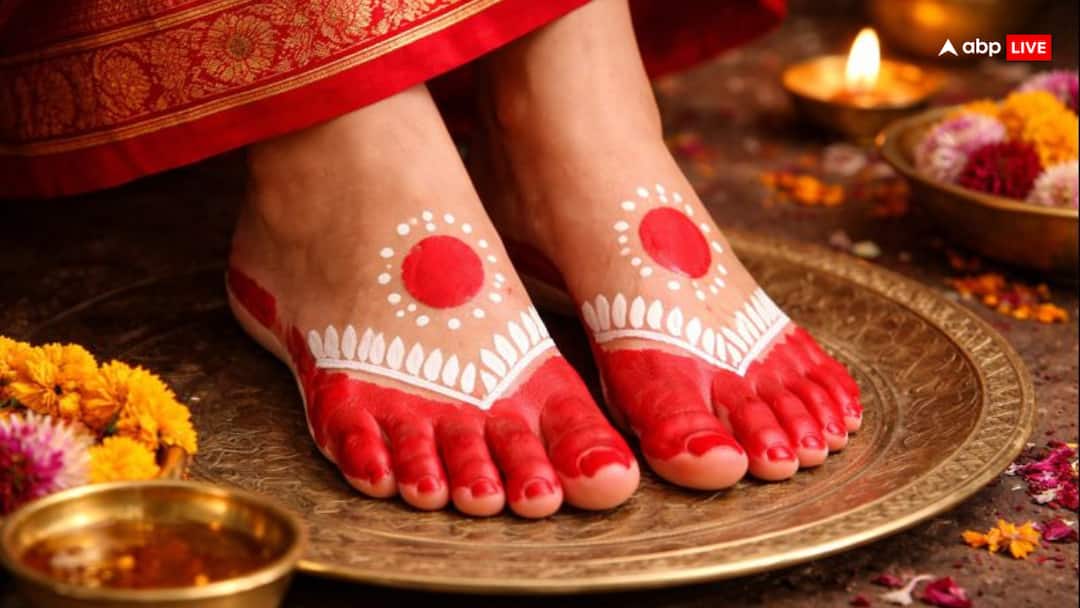
Alta: 16 Shringar have special significance in Indian culture, Mahavar which is also commonly called Alata (red color applied on the feet) is included among them. The makeup of any bride is considered incomplete without Alata.
Be it any religious ritual or any auspicious festival, applying alta on the feet of women is considered a symbol of good luck, prosperity and honeymoon.
However, when it comes to unmarried girls, their ankles are not joined together while wearing alta. That means the back part of the heel is left open. Let us know about the religious importance and reasons behind it.
Religious beliefs regarding alta
According to religious beliefs, joining the ankles with the Alta is a symbol of perfection. An unmarried girl is considered part of her father’s house, and she leaves that house and goes to another house.
Not joining the ankles indicates that the girl’s life is not complete yet, and she will start her new life after marriage.
Separation of the heels before marriage shows that the girl is still bound by the customs and traditions of her maternal home. When her heel connects with Alta for the first time on the wedding day, it shows that now she has entered into a new relationship and her married life is about to begin.
For married women, joining Mahavar with anklets is considered a symbol of their complete marital happiness. It is also believed that the joined heels represent the unbreakable bond of husband and wife and their new life. It is considered taboo for unmarried girls to join the anklets with the alta.
Benefits of applying alta
- Alata is not only for beauty, but there are many benefits of using it.
- Applying Alta to the feet provides coolness, which reduces mental stress.
- Many types of medicinal properties were present in traditional Alta, which provided relief from cracked heels and other problems related to feet.
In Indian traditions, there is a concrete reason behind every small thing. Not joining the heels together while wearing alata is not only a tradition, but it also respects the youth of the girl’s life. This is the reason why even today elders strictly follow this rule.
History of Alta
Alata which is also known as Mahavar, Alata or Alata. The tradition of planting Alta has been going on since ancient times. This latter mention is seen in the Upanishads and Kalidasa’s Abhijnana Shakuntalam.
In Hindu religion, Alta is associated with Goddess Lakshmi and Mother Durga. Apart from this, Lord Krishna, the incarnation of Lord Vishnu, is also shown wearing Alta on his palms and hands.
Disclaimer: The information provided here is based only on assumptions and information. It is important to mention here that ABPLive.com Does not constitute any endorsement or verification of information. Before implementing any information or belief, consult the concerned expert.