
 By Admin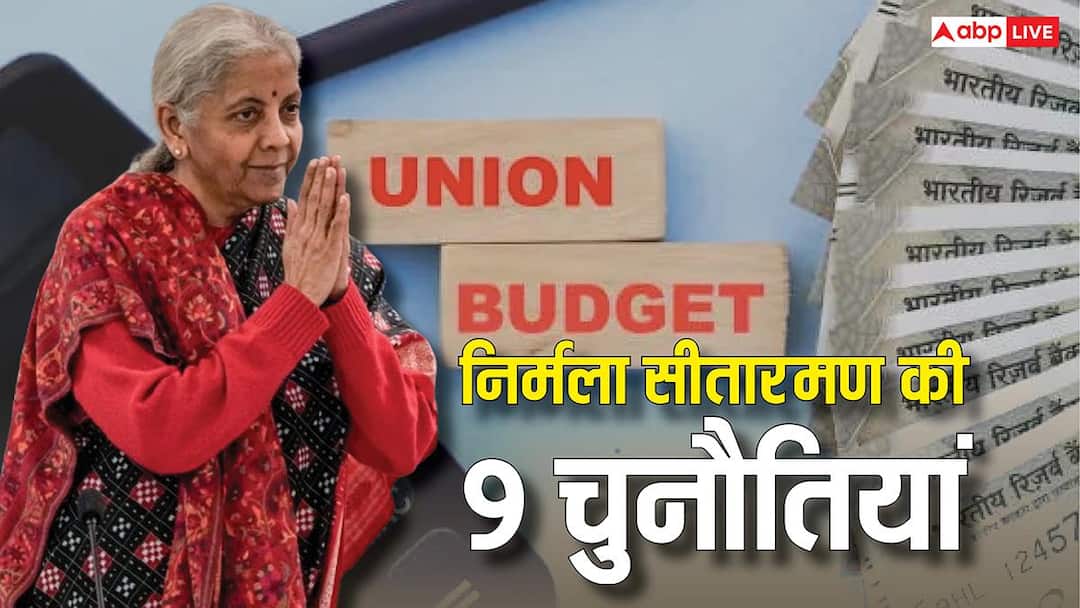
Union Budget 2026: Union Finance Minister Nirmala Sitharaman is going to present the general budget for the financial year 2026-27 on February 1. At a time when India has overtaken Japan to become the world’s fourth largest economy and is moving towards becoming the third economy in the next two years, on the other hand, many serious economic challenges are facing the government. Let us know what will be the major challenges before the Finance Minister while presenting the budget-
1. Speed of GDP growth
According to the Economic Survey, India’s GDP growth in the financial year 2026-27 may be between 6.8 to 7.2 percent. Whereas the government has set a target of becoming a developed India by 2047. To achieve this goal, it will be necessary for the country to continuously maintain a growth rate of 8 percent or more.
2. Continuous decline in rupee
Despite the intervention of RBI, the Indian rupee remains under pressure. On January 29, 2026, the rupee reached an all-time low of 92 against the dollar. Between April 2, 2025 and January 22, 2026, the rupee has declined by about 6.5 percent.
3. Layoffs in IT and software sector
Employment crisis in IT and software companies is a big concern. In the first nine months of the financial year 2025-26, the top 5 IT companies appointed only 17 new employees, whereas in the same period last year this number was 17,764.
4. Increasing trade deficit with China
India’s trade deficit with China is continuously increasing. China has exported about Rs 8.39 lakh crore to India, due to which the pressure on domestic industries has increased.
5. Record prices of gold and silver
Gold and silver prices have reached historic highs. On January 30, gold reached Rs 1.71 lakh per 10 grams and silver reached Rs 3.95 lakh per kg. This is directly impacting the middle class, especially when about 1 crore marriages take place in India every year.
6. Sanitation and air pollution
According to the CREA report released in January 2026, 44 percent of Indian cities are struggling with chronic air pollution. In the national capital Delhi, the air remains in ‘good’ category only 79 days out of 365 days of the year.
7. America’s high tariff
The US has imposed a 50 percent tariff on Indian products – which includes a 25 percent base tariff and an additional 25 percent tariff due to it buying cheaper crude oil from Russia. This has had a big impact on Indian exports.
8. Slow pace of manufacturing sector
Despite ‘Make in India’, the contribution of the manufacturing sector is stuck at 12.13 percent of GVA, while the government aims to take it to 25 percent.
9. Farmers and Agricultural Productivity
India’s food grain production in the agricultural year 2024–25 is estimated to be 3,577.3 lakh metric tons, which is 254.3 LMT more than the previous year. However, the production of cereals, maize, soybean and pulses is still below the global average. According to experts, to increase the income of farmers, focus on productivity improvement, better seeds, modern technology and irrigation is necessary.
Also read: From health sector to education, Nirmala Sitharaman… what are the expectations from Budget 2026?