
 By Admin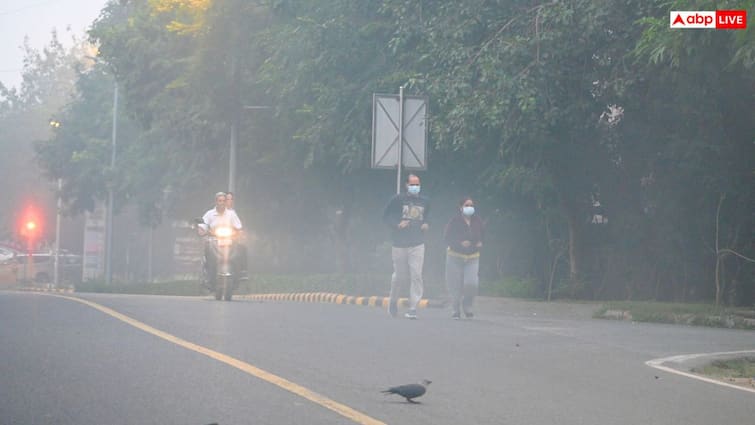
The level of pollution in the country’s capital Delhi is continuously increasing. The air has remained poisonous since Diwali and even on the morning of 24 October there was a dense curtain of fog. The Air Quality Index (AQI) has crossed 300 in many areas, due to which people are complaining of difficulty in breathing and burning sensation in the eyes. Meanwhile, for the first time, the Delhi government has prepared for artificial rain through cloud seeding so that pollution can be controlled.
Air quality in Delhi is very bad
The air quality remains at dangerous levels in many parts of the capital. On the morning of October 24, according to CPCB, the air quality index in Akshardham and surrounding areas was recorded at 403, which is in the ‘severe’ category. AQI was recorded at 306 in Shadipur, 313 in Punjabi Bagh, 337 in Wazirpur, 350 in Jahangirpuri and 319 in Rohini.
Whereas in many areas of Noida the situation is between 270 to 290. According to the Central Pollution Control Board (CPCB), Delhi’s average AQI on October 23 was recorded at 305, which falls in the “very poor” category. The highest AQI of 410 was recorded in Anand Vihar yesterday.
#WATCH Delhi | The AQI at the Akshardham and the surrounding areas was recorded at 403 in the ‘Severe’ category as per the CPCB. pic.twitter.com/HvzgL9PX82
— ANI (@ANI) October 24, 2025
The fifth most polluted city in the country
According to CPCB data, on October 23, Delhi was the fifth most polluted city in the country. Bahadurgarh of Haryana remained on top with 325 AQI. Of the 38 monitoring stations in Delhi, 23 recorded air quality in the “very poor” category. According to PTI, the situation was slightly better in NCR cities like Gurugram, Noida, Ghaziabad and Faridabad, where the AQI remained around 200. According to experts, Delhi’s air level will remain in the “very poor” category till October 25, after which slight fluctuations are possible.
Crackers, stubble and weather are responsible!
The CPCB report said that 69 incidents of stubble burning have been recorded in Punjab, 3 in Haryana and 44 in Uttar Pradesh. The smoke rising from these is making the air of Delhi worse. The Indian Meteorological Department (IMD) has also predicted fog to persist on the morning of October 24, while the maximum temperature is expected to be around 32 and minimum 18 degrees Celsius. At the same time, the poison mixed in the air of the capital and the heavy fireworks on the night of Diwali are also being considered as a major reason.
Preparing for the first artificial rain
Delhi government has started a new experiment to deal with pollution. Chief Minister Rekha Gupta announced on Twitter that cloud seeding technology has been successfully tested in Burari area. The Meteorological Department has predicted cloudy weather on 28, 29 and 30 October. If the weather remains favourable, Delhi will experience artificial rain for the first time on October 29. The government says that this initiative will not only be historic from the technical point of view but will also prove to be a scientific step to provide relief from pollution. This has given rise to new hope in keeping the capital’s air clean and the environment balanced.