
 By Admin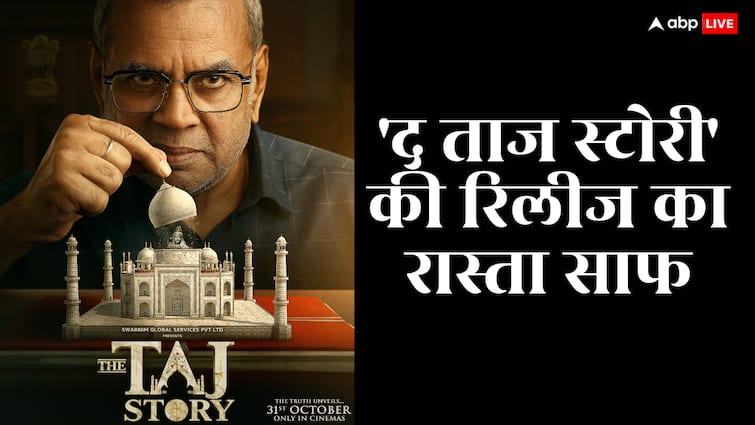
Delhi High Court has rejected the petition filed against actor Paresh Rawal’s film ‘The Taj Story’. The High Court reprimanded the petitioner and said that he should first file a revision application with the Central Government against the Censor Board certificate given to the film.
The High Court said in its order that it is not a super censor board. The judge raised the question why the application was not filed with the Central Government before coming to the High Court? He also raised the question as to why the petitioner made actor Paresh Rawal a party in the petition? Where does the actor have responsibility regarding the content of the film?
What did Delhi High Court say in the matter
Delhi High Court Chief Justice Devendra Kumar Upadhyay and Justice Tushar Rao Gedela heard this petition. During this he said, “Are we a super censor board?”
However, the petitioner said that the court has sufficient powers. On this, the Chief Justice said, “Try to understand our limitations. We are not a super censor board. The difficulty in such cases is that sometimes allegations are made against the parties and lawyers. Avoid this. You have to present your case within the ambit of the Act. Please point out any violation of the rules.”
The petitioner withdrew the petition
After rebuke from the High Court, the petitioner has withdrawn the petition. This has cleared the way for the release of the film. The film ‘Taj Story’ is going to be released on 31st October. In this, Paresh Rawal will be seen playing the role of a lawyer.
Let us tell you that this petition was filed by Delhi’s senior advocate Shakeel Abbas. In this, producer, director and actor of ‘Taj Story’ Paresh Rawal was made a party. Besides, the petitioner had also made the Central Government and the Central Board of Film Certification (CBFC) as parties.
The petitioner had claimed that the film misrepresents the Taj Mahal and the historical information related to it, which may spread confusion among the public and risk creating religious and communal tension. The petitioner said that CBFC did not examine the trailer and the content of the film responsibly, which could create confusion among the public.