
 By Admin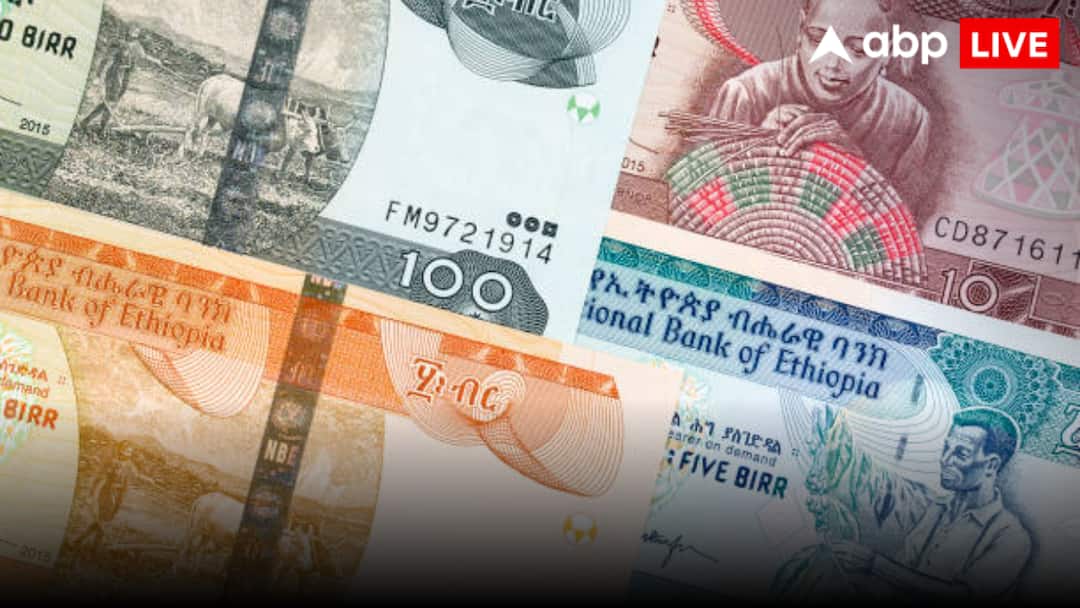
Prime Minister Narendra Modi has left for Jordan, Ethiopia and Oman for a 4-day visit. During this time he will be in Ethiopia on 16 and 17 December. India and Ethiopia are both developing countries, but there is a big difference in their economic conditions. This difference is clearly visible in their currency value also. Meanwhile, when it comes to the economy, trade or foreign investment of two countries, the strength of their currency becomes important.
The official currency of Ethiopia is the Ethiopian Birr. Internationally it is called ETB. Ethiopia’s economy is mainly based on agriculture. Due to limited industry, exports and foreign investment, there is often pressure on the currency there. The national currency of India is the Indian Rupee (INR). India holds a strong position in IT, pharma, manufacturing and service sectors. For this reason, the Indian rupee is considered more stable than the currencies of many developing countries.
Value of 1 Ethiopian Birr
According to the report of Vice.com, the value of 1 Ethiopian Birr is only 0.59 paise against the Indian Rupee. At the same time, the value of 1 Indian Rupee in Ethiopia is equal to 1 Rupee 70 Paise. According to this, if an Indian goes to Ethiopia with Rs 1 lakh, then his price there will be Rs 1 lakh 69 thousand 981.
Why is the Ethiopian Birr weak?
Lack of industrial development, high imports and low exports, limited foreign exchange reserves, high inflation rate and political and regional instability are considered to be the reasons behind Ethiopia’s weak currency. Due to these reasons, the demand for Birr remains low in the international market.
Why is the Indian Rupee considered strong?
The main reasons for strengthening the Indian rupee include the large domestic consumer market, rapidly growing digital and IT sector, continuous improvement in exports, confidence of foreign investors and strong banking system. Although the rupee looks weak against the dollar, it is still in a better position than many currencies of African countries.
Role of currency in India-Ethiopia trade
Medicines, agricultural products, machinery and textiles are traded between India and Ethiopia, but due to differences in currency values, most transactions are done in US dollars or other international currencies, putting additional pressure on the Ethiopian Birr.
Also read: Australia Bondi Terrorist Attack: What is the connection of the terrorist attack in Australia with the Indian passport? New revelations created a stir