
 By Admin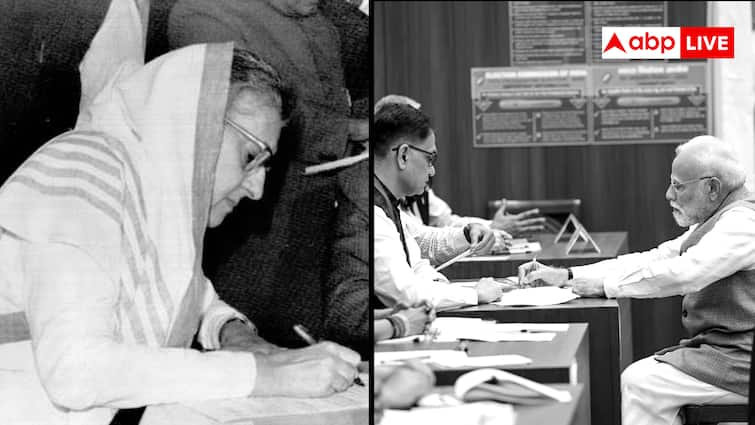
From India’s first woman Prime Minister Indira Gandhi to Prime Minister Narendra Modi, all the big leaders contested elections from two seats simultaneously. There are many reasons for this, including the fear of losing the elections and the dominance of the party. Not only this, there is also a law regarding this in the Constitution. Now the news of Tejashwi Yadav contesting on two seats in Bihar Assembly elections is also strong.
So let us understand in ABP Explainer why big leaders contest elections together on two seats, what is the strategy of elections on two seats and what are its advantages and disadvantages…
Question 1- What is the law for contesting elections on multiple seats simultaneously in India?
answer- Under Section 33(7) of the Representation of the People Act 1951, a candidate can contest from two seats simultaneously in a Lok Sabha or Assembly election. If he wins both the seats, he has to vacate one seat in 14 days. If any candidate does not do this then both the seats are considered vacant under Section 70. In by-elections the party has to field candidates again, which is sometimes risky.
Election Commission of India i.e. ECI told the Supreme Court in 2018 that this rule should be changed to limit it to one seat, so that wastage of resources and voter disappointment is reduced.
Question 2- When did the practice of contesting elections from two seats simultaneously start and which leaders have done this?
answer- This practice started with the first Lok Sabha elections of India in 1951-52. Jawaharlal Nehru presented the first example of this.
- In 1952, Vishnu Ghanshyam Deshpande had won by contesting elections simultaneously from Guna and Gwalior in Central India. He was the General Secretary of All India Hindu Mahasabha. Deshpande was the first leader who won by contesting elections on two seats simultaneously. He kept Guna seat with himself and left Gwalior seat.
- In 1971, Indira Gandhi also contested elections from two seats simultaneously – Rae Bareli (Uttar Pradesh) and Medak (Andhra Pradesh) and won both the seats. Indira Gandhi kept Medak for herself and by-election was held in Rae Bareli, in which Arun Nehru won.
- In 1996, Atal Bihari Vajpayee also contested elections from two seats. He won from both Gwalior and Bhopal seats of Madhya Pradesh. He left Bhopal seat by keeping Gwalior. By-elections were held in Bhopal, in which BJP lost.
- In 2004, Sonia Gandhi contested the Lok Sabha elections from Amethi (Uttar Pradesh) and Bellary (Karnataka) and won both the seats. She retained Amethi and by-elections were held in Bellary, in which Congress lost.
- In 2014, Narendra Modi also gambled on two seats. He won the seats of Vadodara in Gujarat and Varanasi in Uttar Pradesh. PM Modi kept the Varanasi seat and by-elections were held in Vadodara, in which BJP’s Ranjanben Dhananjay won.

- In the 2019 Lok Sabha elections, Rahul Gandhi also contested from two seats – Amethi (Uttar Pradesh) and Wayanad (Kerala). He won from Wayanad and lost from Amethi.
- Akhilesh Yadav also contested from two seats (Kannauj and Mainpuri) in the 2022 Uttar Pradesh Assembly elections. They won both the seats. He kept Mainpuri seat and left Kannauj seat. A by-election was held on this, where wife Dimple Yadav won.
Now Tejashwi Yadav can also contest from two seats in Bihar Assembly elections. One could be Raghopur and the other Phulparas.
Question 3- Why do big leaders contest elections on more than one seat in Indian politics?
answer- According to senior journalist and political expert Harshvardhan Tripathi, there are two big reasons for this…
- Strengthening your and your party’s image: By contesting elections on two seats, leaders strengthen their own and the party’s image. This increases their popularity and influence of the party, strengthens the vote bank and regional base. Like in 2014, PM Modi gave a boost to BJP in Gujarat and Uttar Pradesh by fighting from Vadodara and Varanasi.
- Fear of losing elections: Leaders fear that if they lose on one seat, they can secure a place in Parliament or Assembly by winning from another seat. This way they are not thrown out of the House. For a politician, it is a real fight to remain in the House. Like in 2019, Rahul Gandhi lost Amethi, but won from Wayanad.
Question 4- What are the benefits of contesting elections on more than one seat?
answer- According to Harshvardhan Tripathi, it has 3 major benefits…
- Worker Mobilization: If a big leader contests elections on more than one seat, then the workers of that area get mobilized, that is, their enthusiasm increases and they become fully active in the elections. This also improves the image of the leader, because he reaches that area with his entire army.
- Improving electoral environment: Contesting elections on two seats improves the electoral environment, that is, the environment becomes in favor of that leader. This also shows the strength of the leader that he campaigns on two seats simultaneously and tries his best to win. This creates its positive effect.
- Advantages of political party: This also benefits the party, because his name and popularity attracts votes in many areas, which gives support to other candidates of the party. With a big leader contesting elections, the party’s publicity increases in that area and the electoral environment becomes favorable for it. For example, in 2004, Sonia Gandhi helped Congress increase its campaign in Karnataka by contesting elections from Bellary.
Question 5- Are there any disadvantages of contesting elections on more than one seat?
answer- According to political expert Rashid Kidwai, there are 3 major disadvantages of this practice…
- By-election expenses: By-election is held when one seat is left, the expenditure of which runs into crores. According to ECI, more than Rs 50 crore was spent on such by-elections from 2004 to 2018.
- Broken trust of voters: When a leader leaves a seat, the voters of that area are disappointed. Like in 2004, Bellary voters made Sonia Gandhi victorious, but BJP won the by-election after she left the seat.
- Weapon of opposition: Opposition parties promote it by calling it ‘greed’ or ‘cheating’. Like in 2019, BJP had raised questions on Rahul Gandhi’s Wayanad-Amethi. BJP had said about Rahul Gandhi that he is betraying the public by contesting elections from two seats.
Question 6- Will this practice end in the coming time?
answer- Rashid Kidwai says, ‘The law of contesting elections from two seats simultaneously is in the Constitution, due to which the Constitution will have to be amended to change it. This will happen after the consensus of the parties and everyone’s consent. There is no problem or flaw in contesting elections from two seats simultaneously. This system is not going to harm anyone. However, the money spent in this is definitely a problem. But black money is useful for the parties.
At the same time, Harshvardhan Tripathi believes, ‘This practice should end. This practice is a waste of time and money. If a leader wins both the seats and leaves one seat, then it becomes the responsibility of the Election Commission to conduct elections on it. This upsets the public and also breaks their trust.