
 By Admin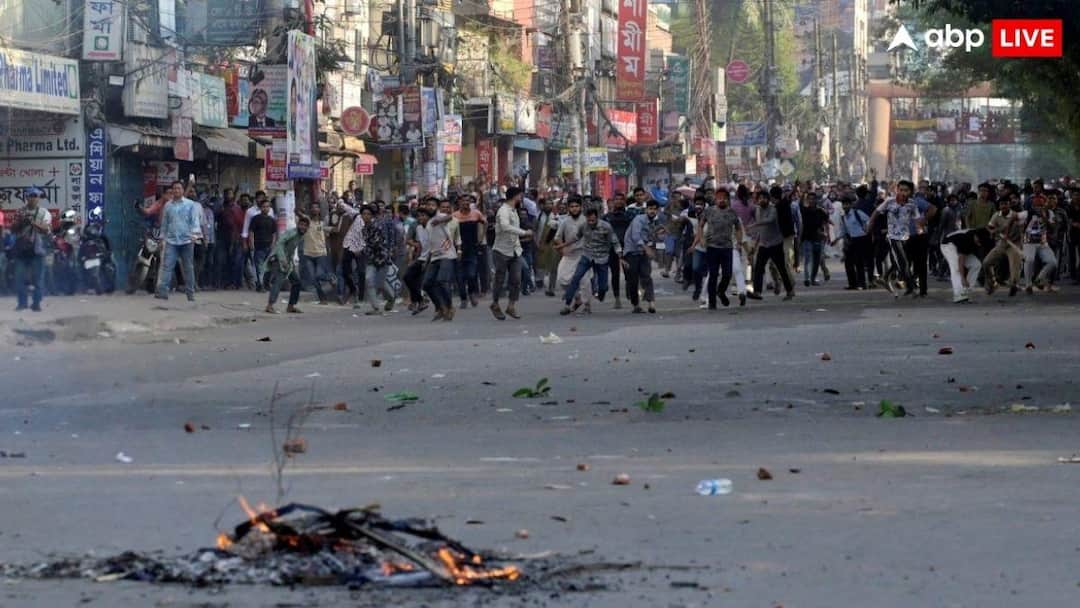
Along with the general elections, a referendum will also be held in Bangladesh on 12 February 2026. The last date for filing nomination papers is December 29, 2025 and the scrutiny of nomination papers will take place between December 30 and January 30. Elections are to be held on 300 seats here. After the overthrow of Sheikh Hasina on August 5, 2024, an interim government is running in Bangladesh under the leadership of Mohammad Yunus.
Radical forces are a threat to the future of Bangladesh
The interim government of Mohammad Yunus has taken more than one and a half years to conduct general elections in Bangladesh. However, the situation has still not improved in Bangladesh. Every day there are reports of violence, arson and atrocities on Hindus. At present, law and order remains the biggest challenge in the neighboring country. Radical forces are establishing their roots across the country. These fundamentalist forces are emerging as a threat to the future elections of Bangladesh.
In the year 2024, when there was a violent movement against Sheikh Hasina in Bangladesh, she had to leave the country. Meanwhile, the students who were involved in this movement together formed a political party, National Citizen Party (NCP), but now when the elections are approaching, there is a strong discussion about the NCP party joining hands with the fundamentalist ideology Jamaat-e-Islami. Hurt by this decision, many NCP leaders are leaving the party and opposing this alliance.
A wave of resignations in NCP, a party formed out of student movement
The views of Jamaat and NCP are very different. The thinking of Jamaat is very different from the reforms announced by NCP during the student movement. At present, Naheed Islam is the convener of NCP, on whom most questions are being raised. In Bangladesh, Naheed is being accused of carrying forward the agenda of Jamaat-e-Islami. This is the reason why today NCP’s Mahfooz Alam has also announced to leave the party.
Party’s Joint Secretary Mir Irshadul has also announced his resignation. Till now, more than 30 leaders are leaving the party. Because of this, it is also being discussed that what was the real objective of the student movement that took place last year? Was the only objective of that movement to remove Sheikh Hasina from power? Did the leaders associated with NCP deceive the people of Bangladesh? These questions are circulating in the political atmosphere of Bangladesh.
However, seat sharing could also be a major reason behind NCP joining hands with Jamaat. If NCP had joined hands with Khaleda Zia’s party BNP, it would have got very less seats and with Jamaat, it could have contested more seats, for which NCP seems to be abandoning its issues.
BNP will be the biggest party in Bangladesh elections
Experts in Dhaka believe that BNP i.e. Bangladesh Nationalist Party can become the largest party in these elections. This party of former Prime Minister Khaleda Zia is considered the biggest political enemy of Sheikh Hasina. Khaleda Zia is currently ill and admitted in the hospital. Khaleda’s son Tariq Rahman has returned to Bangladesh after 17 years and is handling the party’s election campaign. This time in the general elections he himself is trying his luck from 2 seats.
On the other hand, Jamaat-e-Islami is also fielding its candidates in these elections. Sheikh Hasina had banned this party because Jamaat is considered a party that supports fundamentalism. This party is led by Shafiqur Rehman and was also a part of the coalition in the BNP government between 2001-06.
Overall, mainly only 3 parties are visible on a large scale in the electoral arena in Bangladesh. However, Bangladesh’s largest party, Awami League, is banned from participating in the electoral process. Awami League is Sheikh Hasina’s party and Sheikh Hasina had left the country after the coup, but big questions are being raised on the ban on Sheikh Hasina’s party Awami League in the electoral process of Bangladesh. Many international experts believe that without Awami League, the elections in Bangladesh are being considered fixed.
Mohammad Yunus silent on attacks on Hindus
At the same time, the challenge before Bangladesh is to conduct peaceful elections, because fundamentalist forces are targeting common Hindus in Bangladesh. Questions are also being raised on the silence of Mohammad Yunus. Recently, Mohammad Yunus has met the High Commissioner of Pakistan in Bangladesh, after which questions are being raised on the intentions of Yunus.
Along with the elections, referendum is also to be held in Bangladesh on 12th February, which means voting will take place twice in a day. Different colored ballot papers will be used for both of these. For parliamentary elections, black colored ballot paper will be used on white paper, whereas for referendum, colored ballot paper will be used. A total of 42,761 polling centers have been built in Bangladesh, in which there will be 2,44,739 booths.
Voting time has been kept from 7:30 am to 4:30 pm. 12,76,12,384 voters will cast their votes in the general elections to be held in the year 2026. Which includes approximately 6,47,60,382 male voters and 6,28,50,772 female voters. About 1,230 transgender voters are also included. After the voting is over, counting of votes will start.